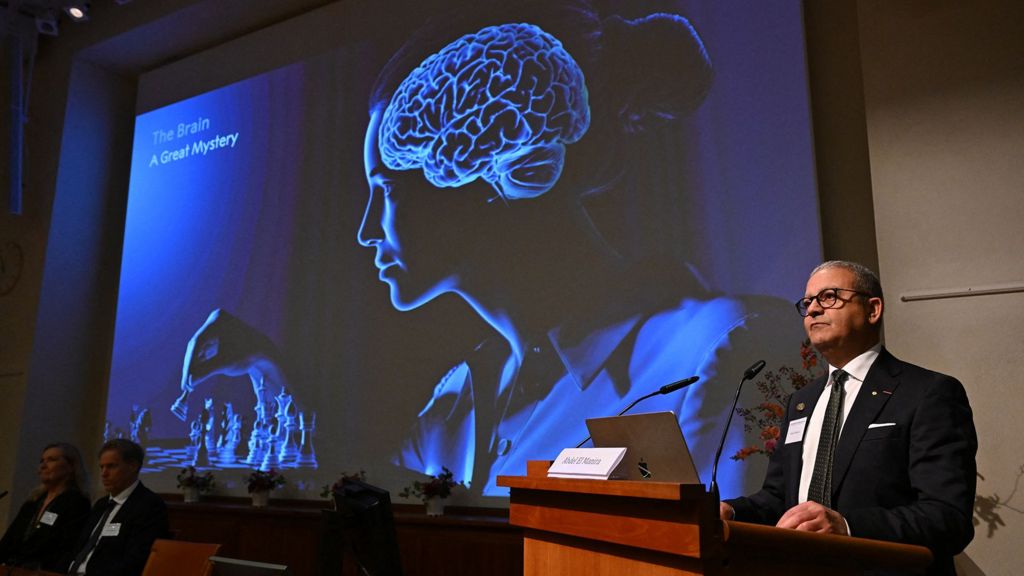
On October 6, 2026, the Nobel Committee announced at Sweden’s Karolinska Institute that three pioneering researchers from the United States and Germany will share this year’s Nobel Prize in Physiology or Medicine for their transformative work founding the field of optogenetics.
US psychiatrist and neurologist Karl Deisseroth shares the honor with German scientists Peter Hegemann and Georg Nagel, a trio whose collaborative research has opened an unprecedented new window into understanding brain function, upending decades of limited knowledge about how neural circuits drive thought, behavior, and disease. The 900,000 pound (12 million Swedish krona) prize recognizes the team’s role in laying the foundation for a new era in neuroscience, a breakthrough that the Nobel Assembly says has fundamentally reshaped the global scientific approach to studying the brain.
The core of the trio’s achievement is the development of optogenetics: a revolutionary technique that uses light to precisely control the electrical activity of individual cells, most notably neurons in the brain. The story of the breakthrough began in the early 2000s, when Hegemann and Nagel identified channelrhodopsin, a unique light-sensitive protein found naturally in algae. Deisseroth later built on this discovery, successfully demonstrating how channelrhodopsin could be used to turn specific neural circuits on and off in the brains of living mice.
Before optogenetics, the inner mechanisms that govern human memory, emotion, behavior, and basic bodily function remained largely a black box for neuroscientists, who lacked tools to isolate the role of specific neural circuits in real time. Today, the technique allows researchers to selectively activate or deactivate individual neuron groups, enabling them to trace exactly which circuits contribute to specific memories, mood states, and behaviors linked to a wide range of neurological and psychiatric disorders.
Per Svenningsson, chair of the Nobel Committee for Physiology or Medicine, emphasized that optogenetics has delivered on a long-unattainable goal for brain science: “Optogenetics provides opportunities for mapping the brain in a way that we could once only dream of.” Beyond mapping brain activity, the technique has also revealed critical new insights into how the central nervous system interacts with other key organ systems across the body, including the heart and gastrointestinal tract.
The impact of the breakthrough extends far beyond basic neuroscience research, with early translational work already yielding promising results in clinical medicine. Currently, researchers are conducting clinical trials testing optogenetics as a treatment to restore vision for people living with blindness caused by retinitis pigmentosa, a degenerative disease that destroys the eye’s light-sensitive rods and cones. By inserting the light-sensitive algal protein into damaged regions of the eye, and pairing the treatment with specialized light-emitting glasses, patients have already regained partial functional vision, marking the first successful steps toward bringing optogenetics from the lab to widespread clinical use.
In a statement following the announcement, the three laureates described receiving the prize as “absolutely wonderful,” adding that it was a special honor to share the accolade with long-time collaborators and friends. The Nobel Assembly noted that the field continues to advance at a rapid pace, with new discoveries emerging daily that bring the global research community closer to solving one of humanity’s oldest great mysteries: how the complex, extraordinary human brain actually works.