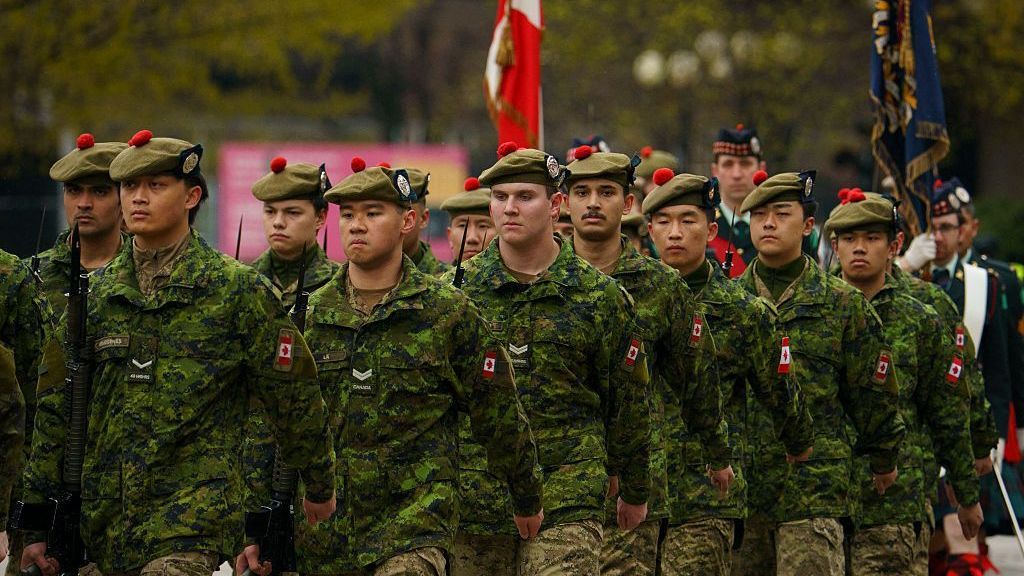
Against a backdrop of rapidly shifting North American geopolitics, Canadian Prime Minister Mark Carney has confirmed that his administration has drawn up contingency plans for a once-unimaginable event: a military invasion by the United States. In an interview with *The New York Times*, Carney emphasized that the probability of such an attack remains extremely low, but framed the planning as a necessary act of responsible risk management amid a fundamental redefinition of Canada-US relations during Donald Trump’s second presidential term.
Trump’s imposition of sweeping global tariffs and his repeated public comments about absorbing Canada as the 51st US state have pushed Canadian defense planners to run war games simulating a US offensive. While Trump stated in 2025 that a direct military attack on Canada was highly unlikely, he has made clear he will continue leveraging economic pressure to advance US political goals. In a recent statement to the BBC, the White House pushed back on concerns, claiming that “President Trump has done more than anyone to protect the great people of Canada.”
Military analysts broadly agree that a full-scale US invasion remains a remote outcome, pointing to decades of deep defense integration between the two neighboring nations. Both are treaty allies within NATO, which requires members to come to the defense of any ally facing an external attack, and they jointly manage North American aerospace defense through the binational NORAD agreement, sharing real-time intelligence and running regular joint Arctic defense missions.
Still, anxiety over the possibility of US aggression has seeped into Canadian public consciousness. A Leger poll conducted in January, shortly after US military forces captured former Venezuelan President Nicolás Maduro in a special operation, found that more than 30% of Canadian respondents view a US invasion as a likely future scenario.
Lieutenant General Christopher Coates, a 34-year veteran of the Royal Canadian Air Force who held multiple senior command posts and served on NATO missions, told the BBC that for his entire career, a military attack from the US was never even considered in Canadian defense planning. Coates noted that if tensions did escalate to conflict, an attack would unlikely begin with a direct armed assault, and would more likely open with stealthy cyberattacks targeting critical Canadian infrastructure.
Historians of Canadian defense point out that anxiety over US expansionism is not a new trend – it is actually a foundational element of Canadian national identity. Tim Foran, a researcher at the Canadian War Museum, explained that modern Canada grew out of British North American colonies that remained loyal to the British Crown during the American Revolution. US forces attempted to seize these northern colonies as early as 1775, capturing Montreal and nearly taking Quebec City, and launched repeated invasions of Upper Canada, Lower Canada and the maritime colonies during the War of 1812, ending in a stalemate that saw British troops burn the White House in retaliation for US attacks.
After World War I, as US global power grew, Canadian military planners again secretly drafted contingency plans for a potential war, with generals posing as tourists to cross the border and photograph infrastructure and gather intelligence from local residents. Andrew Burtch, another Canadian War Museum researcher specializing in 20th-century Canadian defense, noted that war was seen as unlikely even then – planning for all possible outcomes is simply a core function of military institutions.
In the current era, the very fact that Canada is revisiting invasion planning signals a dramatic shift in the global geopolitical order, according to Matthew Schmidt, an associate professor of national security at the University of New Haven. Schmidt explained that the deep bilateral military partnership that Canada has relied on for decades now creates its own risks, as the close intelligence sharing that benefits both nations could also give the US unique insight into Canadian defense vulnerabilities if relations continue to sour. While American voters and political observers often dismiss Trump’s comments about making Canada the 51st state as offhand rhetoric, Schmidt said Canadian leaders are right to take the threat seriously and prepare accordingly.
Modeling conducted by the Canadian military and reported by *The Globe and Mail* earlier this year lays out a grim scenario for an invasion: key Canadian strategic positions would be overwhelmed by US forces within just seven days, with the vast imbalance in military size forcing regular Canadian troops to retreat and switch to guerrilla tactics. Under the theoretical plan, Canada would call on NATO allies including France and the United Kingdom to intervene to defend Canadian sovereignty. This is the first time in a century that Canada has developed a formal plan for a US assault.
Coates noted that the current planning is still in early stages, and that Canada has fallen behind allies in developing a robust response to a potential ground invasion, forcing the country to play catch-up in an age of growing geopolitical unpredictability. That gap has been acknowledged by Canadian defense leaders, who recently called for a massive expansion of the country’s military, including the addition of up to 300,000 lightly trained reserve citizen soldiers to bolster domestic defense capacity.
A full-scale invasion would also pose major challenges for the US, even with its overwhelming military superiority. Schmidt argued that it would be extremely difficult for the Trump administration to secure buy-in from the US military officer corps for an attack on Canada, with many senior officers likely to resign rather than carry out an order they would view as illegal and immoral. Decades of joint training and operational cooperation have built deep mutual respect between American and Canadian service members, making an ordered attack on a long-time ally deeply unpopular within military ranks.
If conflict does eventually come, Schmidt predicted the US would likely target Canada’s vast natural resource reserves – including oil and critical minerals – and seek rapid political decapitation of the Canadian government, mirroring the 2025 special operation that captured Maduro in Venezuela. Even with the US’s massive military advantage, Schmidt noted that Canadian troops are highly trained and would be able to put up a formidable resistance on home terrain.