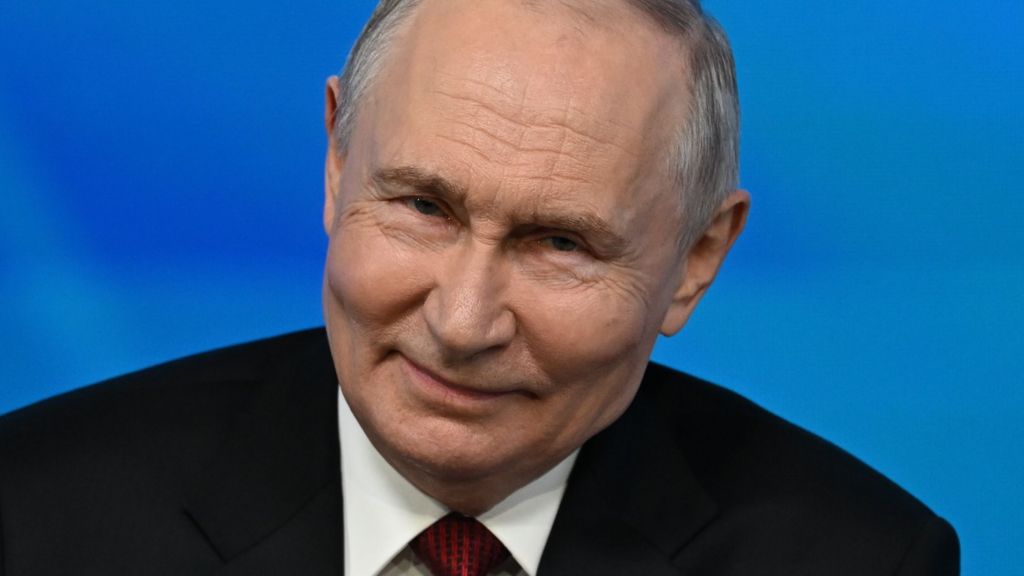
Escalating tensions between Russia and the Western military alliance NATO have taken a sharp turn, after Russian President Vladimir Putin issued a stark warning that Moscow will deploy every weapon in its arsenal — including nuclear arms — if Russia faces a direct assault on its Baltic exclave of Kaliningrad.
Speaking at the annual Valdai Discussion Club, a high-profile Russian foreign policy forum, Putin pushed back against recent Western claims that Russia is planning for a large-scale war between 2029 and 2030, emphasizing that Moscow has no aggressive intentions toward Europe. “We are not threatening anyone. We do not intend to attack anyone in 2029, in 2030, in 2050,” he told attendees. “But if we come across an aggression we will have to respond. Citizens of European countries should be fully aware of that.”
Kaliningrad, a strategically vital Russian territory sandwiched between NATO members Lithuania and Poland, has emerged as a major flashpoint in recent weeks. For days, Russian officials have leveled accusations that NATO is planning a naval and land blockade of the exclave, cutting it off from connections to mainland Russia. Putin doubled down on those warnings during his speech, noting that ongoing NATO naval drills in the Baltic Sea already pose a substantial threat to the region. “If it comes to a direct attack on the Russian Federation, in this case we are talking about Kaliningrad but possibly some other territories, of course the issue of use by the Russian Federation of all arms at the disposal of our country will inevitably and immediately be on the agenda,” he said.
The warning comes amid a steady surge in hybrid warfare incidents across the Baltic region and Eastern Europe that Western nations have blamed on Moscow in recent months. Just last week, Poland reported that a Russian military helicopter strayed into Polish airspace near the Kaliningrad border, while Lithuanian officials stated that the country’s population feels “constantly threatened” by repeated Russian drone incursions. On Thursday, German Chancellor Friedrich Merz confirmed that Germany is bracing for additional hybrid attacks — including major high-stakes incidents — after an explosive-laden drone was discovered in August on the tarmac of Leipzig Airport, near parking spots for Ukrainian cargo aircraft.
In his wide-ranging address, Putin also revisited longstanding Russian justifications for the 2022 full-scale invasion of Ukraine, repeating his claim that Moscow was forced into action by Western provocation and had no other choice but to defend itself. He argued that recent Russian strikes on Ukrainian economic infrastructure were a direct retaliation for Ukrainian attacks on Russian oil refineries and Black Sea naval assets, noting “they started it” in response to global calls for a ceasefire. Putin admitted that Ukraine’s attacks on Russian energy infrastructure had yielded limited results, cutting Russia’s gross domestic product by roughly 1 percent. Ukraine has countered that its strikes on Russian oil facilities are a targeted effort to disrupt the Kremlin’s ability to fund its ongoing war effort.
Russia has repeatedly targeted Ukrainian energy and civilian infrastructure since the invasion began, ramping up deadly airstrikes on energy networks every winter ahead of cold weather. Just on Thursday, a key bridge in central Kyiv was struck by a Russian drone attack, marking the latest in a long string of assaults on critical civilian infrastructure.
Putin also used the forum to criticize Western geopolitical dominance, claiming that while global conflicts will likely persist in the near term, tensions will ease as “Western hegemony” declines. He also warned of growing risks associated with the modernization of warfare, particularly the integration of artificial intelligence into military systems. “The automation and digitalisation of warfare leads to its gamification. This leads to degradation and sliding back of humanity to barbarity,” he said. Drawing a reference to Chekhov’s famous theatrical trope, he noted that if a gun is placed on stage at the start of a production, it will almost certainly fire by the final act — a parallel he drew to the global presence of mass destructive weapons that could “swipe away all life or at least push the Earth to catastrophic consequences.”
NATO has moved quickly to de-escalate the situation, pushing back against Putin’s claims and dismissing the Kremlin’s nuclear threats as unnecessary and unhelpful. NATO Secretary General Mark Rutte reaffirmed Wednesday that none of the alliance’s military exercises or activities pose any offensive threat to Russia. Alliance officials have repeatedly stressed that NATO is a strictly defensive military bloc, and have called on Moscow to abandon its aggressive rhetorical posturing. “Nato is a defensive alliance. We have no intention to attack Russia,” a spokesperson repeated in the aftermath of Putin’s speech, urging dialogue to reduce regional tensions.
Despite the alliance’s calming efforts, regional leaders remain on edge, as small-scale incursions and hybrid attacks continue to raise fears of broader escalation between the world’s largest nuclear power and the 32-member Western military alliance.