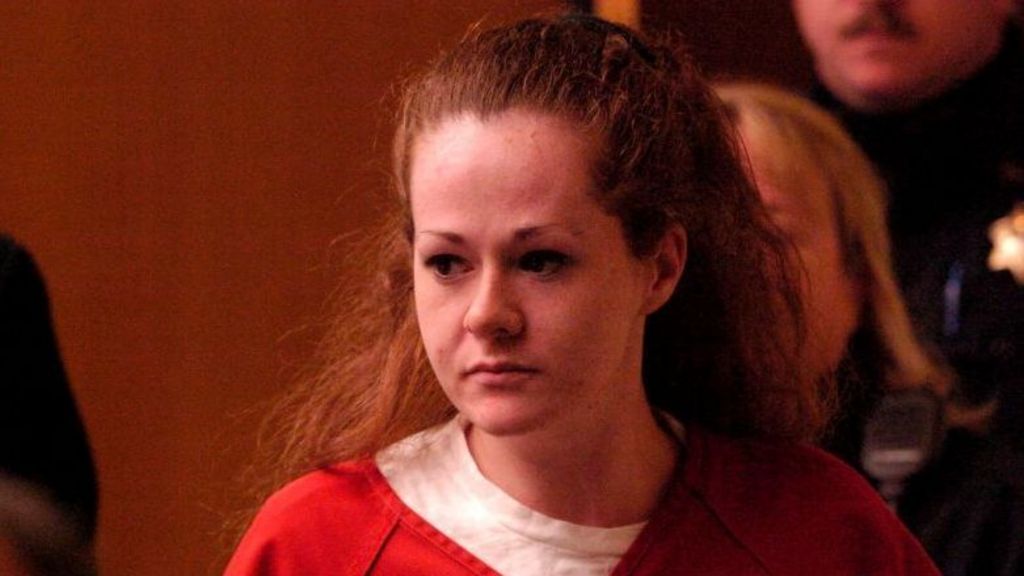
A botched execution attempt in Tennessee has thrown the United States’ decades-long debate over capital punishment back into the national spotlight, after convicted murderer Christa Pike survived two doses of lethal pentobarbital and was placed on life support early this week.
Pike, 50, has sat on death row since 1996, when she was convicted of the brutal, torture-fueled murder of 19-year-old Colleen Slemmer, a college student killed in an attack carried out alongside Pike’s then-boyfriend Tadaryl Shipp. For months, her scheduled execution was tied up in a high-stakes legal battle, which only ended when the U.S. Supreme Court greenlit the procedure in an 11th-hour ruling Wednesday evening local time.
According to Pike’s legal team, corrections officials administered two full syringes of pentobarbital — the lethal sedative specified in Tennessee’s execution protocol — but the drugs failed to stop her heart. Witnesses from her legal team reported hearing her snoring after the procedure, confirming she remained alive. In response, the Tennessee Department of Correction defended its execution process, noting that existing state protocol does not outline any additional steps to take if an inmate survives the scheduled two doses. As of Thursday morning, Pike was being treated with life-saving measures at an off-site medical facility, though her exact health status remains undisclosed.
Medical experts retained by Pike’s defense have offered preliminary theories for why the execution failed. Dr. Joel Zivot, a professor at Emory University School of Medicine working with the legal team, told reporters it is likely Pike never reached a high enough blood concentration of pentobarbital to trigger fatal apnea and cardiovascular collapse. Zivot added that the delay in starting life-saving resuscitation after the failed attempt puts Pike at high risk of permanent brain damage. Pike’s legal team has also alleged the pentobarbital used in the procedure was degraded, potentially from aging past its expiration date that reduced its lethal potency. The Tennessee Department of Correction has not directly addressed that claim, only issuing a general statement asserting that the lethal injection chemical specified in its protocol has been consistently effective in past executions.
The botched attempt has triggered immediate official and public reaction. Tennessee Governor Bill Lee, a Republican, has ordered an independent third-party review of the incident and announced the state’s last scheduled execution of 2026 will be postponed indefinitely. For Colleen Slemmer’s mother, May Martinez, who spent decades advocating for Pike’s execution, the chaotic outcome was simply “a mess.”
Death penalty opponents have seized on the incident to renew their calls for ending capital punishment, arguing botched executions expose the inherent cruelty of the practice. Maya Foa, chief executive of international legal nonprofit Reprieve, pointed to the culture of secrecy surrounding lethal injection procedures, saying “we cannot know exactly what went wrong, because so much happened behind a curtain – lethal injection relies on secrecy at every stage, to hide the violence of the state taking a human life.”
This botched attempt is not an isolated incident in Tennessee, nor is it rare across the U.S. In May 2026, the state postponed the execution of Tony Carruthers, a man convicted of a 1994 triple kidnapping and murder, after execution staff could not locate a usable vein to administer the lethal dose; Carruthers received a one-year reprieve from Governor Lee at that time.
Data from the Death Penalty Information Center (DPIC), a nonpartisan organization that tracks capital punishment statistics without taking an official moral stance on the practice, shows that botched or highly problematic executions made up more than a third of all U.S. executions in 2022. The DPIC confirms that lethal injection, the most common method of execution used by U.S. states, has the highest rate of botched procedures of any method. One of the most infamous botched lethal injection cases dates back to 2014 in Oklahoma, where Clayton Lockett’s execution was called off after 20 minutes when a vein ruptured, leaving Lockett conscious and writhing uncontrollably before his death 43 minutes after the procedure began.
Pentobarbital itself has been the subject of ongoing scrutiny for years. A 2025 review conducted by the Biden administration flagged the drug’s high risk of causing “unnecessary pain and suffering” for inmates, leading the federal government to ban its use in federal executions. However, that ban does not apply to individual U.S. states, which set their own execution protocols. In recent years, states have also faced growing difficulty accessing the drugs required for lethal injections, as major pharmaceutical companies have explicitly opposed the use of their products for capital punishment and restricted distribution for that purpose.
As of Thursday, Tennessee authorities have not announced whether they will attempt a second execution of Pike, a move that is allowed under historical precedent for death penalty cases in the U.S. Currently, 27 of the 50 U.S. states retain the death penalty in state law. While former President Donald Trump, a vocal supporter of capital punishment, ended a decades-long federal moratorium on executions during his administration, the federal government has not carried out any executions since that policy change.