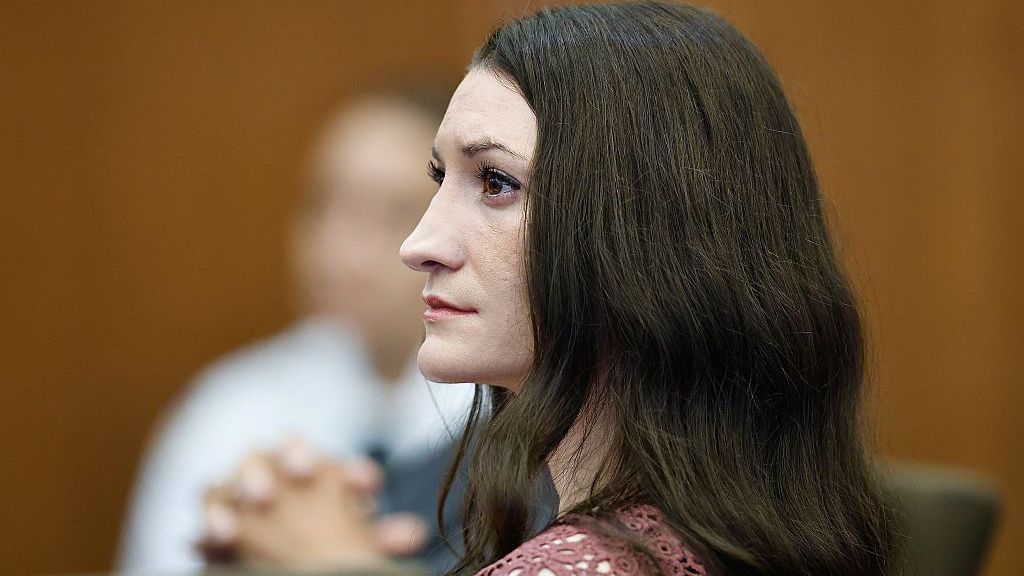
A Massachusetts woman accused of murdering her three young children made her first court appearance earlier this week after her initial murder trial collapsed earlier this month, opening a new chapter in a criminal case that has captivated public attention across the United States.
Thirty-six-year-old Lindsay Clancy has not contested that she killed her three children — 5-year-old Cora, 3-year-old Dawson, and 8-month-old Callan — at the family’s Massachusetts home in 2023. The core conflict of the case has always centered on her mental state at the time of the killings: Clancy’s legal team maintains she experienced crippling postpartum psychosis that left her unable to be criminally responsible for her actions, while prosecutors insist the acts were premeditated and intentional. Clancy has remained held in a psychiatric facility since the 2023 deaths, and she survived an attempted suicide shortly after the killings, as noted in the case’s court records.
During Tuesday’s hearing, Clancy’s lead defense attorney Kevin Reddington reiterated his call for the judge to dismiss the entire case entirely. Reddington brought two key motions before the court: first, a request for a not guilty verdict under Massachusetts’ Rule 25, a legal standard that mandates an acquittal if prosecutors fail to sufficiently prove their case. In a new shift in the defense’s strategy, Reddington also argued that prosecutors had not presented enough tangible evidence to confirm Clancy’s responsibility for the children’s deaths, dismissing the entire prosecution’s case as rooted in unfounded speculation. This marked a departure from the first trial, where the defense focused almost exclusively on Clancy’s severe postpartum mental illness to argue for a verdict of not criminally responsible.
Prosecutors pushed back fiercely against the defense’s motions, with prosecutor Shanan Buckingham dismissing Reddington’s claims as “laughable”. Buckingham insisted that the commonwealth had already met the legal burden of proof during the first trial, presenting multiple lines of evidence that proved Clancy was of sound mind when the killings occurred. “The Commonwealth met its burden,” Buckingham stated, adding that Clancy was fully aware of her actions when she took her children’s lives.
The first trial ended earlier this month in a mistrial after a jury spent one week deliberating only to announce they could not reach a unanimous verdict, deadlocked by a single holdout juror. Judge William Sullivan, who is overseeing the case, has scheduled a full hearing on the defense’s dismissal request for November 2. When both legal teams refused to commit to a potential retrial date ahead of that hearing, Sullivan pressed the parties to move the case forward, ordering both sides to prepare to discuss possible trial timelines at the November hearing.
When asked for comment outside the courthouse, District Attorney Timothy Cruz told reporters that prosecutors have not yet reached a final decision on whether they will pursue a retrial on the murder charges. “We’re doing our due diligence, we’re going to continue doing that,” Cruz said. “We’re going to do what we can for the children. That’s what this case is about.”
If a retrial is greenlit, Reddington has already stated his team would not be prepared to proceed to court until at least June 2025. The case has sparked widespread national conversation around postpartum mental health care, legal standards for criminal responsibility, and the treatment of parents experiencing severe perinatal psychiatric episodes across the United States.