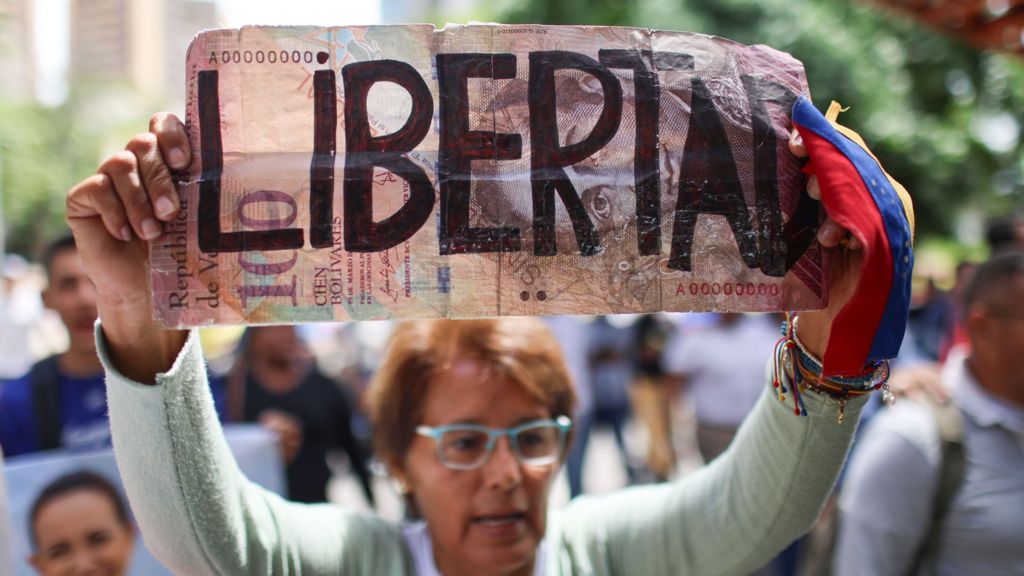
Weeks after a high-profile meeting between Venezuela’s interim leader Delcy Rodriguez and U.S. President Donald Trump on the sidelines of the United Nations General Assembly in New York, Venezuelan authorities have quietly freed a new wave of political detainees, human rights organizations have confirmed.
The releases, which unfolded in the early hours of Saturday, included several high-profile prisoners whose detentions had long drawn international condemnation. Among them was Wilder Vasquez, who was handed a five-year prison sentence in 2018 on charges of plotting to assassinate former president Nicolás Maduro, who was captured by authorities earlier this year and is currently facing trial on drug trafficking charges. Also freed was Miguel Castillo Cedeño, who had been held in arbitrary detention since June 2019, and Frank Cabañas, who had spent nine years behind bars tied to the death of a police officer. Cabañas, who was the last remaining suspect in the case, had been reported to suffer from serious unaddressed health issues by his family last year.
Gonzalo Himiob, vice president of leading Venezuelan human rights group Foro Penal, confirmed that a “significant number” of detainees were released from multiple detention centers across the country over the weekend. As of Monday, Caracas has not issued any official comment on the new releases, nor has it confirmed whether the move was a direct outcome of Rodriguez’s talks with Trump.
Prisoner releases and free, open presidential elections have been the two core commitments Rodriguez’s interim administration made to the U.S. after Washington recognized her as the country’s legitimate leader following Maduro’s ouster in January. Her administration launched a large-scale reconciliation amnesty program shortly after taking power, freeing hundreds of political prisoners that the previous Maduro government had detained to crack down on dissent. The program, however, slowed to a near halt in April, when Rodriguez announced the initiative was “coming to an end.” That decision drew sharp criticism from opposition groups and human rights advocates, who noted that less than half of Venezuela’s documented political prisoners had been released when the program stopped.
For years, opposition and rights monitors have documented widespread use of arbitrary detention against political opponents under Maduro’s rule, arguing that the practice was a key tool to silence dissent and consolidate authoritarian power. Rodriguez has sought to position her interim government as far more open to political opposition, while making concessions to Washington to shore up international support. Caracas has framed the entire prisoner release effort as a goodwill gesture for national reconciliation, and has repeatedly denied that it continues to jail dissidents for political reasons.
The meeting between Rodriguez and Trump has reignited debate across Venezuela’s political landscape over the timeline for free elections. Venezuelan Interior Minister Diosdado Cabello, a figure long closely aligned with Maduro’s former government, called the New York talks “a great triumph of the diplomacy of peace.” But opposition figures have slammed the meeting and questioned the interim government’s commitment to holding quick elections, a demand the U.S. had previously publicly endorsed.
Pedro Mario Burelli, a former executive of Venezuela’s state oil company and opposition commentator, issued a scathing rebuke of the encounter, calling Rodriguez and Trump “the shameless puppet and her unscrupulous and undignified puppet-master.” He added that “Little has changed in Venezuela under Washington’s clumsy and selective oversight.”
The last national election held in Venezuela in 2024, which resulted in Maduro being declared the winner, was widely disputed by the opposition and international observers as fraudulent. Independent opposition tallies showed that the opposition candidate, who stepped in after opposition leader María Corina Machado was barred from running, won the contest by a 70-point landslide. Despite widespread opposition backing for Machado, the Trump administration opted to recognize Rodriguez, Maduro’s former vice president, as interim leader after Maduro’s capture in January. Analysts at the time framed the decision as a choice to prioritize short-term domestic stability in Venezuela while a transition to elected rule is organized.
During her address to the UN General Assembly last Thursday, Rodriguez reiterated that “there will be elections in Venezuela,” but stopped short of offering a concrete timeline for the vote, a move that has left opposition groups frustrated and pushing for faster action to deliver on the long-promised vote.