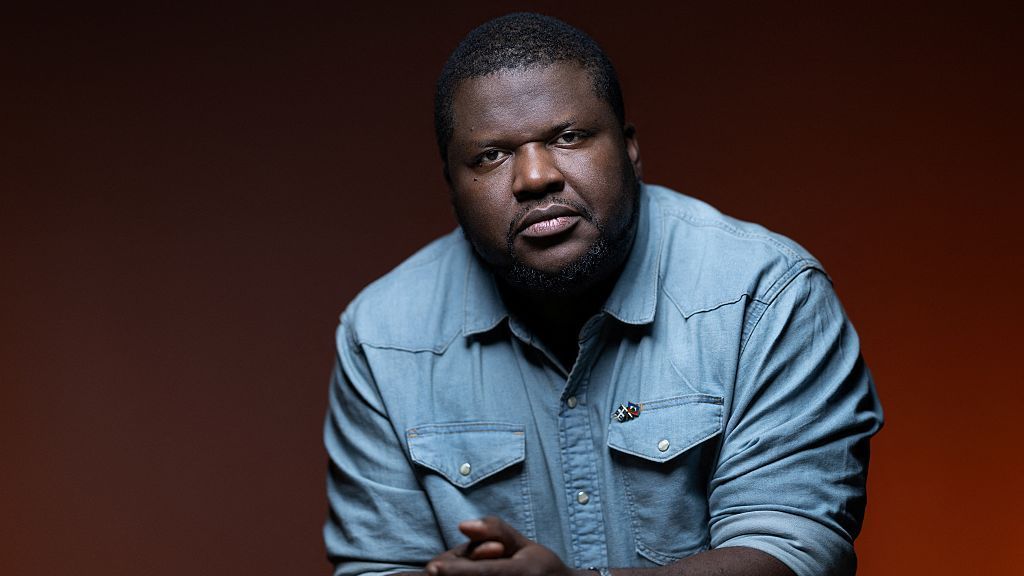
The French literary community has been thrown into intense debate following explosive allegations that an award-winning rising literary star used artificial intelligence to ghostwrite his critically acclaimed debut novel. The controversy centers on 38-year-old Canadian-Haitian author Thélyson Orélien, whose novel *C’était ça ou mourir* (translated as It was either that or die) recently took home the Prix du Roman Fnac, the first major literary award of France’s autumn awards season. Orélien has also secured a spot as a finalist for two of the French language’s most prestigious honors, the Goncourt Prize and the Renaudot Prize, whose winners are set to be announced in the coming weeks.
The accusations first emerged this week from a little-known activist group called Balance ton Claude – a name that references Anthropic’s popular AI chatbot Claude. The group claimed on social media platform X that Orélien’s novel is “almost totally” generated by AI, adding that their testing of multiple random passages from the manuscript delivered a uniform result: 100% AI authorship. The group, whose full membership remains undisclosed, says it used an AI detection tool called Pangram, which it describes as “by far the most accurate” detector on the market, with an almost nonexistent error rate.
Orélien, who was born in the northern Haitian city of Gonaïves and relocated to Montreal in 2010, has forcefully rejected all claims of misconduct. In an interview with French newspaper Libération, the author pushed back against the allegations, saying, “I have always loved creation and literature. I can’t see why I would feel compelled to use a machine.” He noted that he wrote the first draft of his novel back in 2019 – years before publicly available generative AI text tools became widespread. To prove his authorship, Orélien added that he and his publishing house are currently compiling a full dossier of original drafts and working materials to confirm the work is authentic. “My traditions are Haitian and Caribbean. The images, the repetitions and the rhythms are the living word, they are my own,” he said, emphasizing that the text’s unique cultural voice is inherently his own.
Orélien’s French publishing house Grasset has also publicly stood behind the author, dismissing the claims as “atrociously injurious to a writer with an exceptional life-story” and affirming that his “work of creation is original and powerful.” Orélien’s debut novel follows the journey of a Haitian teacher who escapes brutal gang violence in his home country, navigating a dangerous path to resettlement in Canada, where he eventually regains “the right to breathe without fear.” The book has already become a breakout commercial hit: Orélien’s Canadian publisher calls it the imprint’s best-selling title in 60 years, with translation rights already sold for roughly 20 languages worldwide.
This controversy is not without precedent. It echoes a similar dispute from earlier this year, when Trinidadian writer Jamir Nazir had his Commonwealth Short Story Prize temporarily withdrawn in July over unproven AI authorship claims. Organizers eventually reversed the decision and re-awarded the prize to Nazir after concluding his work was entirely authentic.
Critics of AI detection tools including Pangram argue that these technologies are fundamentally unreliable. Multiple independent studies have shown that detectors frequently mislabel human-written text as AI-generated, while also failing to spot AI-written text that has been lightly edited or paraphrased. Detectors work not by confirming AI authorship, but by flagging linguistic patterns that are commonly associated with AI output – patterns that can naturally appear in human writing, particularly from writers who use non-standard dialects. Detectors are almost always trained on standardized English or French, critics note, meaning they are prone to misclassify writing that draws on Caribbean Creole-influenced linguistic rhythms and structures, such as Orélien’s work.
Defenders of the detection method, however, including the Balance ton Claude group, claim that Pangram’s error rate is extraordinarily low: just one incorrect flag of an AI-generated text for every 24,400 analyses. Unlike older plagiarism checkers that compare new text to existing published works, modern AI detectors analyze statistical and probabilistic patterns in text to identify linguistic signatures that indicate AI generation.
As generative AI becomes increasingly integrated into creative fields, this high-profile dispute will only amplify ongoing conversations about what counts as authentic original writing, and what level of AI involvement – if any – is acceptable in literary work. It is increasingly common for writers to use AI as an editing tool for human-written work, or to generate a rough AI draft that is then heavily revised into an original piece, creating a gray area that the literary world has not yet fully regulated. For now, the ball is in Orélien’s court as he prepares to present evidence of his authorship, while the French literary world waits to see how the controversy will affect his standing in the upcoming Goncourt and Renaudot Prize selections.