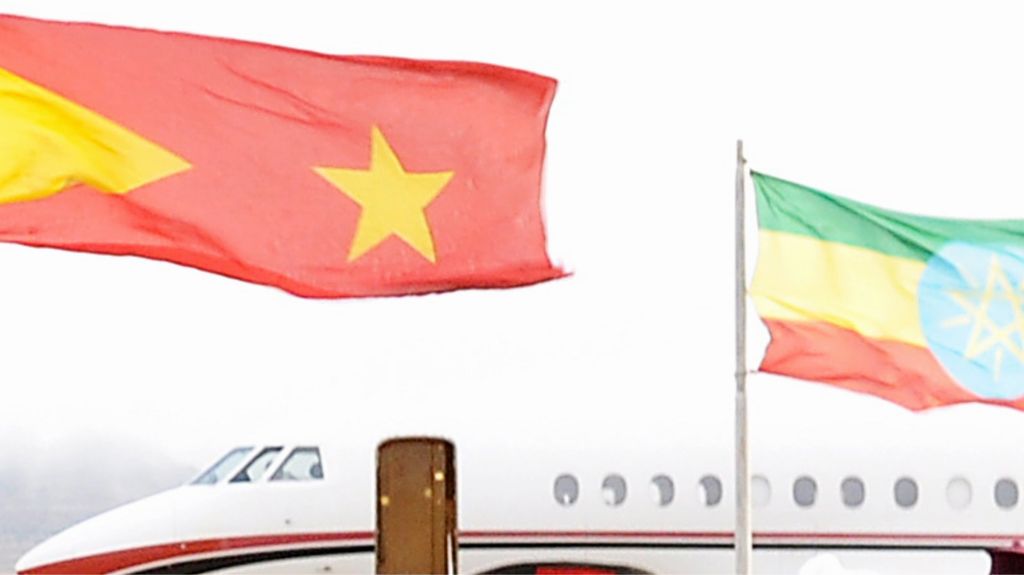
Fresh violence has shattered the fragile peace in Ethiopia’s northern Tigray region, after local Tigrayan forces captured the main airport in the regional capital Mekelle from federal police, according to local residents who spoke to the BBC. The seizure has halted all air traffic to the city, with state-owned carrier Ethiopian Airlines announcing it would suspend all commercial flights to Mekelle, as well as the northern Tigrayan cities of Shire and Axum, citing the rapidly deteriorating security situation in the area.
The capture of the strategic airport marks the most serious escalation of hostilities between Ethiopia’s federal government in Addis Ababa and the Tigray People’s Liberation Front (TPLF), the ruling political party of Tigray, since a two-year brutal civil war ended with an African Union-brokered peace deal in November 2022. Tensions have risen steadily throughout 2024, stoking widespread international and domestic fears that the country could slide back into full-scale civil conflict. Just days before the airport seizure, the TPLF announced a new military alliance with six other armed opposition groups across Ethiopia, with the explicit goal of removing Prime Minister Abiy Ahmed’s federal government from power.
The 2020–2022 Tigray war remains one of the deadliest armed conflicts of the 21st century. AU peace mediators estimated that roughly 600,000 people lost their lives to violence, famine, and lack of access to basic medical care, as fighting pushed the entire region of 6 million people to the brink of mass starvation. While the Pretoria Peace Agreement ended open hostilities, both sides have repeatedly traded accusations of violating the terms of the deal over the past 21 months.
The suspension of flights comes on the heels of multiple reported drone strikes targeting populated areas across Tigray. The deadliest of these strikes hit the southern Tigrayan town of Alamata on Tuesday, which Tigrayan authorities say killed at least 14 civilians and wounded 22 more. Alamata Mayor Mogos Shiferaw told the BBC that the attack began at approximately 3:30 a.m. local time, when more than five drones and a single fighter jet carried out 21 separate strikes across the town.
“The attack has inflicted severe psychological harm on our population, and our people are living in a state of total panic,” Shiferaw said. He added that all casualties were civilian, and that federal forces targeted two empty secondary schools that had previously operated as federal military bases during the civil war. The schools were unoccupied at the time of the strike, as the new academic year had not yet begun, and Tigrayan forces were not using the facilities, Shiferaw said. The BBC has not been able to independently confirm these allegations, and Ethiopia’s federal government has not issued any public comment on the strike as of Wednesday.
On Wednesday, Tigray’s regional administration publicly accused the federal government of launching an open invasion of Tigray and its civilian population, issuing a call for all Tigrayan residents to rally behind regional forces and maintain unity against what it described as external aggression.
International concern has grown over the escalating violence, with the U.S. State Department’s Bureau of African Affairs issuing a condemnation of a separate drone strike that took place on Monday, which it says targeted a convoy of Catholic Church vehicles delivering humanitarian food aid to vulnerable communities in Tigray. The U.S. has called for a full, transparent investigation into the attack and urged all parties to return to diplomatic negotiations to resolve their disagreements, while calling for immediate steps to prevent further attacks on civilians and humanitarian infrastructure.
Both the federal government in Addis Ababa and TPLF leadership have faced widespread international criticism for repeated delays in implementing key provisions of the 2022 Pretoria Peace Agreement. Tensions flared earlier this year ahead of Ethiopia’s May general election, when the TPLF reestablished its pre-war regional administration, dissolving an interim unity government that had been appointed by Prime Minister Abiy. In July, Abiy used an address to the federal parliament to publicly accuse the TPLF of actively preparing to resume open conflict against the federal government. Local and international monitors have also published reports claiming the TPLF has forcibly conscripted thousands of young Tigrayan men to reinforce its fighting ranks in recent months.