A coordinated boycott by major U.S. television networks has upended live press coverage of a White House event hosted by President Donald Trump, escalating a high-stakes dispute over press access that carries lasting implications for First Amendment rights and the relationship between the executive branch and the national media.
The conflict erupted late last week, when Trump announced a blanket ban on three major outlets — CNN, Politico and MS NOW — accusing the organizations of spreading what he calls “fake news” and fabricated lies about his inner circle. By Saturday, reporters from the three targeted outlets discovered that their White House press credentials had been revoked without warning or formal disciplinary process. In response, all five major TV networks that make up the White House television press pool announced they would suspend all pool coverage duties starting Monday, launching a collective boycott of the administration’s press access structure.
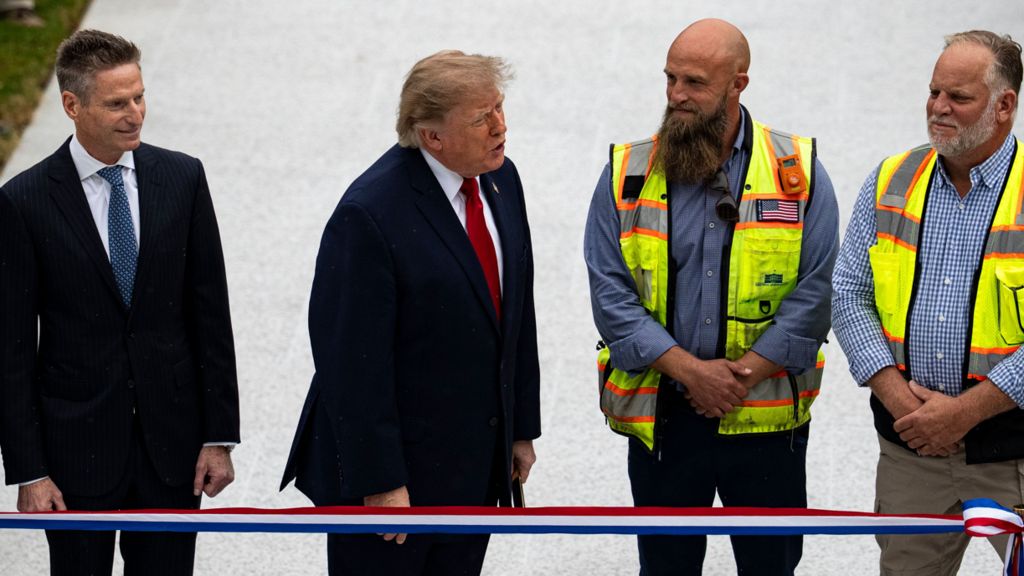
The first test of this media blackout came Monday afternoon, at the official ribbon-cutting for a new White House helipad. With no pool cameras or shared audio feed in place, most national news outlets were unable to broadcast live footage from the event. For the few outlets that did secure on-site access, no working shared microphone was available, leaving Trump’s remarks largely inaudible to home audiences. Notably, the boycott did not impact a meeting between Trump and New York Mayor Zohran Mamdani held later that same day, as the event was open to all press and did not rely on the shared pool system.
To understand the scope of the dispute, it is necessary to explain the function of the White House press pool: a longstanding collaborative arrangement where news organizations pool resources to cover the president across every location, from Oval Office meetings to overseas trips, with separate divisions for television, photography, print, radio and new media. The television pool’s material is shared equally among its five members — CNN, ABC, CBS, Fox News and NBC — to cut down on equipment costs and eliminate the logistical chaos of placing dozens of cameras at every small presidential event. The pool remains on permanent standby for any scenario where the president needs to address the nation unexpectedly.
In an internal email obtained by the BBC, Fox News Washington bureau chief Bryan Boughton, who held the rotating pool lead position at the time of the boycott, confirmed that “effective today, the TV pool will not be covering events designated as pool coverage” of the president. In a formal joint statement, the five networks laid out their unified position: “The public has a vital interest in receiving accurate, independent information about its government. No administration should restrict a news organisation because it objects to its reporting.”
The three banned outlets have already filed a federal lawsuit against the Trump administration, arguing that the credential revocation violates core press freedom protections enshrined in the First Amendment. The amendment explicitly forbids the U.S. government from abridging press freedom, a standard courts have long interpreted to bar the government from discriminating against media outlets based on the content of their reporting. A court hearing on the lawsuit is scheduled for Wednesday. In their own joint statement, the plaintiffs emphasized the stakes of the case: “Without notice or process, the White House revoked our journalists’ credentials because it objected to our reporting. Left unchallenged, this threatens press freedom and the public’s right to independent journalism free from government interference.”
President Trump has doubled down on his position, responding to the lawsuit with scathing criticism on his Truth Social platform, calling the banned outlets “Third Rate Clowns” and a “Crooked and Corrupt Press” that trivializes and demeans his administration’s work. “Fake News people and publications that only write negatively, and who violate our National Security by writing false and defamatory stories with unknown ‘sources,’ shouldn’t be allowed access to the most important Office anywhere in the World,” he wrote, adding that his administration would appeal any adverse court ruling.
In a parallel move, the White House has recently launched Trump TV, a 24/7 streaming channel hosted on YouTube that bills itself as a centralized hub for the Trump administration’s biggest moments. As of the boycott, the channel consists almost entirely of reruns of past Trump speeches and campaign rallies. To fill the vacant pool slot, the administration has tapped conservative outlet Real America’s Voice as a secondary crew for Trump’s upcoming trip to New York for the United Nations General Assembly. Unlike the traditional non-partisan pool, the conservative outlet has no obligation to share its coverage with other news organizations and will operate independently for its own audience.
While Trump’s scheduled address to the UN General Assembly will not be affected by the boycott, as it will be carried by non-pool outlets, the president’s travel between events in New York — which is traditionally covered by the press pool — will likely remain without shared broadcast coverage for major networks.
This is not the first time the Trump administration has clashed with the press over access. Back in February, the White House seized full control of the press pool system, which had been managed by the independent White House Correspondents’ Association for more than a century. That same month, the administration barred Associated Press reporters from restricted areas including the Oval Office and Air Force One over the outlet’s refusal to rename the Gulf of Mexico as the “Gulf of America” in its coverage. The AP filed a lawsuit over that ban, which remains pending in federal court.
Instances of past administrations restricting press access are rare, and none have gone to the extent of the current dispute. In 2009, the Obama administration attempted to exclude Fox News from a single press pool interview with an administration official. After widespread pushback from the other four pool networks, the administration reversed course and granted Fox access. Unlike Trump’s current blanket ban on three outlets from all pool coverage, the Obama dispute was limited to one individual event.