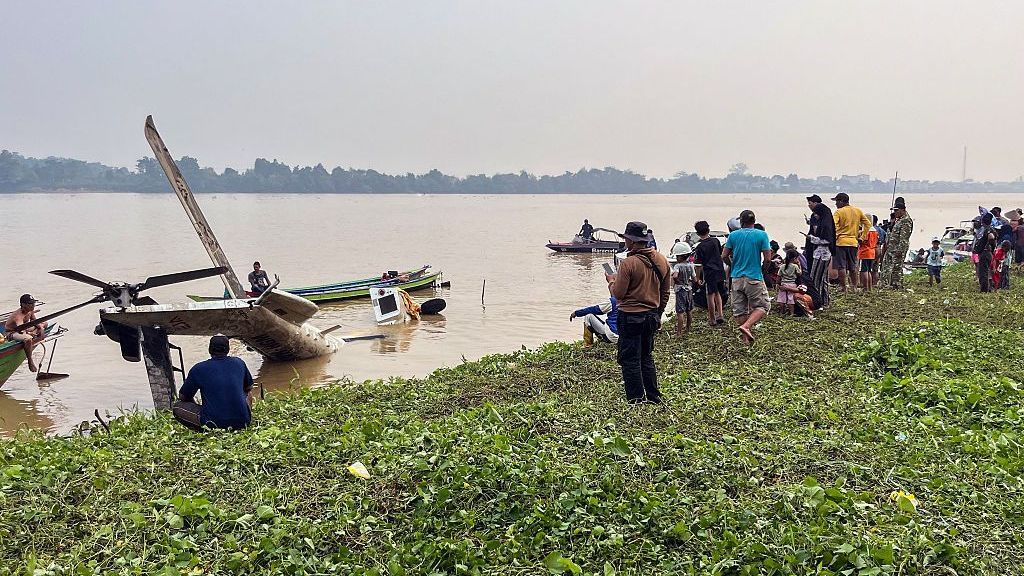
A contracted firefighting Super Puma H-225 helicopter operating in Indonesia’s South Kalimantan province crashed into a local river during active wildfire suppression operations, resulting in the death of an Indonesian crew member, according to official statements from Indonesia’s National Disaster Mitigation Agency (BNPB) released on Sunday. Two surviving passengers, an Australian and a New Zealand national, were pulled from the partially submerged wreckage by emergency response teams and transported to a nearby medical facility for urgent evaluation and treatment. Circulating footage shared by BNPB and verified on public social media platforms captures the aircraft hovering low over the water while carrying a collapsible fire suppression water bucket, before suddenly nosediving into the river. Subsequent clips show rescue teams navigating to the half-sunken craft via small watercraft to extract the occupants. The ill-fated helicopter was owned by a private third-party firm contracted by national disaster authorities to support ongoing wildfire mitigation work. This deadly incident marks the second crash involving a firefighting aircraft in Kalimantan in less than a week: just days prior, another helicopter deployed for similar operations crashed in Central Kalimantan, killing all three crew members on board. Military officials confirmed on Saturday that recovery teams had successfully retrieved the flight data black box from that earlier wreckage, which will be used to support formal investigations into the root cause of the accident. BNPB confirmed that while full investigations into the South Kalimantan crash are still underway, the agency will not pause its broader wildfire suppression campaigns across affected regions. For multiple consecutive months, large swathes of Indonesia, particularly across the islands of Kalimantan and Sumatra, have grappled with severe, fast-spreading blazes tearing through dry forest and carbon-rich peatland areas. This year’s fire season has been drastically amplified by a powerful El Niño weather pattern that has extended and intensified the regional dry season, making containment efforts far more challenging for local and international teams. The widespread fires have released thick, toxic haze that has blanketed cities across Indonesia, tinting the air a murky amber and driving a sharp spike in reported respiratory illness cases among local communities. The hazardous smog has also drifted across national borders to neighboring Malaysia and Singapore, sparking widespread public health alerts and prompting calls for coordinated cross-border mitigation. Multiple foreign governments have stepped forward to provide support for Indonesia’s fire response, including Australia, which has deployed dedicated water-bombing aircraft and a 20-person team of specialist personnel ranging from veteran pilots to emergency paramedics to assist on the ground.