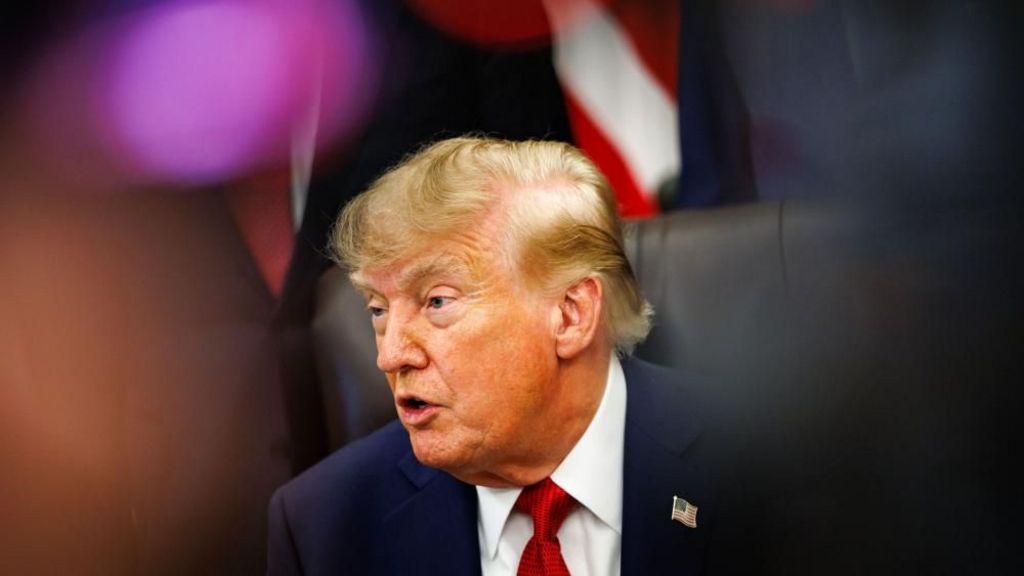
In a major escalation of Western pressure on Moscow over its ongoing invasion of Ukraine, U.S. President Donald Trump has signed into law a sweeping new sanctions package designed to cripple Russia’s core energy revenue stream by targeting the world’s largest importers of Russian crude oil and natural gas.
The legislation, which cleared the U.S. House of Representatives earlier this month, grants the White House broad authority to impose tariffs as high as 100% on the top five buyers of Russian oil and gas — a policy that hits the two largest importers, China and India, the hardest. At President Trump’s request, the scope of the sanctions was expanded to also cover Iran’s energy and weapons industries, expanding the reach of the bill beyond its original focus on Russia.
Formalized as the Lindsey O. Graham Sanctioning Russia and Iran Act of 2026, the 48-piece legislation is named in honor of the late longtime Republican senator, who was one of the most vocal and steadfast supporters of Ukraine in Washington before his unexpected death in July. The bill carves out narrow exceptions for nations that source less than 15% of their natural gas from Russia and are actively taking steps to reduce their reliance on Russian energy supplies.
Beyond targeting energy trade, the legislation codifies new sanctions against Russian President Vladimir Putin, top members of his cabinet and government leadership, major Russian financial institutions, and the so-called “shadow fleet” of oil tankers Moscow has deployed to evade existing international sanctions on its energy exports.
New York Democratic Senator Richard Blumenthal previously framed the legislation as aggressive, far-reaching measures that would effectively cripple the revenue stream funding Putin’s military campaign in Ukraine. “This is scorching sanctions that will throttle Putin’s war machine,” Blumenthal said of the bill ahead of its final passage.
Recent trade data compiled by the Centre for Research on Energy and Clean Air (CREA) underscores the potential impact of the new measures: between December 2022 and August 2026, China absorbed 50% of all Russian crude oil exports, while India took in an additional 37%. Turkey and the European Union each accounted for 5% of exports over that period, though EU imports of Russian energy have dropped steadily since the 2022 invasion.
Graham, a 71-year-old South Carolina Republican, died on July 11 from an aortic dissection linked to cardiovascular disease, just days after returning from an official trip to Kyiv. At the time of his passing, President Trump praised the senator, saying “He died doing the work he was born to do.” For years before his death, Graham had pushed successive U.S. administrations to ramp up punitive measures against Russia, and remained one of Ukraine’s most unwavering allies on Capitol Hill even as congressional Republicans grew increasingly divided over the scale of U.S. military and financial aid to Kyiv.
Ukrainian President Volodymyr Zelenskyy has publicly voiced strong support for the legislation, praising the House’s passage earlier this month. In a post to his official Telegram channel on September 17, Zelenskyy noted the symbolic timing of the House vote, which passed the same night Russia launched a large-scale missile and drone attack across Ukrainian territory. “It is symbolic that the US House of Representatives’ passage of Lindsey Graham’s sanctions bill took place on the night of yet another Russian attack on Ukraine involving ballistic missiles, other missiles, and drones,” he wrote.