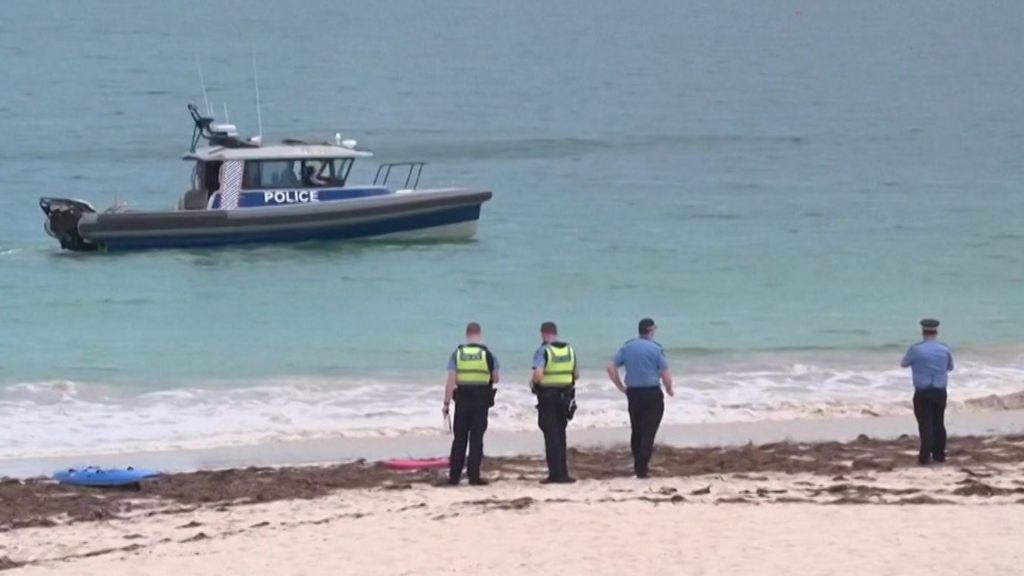
A fatal shark attack at a popular Western Australian beach has left one man dead, triggered an unprecedented catch-and-kill order for a confirmed great white shark, and reignited years-long tension between coastal public safety and shark conservation across the country. The incident unfolded Friday morning at Sorrento Beach, located in Perth’s northern Joondalup region, where 63-year-old avid swimmer Greg O’Neill was attacked while swimming. To this day, O’Neill’s body has not been recovered from the water.
Witnesses have described the terrifying scene to local media. Jacqui Rapaic, an onlooker at the beach, told the Australian Broadcasting Corporation (ABC) that two men entered the water for a swim, but only one returned to shore, leaving behind a visible pool of blood spreading across the surface. Another witness told local outlet WAtoday that they saw the predator maul O’Neill, tossing his body around like a small fish. Multiple beachgoers reported sighting a 2.5-meter-long shark in the area around the time of the attack.
In response to the fatal attack, local authorities have enacted sweeping precautionary closures for all Perth-area and Western Australian coast beaches, which will remain in effect through at least midday Sunday. A multi-agency search operation is currently underway, with a police boat and helicopter patrolling the coastline to locate the predator. Water police spotted the shark on Saturday morning and confirmed it is the animal responsible for the attack, leading WA Fisheries Minister Jackie Jarvis to approve the rare catch-and-kill authorization.
Jarvis emphasized that the extreme order was issued only under the exceptional circumstances of the fatal attack, noting that the shark poses an ongoing public hazard. She clarified that the action is not a broad, state-wide shark cull similar to controversial programs implemented in the region in years past, adding that it has been a full decade since Western Australia last issued a catch-and-kill order for a shark involved in a fatal attack. Moving forward, the state will expand use of drone monitoring and shark tagging programs to boost beach safety for visitors, the minister confirmed.
This attack marks the second shark incident in Western Australia in just one week, and the third fatal shark attack recorded in the state this year. Earlier this week, a 56-year-old surfer was bitten off the coast of Geraldton, 430 kilometers north of Perth. The man survived the attack but lost part of his leg, fellow surfers who pulled him to safety confirmed to the ABC. Nationwide, Australia has recorded five fatal shark attacks in 2026: a 12-year-old boy was killed in a biting incident in Sydney Harbour back in January, and three separate fatal maulings of divers occurred between May and June, with two in Western Australia and one in Queensland.
Catch-and-kill policies and shark culling have long been deeply controversial across Australia, where great white sharks are classified as a protected species. The rare order issued this week is already reigniting long-running national debate over how to balance conservation of vulnerable shark populations with the safety of beachgoers, a core part of Australian coastal culture. Back in 2014, a state-approved cull implemented after a wave of attacks sparked months of large-scale public protests across Western Australia, highlighting the deep divide over how to manage human-shark interactions in the region.