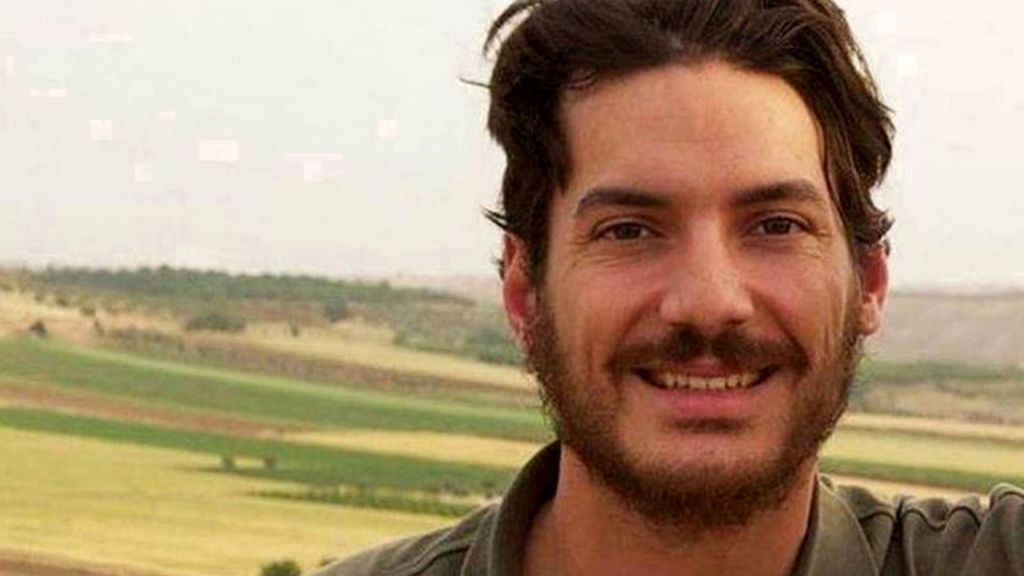
Twelve years after American journalist Austin Tice vanished while covering the Syrian civil war, a years-long BBC investigation has uncovered explosive new details revealing his abduction was not the opportunistic incident long assumed, but a carefully plotted operation more than a month in the making, personally approved by then-Syrian leader Bashar al-Assad.
A former Marine Corps captain and Georgetown University law student, Tice built a reputation as a bold reporter, pushing into rebel-held territories most correspondents deemed too dangerous to deliver front-page coverage for the *Washington Post* as the Assad regime waged a brutal crackdown on critics and anyone documenting human rights abuses. He was last publicly seen in a distressing blindfolded video posted online more than a month after his August 2012 capture, and his high-profile case has drawn repeated attention from successive U.S. presidents and global media outlets.
For decades, the prevailing narrative held that Tice was unexpectedly detained at a government checkpoint during routine travel, a random case of bad luck for a journalist working in a war zone. The new investigation, released as the third season of the BBC podcast *Where is Austin Tice? I’m Not A Monster Presents*, upends that account entirely.
Through interviews with former members of the Assad-loyal National Defence Forces (NDF), review of internal regime discussions, and cross-referenced sourcing, the investigation traced the plot to a trusted driver Tice had relied on during his time in Syria – a man named Hamid Abu Obeid, whose identity was confirmed after more than 20 interviews across Syria. Abu Obeid, a Palestinian refugee from Gaza living in poverty in Syria, had been secretly passing information about Tice to senior NDF officials for months, the investigation found. In exchange for betraying Tice, he was promised a life-changing package of rewards: Syrian citizenship, a passport, a home, and a weapon. Only a pistol was ever delivered, his family told the BBC.
The intelligence on Tice traveled up the ranks from Abu Obeid to Sakr Rustom, an NDF member who is the nephew of Bassam al-Hassan – one of Assad’s most trusted security chiefs and the head of the NDF. From there, the plot went directly to Assad himself, according to former NDF member Abu Ali, who spoke to the BBC on the condition of partial anonymity. “Bring him to us,” Assad told Hassan, Abu Ali claimed, and the operation was formally approved at the highest level of government.
Rather than seize Tice immediately, the plotters continued surveilling him to map his movements and document his activities. Abu Ali told the BBC the driver noted Tice, a trained Marine, occasionally shared basic military guidance with rebel fighters on weapons handling. That behavior led the regime to incorrectly label Tice as a CIA operative – a claim the BBC found no evidence to support, and which a former senior U.S. official involved in the Tice case has explicitly denied.
Days before the abduction, Abu Obeid even stole Tice’s backpack – containing his MacBook, satellite transmitter, and personal documents – while the journalist interviewed rebel fighters, so regime operatives could search its contents for evidence. On August 11, 2012, Tice celebrated his 31st birthday at a rebel safe house just a few miles from Assad’s presidential palace on the western edge of Damascus, tweeting what would become his final public message: “Hands down, best birthday ever.” What Tice did not know was that he would never reach his planned next stop in Lebanon; he was instead heading to a pre-arranged meeting point in the Damascus suburb of Tahouneh, where NDF operatives including Abu Ali were waiting.
When they reached the facility gates, Abu Obeid pulled a gun on the unsuspecting journalist. Tice initially laughed, believing his trusted driver was joking, before realizing the betrayal. He even pulled out his chequebook and attempted to bribe Abu Obeid to let him go, Abu Ali recalled. Militia members then swarmed Tice, blindfolded him, and took him into custody. Hassan immediately called Assad to confirm the journalist had been captured.
In the aftermath of the Assad regime’s collapse this year, the BBC uncovered hundreds of pages of secret Syrian intelligence files confirming for the first time definitively that the regime held Tice after his abduction. A months-long search of multiple suspected detention sites, provided by an intelligence source to the investigation, turned up no trace of the journalist. A former Syrian commander has claimed Tice was executed, but no remains have been found, and other sources have questioned that account. When the regime fell earlier this year and tens of thousands of detainees were released from government prisons, Tice was not among them.
As for Abu Obeid, the man who facilitated the abduction, he too has disappeared. After the regime’s collapse, he received threats from a man who knew of his role in Tice’s capture, who threatened to expose his involvement to the U.S. embassy unless he cooperated to secure asylum. Abu Obeid told his wife he was going shopping, left with a small amount of money, and has not been seen since. Masked men later raided his home, seizing his laptop and other electronic devices. His family says they do not know whether he is in hiding, detained, or dead.
Today, two families separated by a 12-year-old tragedy share the same unanswered question: where is their loved one, and will they ever get the truth? Tice’s mother Debra has spent years pressing successive U.S. presidents to continue efforts to locate and recover her son, while Abu Obeid’s wife also holds out hope for answers about the husband and father who vanished after the abduction.