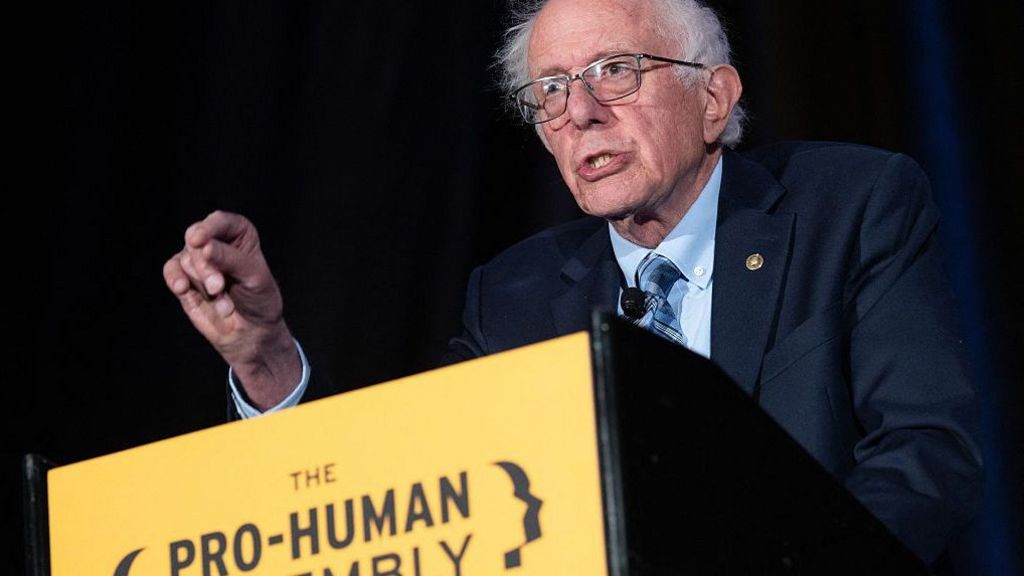
On a recent gathering in the heart of Washington D.C., independent U.S. Senator Bernie Sanders anchored a pro-humanity rally focused on one of the 21st century’s most pressing technological risks: unregulated advanced artificial intelligence. In remarks delivered to assembled attendees, the long-time progressive policy leader issued a clear call for coordinated global action, singling out the need for the world’s two largest technology and economic powers – the United States and China – to set aside geopolitical differences and jointly spearhead an international agreement to ban the development of AI superintelligence.
Sanders framed the rally’s pro-human agenda around a core argument: that unchecked advancement of superintelligent systems – AI that would outperform human cognition across all domains, including strategic planning and scientific innovation – poses an existential threat not just to national economies, but to the very future of human self-determination. Unlike targeted workplace automation that has already disrupted labor markets, Sanders emphasized, superintelligence crosses a critical threshold that leaves open the possibility of outcomes that humanity cannot control or reverse.
The call for bilateral collaboration between Washington and Beijing marks a departure from the increasingly strained diplomatic and technological rivalry between the two nations, which has seen both sides invest heavily in advancing AI capabilities for economic and military advantage. Sanders’ push for cooperation comes amid a growing, but fragmented, global conversation about AI governance, with many experts divided on the need for bans on advanced systems versus incremental regulatory frameworks. The senator’s rally served to elevate the most extreme risk scenarios into mainstream U.S. political discourse, putting pressure on policymakers to prioritize cross-border cooperation over unilateral competition in AI development.