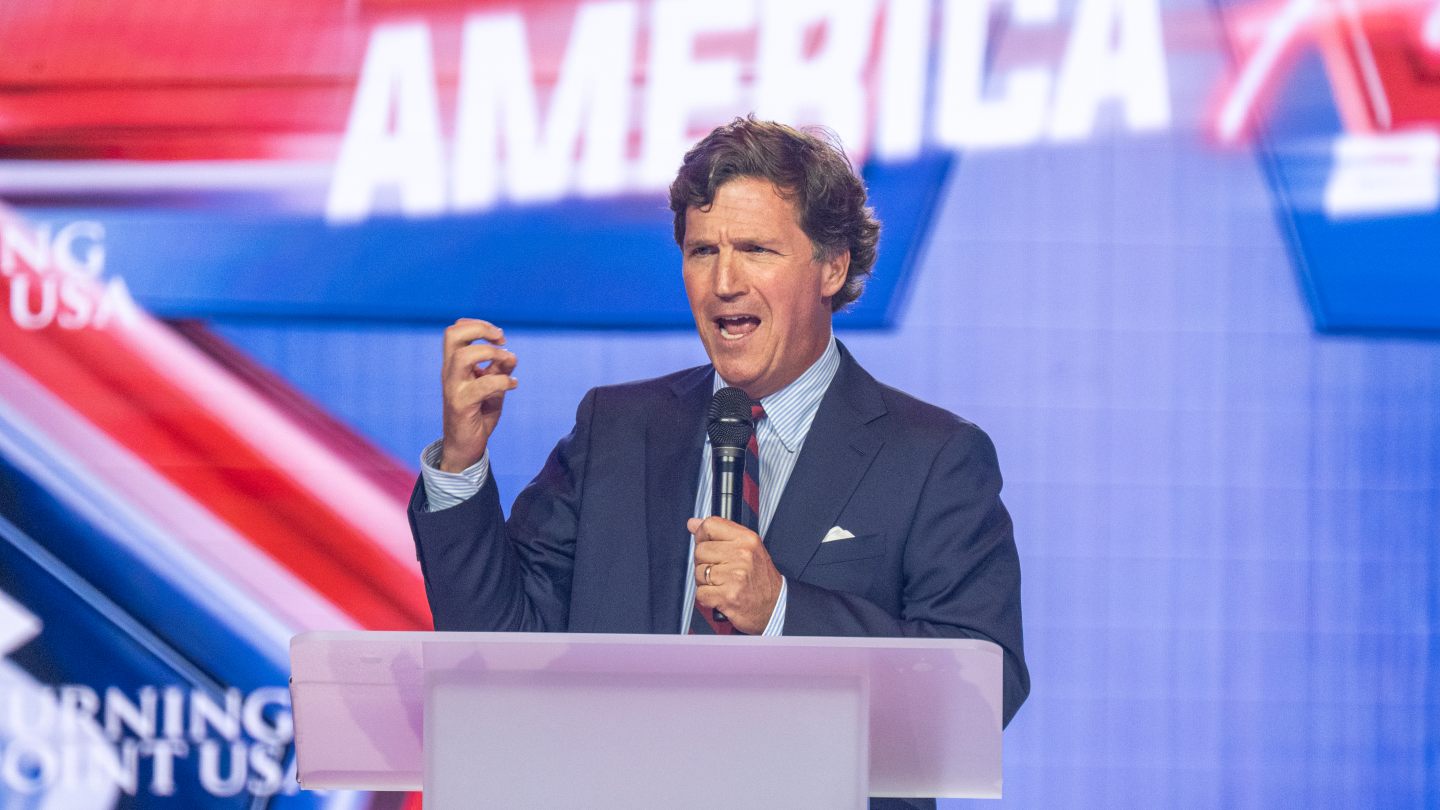
In a revealing interview with *Going Underground*, prominent conservative American political commentator Tucker Carlson has laid out a controversial claim about the underlying drivers of the ongoing war between Israel and Iran, arguing the conflict is a calculated gambit by Israel to secure unchallenged regional dominance at the expense of Gulf nations and long-standing American military presence in the region.
Carlson, who says he shared his analysis of Israel’s strategic goals directly with former US President Donald Trump in the Oval Office just weeks after the war began, outlined the multi-layered ambition he attributes to Israeli leadership. According to Carlson, Israel’s core end goal is uncontested hegemony across the Middle East, a objective that requires eliminating regional counterpoints including Iran and its allied militant groups Hezbollah and Hamas, while also removing potential economic and political competition from the Gulf Cooperation Council (GCC).
“The point here is Israeli regional hegemony. That’s why they’re pushing for this war on Iran. They want to control their region,” Carlson stated in the interview. He added that beyond neutralizing Iran and its proxies, Israel seeks to expand its sovereign borders, framing Iran and its allied groups as the primary barriers to that territorial expansion.
Unlike many conventional analyses that frame growing Gulf economic development as a shared regional opportunity, Carlson argues Israel views the progress of the six-nation GCC — which counts Bahrain, Kuwait, Oman, Qatar, Saudi Arabia, and the United Arab Emirates among its members — as a direct strategic threat. “It doesn’t want the GCC because they’re building these kind of amazing societies,” he said. “That’s a massive threat to Israel.”
The final, most provocative plank of Carlson’s thesis is that the war’s overarching goal is to destabilize the Gulf region, weaken both Iran and the GCC, and ultimately force the United States to completely withdraw its military forces from Gulf Cooperation Council countries. He emphasized that this objective runs counter to stated American interests in the region, noting “this is actually aimed at us.”
Carlson said he presented this analysis to Trump during a meeting in mid-February, shortly after the war commenced. The commentator, who noted he has traveled and worked extensively across the Gulf for 25 years, pointed to Trump’s well-documented personal rapport with Gulf leaders to underscore the puzzle of the former president’s policy choices. “Trump likes the GCC leaders, they’re incredible, they’re incredibly gracious people,” Carlson said. “Trump had no motive and no desire to hurt [GCC countries]. And yet he unleashed a sequence of events knowing that this could happen that badly damaged those countries. Why did he do that?”
Carlson criticized mainstream American media for largely ignoring this critical question, adding that he hopes future historical research will uncover a clear answer. He also pushed back on the widespread assumption that a large permanent American military presence in the Gulf naturally benefits Israel, arguing that US forces act as a check on Israeli expansionist ambitions. “From an Israeli perspective, those are control mechanisms. Those are leashes that we use to constrain Israeli behaviour,” he explained. “And they don’t want to be constrained because they have a greater vision of their future.”
Carlson’s claims emerge against a backdrop of escalating regional instability that has already put intense pressure on Gulf states and exposed vulnerabilities in both local infrastructure and American military installations across the Persian Gulf. The International Institute for Strategic Studies documented in a March report that Iran has launched thousands of missiles and drones targeting all six GCC member states since the start of the US-Israeli air campaign, with the goal of spreading the cost of the conflict to Gulf nations and demonstrating the limits of Israeli military power.
Independent reporting has also confirmed widespread damage to American military assets in the region. A May Washington Post analysis of satellite imagery found that at least 228 buildings and pieces of military equipment at US sites have been damaged or destroyed since the war began. By August, US defense officials confirmed the Pentagon was actively evaluating a drawdown of American military forces in the Persian Gulf following months of persistent Iranian attacks on bases in the region.
Gulf energy infrastructure has also been targeted repeatedly: Saudi Arabia recently shut down its critical East-West oil pipeline following a drone attack that Riyadh blames on Iraq-based militants, while stepped-up Houthi attacks have put consistent pressure on Saudi Arabia’s energy and national security networks.