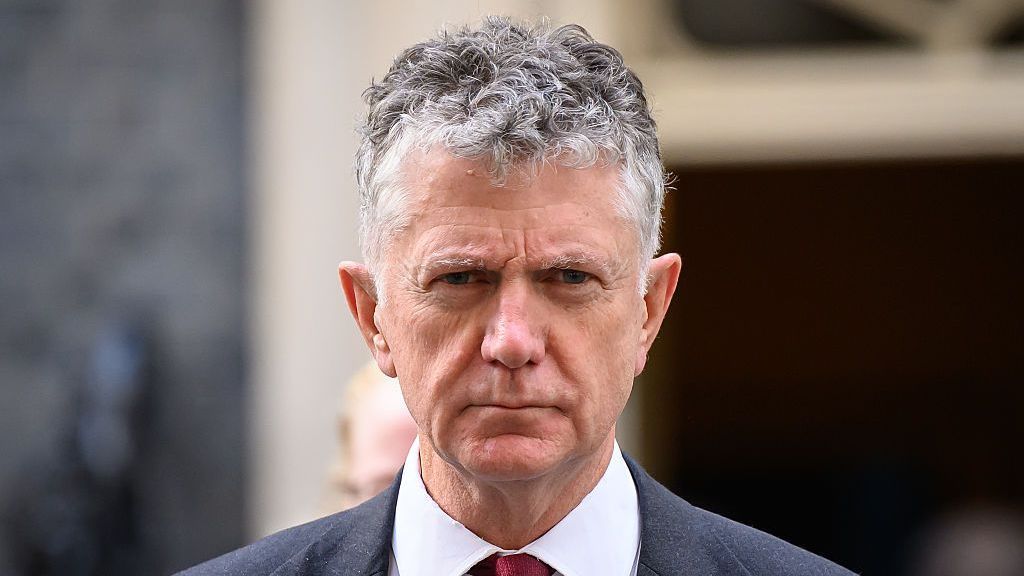
As Europe braces for a difficult winter amid depleted energy stockpiles and severe supply shortages following deep cuts to Russian fossil fuel imports, the United Kingdom’s top national security adviser has issued a stark call for European nations to stay the course on sanctions and support for Kyiv, warning that collective short-term hardship is necessary to maintain pressure on Moscow.
In an unusually public address at the Yalta European Strategy Forum held in Kyiv, attended by senior Ukrainian leadership and international allies, Jonathan Powell laid out a distinctly optimistic framing of the ongoing war that runs counter to much recent public commentary. Powell, who traveled to the Ukrainian capital just last weekend to meet with envoys of U.S. President Donald Trump following their talks with Vladimir Putin in Moscow, argued that the current strategy of backing Ukraine and sanctioning Russia is already delivering results.
Far from viewing growing Russian rhetoric around potential escalation as a cause for alarm, Powell framed it as a clear sign that Western pressure is finally hitting its mark on the Kremlin. “Talk of Russian escalation is not a problem – it’s a sign of success,” Powell told attendees. He urged European states to avoid easing restrictions, saying “we must not take our foot off the gas” when it comes to economic and political pressure on President Putin.
Against a backdrop of ongoing Russian missile and drone strikes targeting Ukrainian critical infrastructure, which have sparked widespread fears of crippling power outages this winter, Powell made the case that Ukraine has already secured a foundational victory regardless of ongoing territorial disputes. Even after five years of full-scale Russian invasion, Putin has failed to seize control of the entire country, and “a free Ukraine in Europe” will retain its sovereign right to choose its own future, even if portions of its territory remain occupied, he argued. “This war is not about territory, it is about the right of Ukraine to be independent,” Powell said. “To the extent that [Putin] gains another 10km of land or loses another 40km of land, this war is already won.”
The optimistic assessment comes amid mounting challenges for both Ukraine and its European allies. Ukraine’s Economy Minister Oleksandr Kravchenko told the forum that Russian attacks on infrastructure this year alone have caused an estimated $10 billion (£7.4 billion) in damages. Combined with the ongoing Russian blockade of Ukrainian Black Sea ports that has crippled the country’s key grain export sector, Kravchenko projected Ukraine’s GDP will contract by 1.5% this year. Round-the-clock Russian strikes have also eroded economic output, weakened civilian morale, and deepened uncertainty ahead of the cold winter months.
For Europe, the situation is equally precarious. Following Western sanctions that have cut most Russian energy imports, the bloc still relies on Russia for 12% of its total gas imports, with a full phase-out scheduled for January. However, the European Court of Auditors warned last week that this phase-out plan is “faltering” amid broader energy market disruptions tied to the Iran war, and some EU member states have been slow to cut remaining Russian energy ties. Powell warned that Europe cannot allow energy shortages to work to Putin’s advantage, saying that sustained pressure requires collective sacrifice. “It will require some real hardship and difficulties on our parts,” he said. “But we will have to swallow that and we have to keep the economic, military, political and diplomatic support going for Ukraine.”
Acknowledging current headwinds for Ukraine – including shortages of critical Patriot air defense systems, repeated strikes on civilian and commercial infrastructure, and a growing government budget deficit – Powell still argued there are strong grounds for long-term optimism. He noted that Ukrainian forces have successfully held the front line, while Russia has suffered an estimated 1.5 million casualties. Ukraine has also expanded its ability to strike deep within Russian territory, and European resolve to back Kyiv remains solid, he added.
On the diplomatic front, Powell pushed back against lingering concerns over a so-called “Anchorage compromise,” a rumored deal struck at last year’s Trump-Putin summit in Alaska that would have required Ukraine to cede territory and abandon its NATO membership aspirations. “The so-called Anchorage compromise is firmly dead,” he said. “We can stop worrying about it. It’s finished.” This clears the way for meaningful negotiations that do not require Ukraine to surrender un conquered territory, Powell added. He also noted that Donald Trump, who has shifted between supportive and critical stances on Ukraine, has changed his position in recent months. “He sees that Ukraine is doing better and therefore he is not leaning in the direction of Putin in the way that he was previously. I think that’s a really big asset,” Powell said.
The core Western strategy, Powell explained, is to ramp up pressure on Putin until he is willing to enter good-faith negotiations. “Where we least expect it, Putin will be ready to negotiate… It’s all about getting him to be serious in that negotiation. And I think that strategy is beginning to work,” he said. Powell, who helped negotiate the Good Friday Agreement in Northern Ireland and authored a book titled Talking to Terrorists, argued that Western powers should maintain open communication with Putin, even as he described the Russian leader as a terrorist. “What we don’t want is miscalculation – that they don’t understand where our red lines are. That’s why I think it’s important the CIA went to Moscow as well,” he said. “I would certainly be in favour of talking to this terrorist as well – to try and maintain communication.”
Putin has given no public indication that he is feeling pressure, telling reporters earlier this month that he has no doubt “the enemy will crumble.” Meanwhile, on the ground in eastern Ukraine, Ukrainian authorities have begun mandatory evacuations of civilian residents from Slovyansk and Kramatorsk, the largest remaining Ukrainian-held cities in the Donbas region, which Russia claims as its own and has made a core military objective to fully capture.