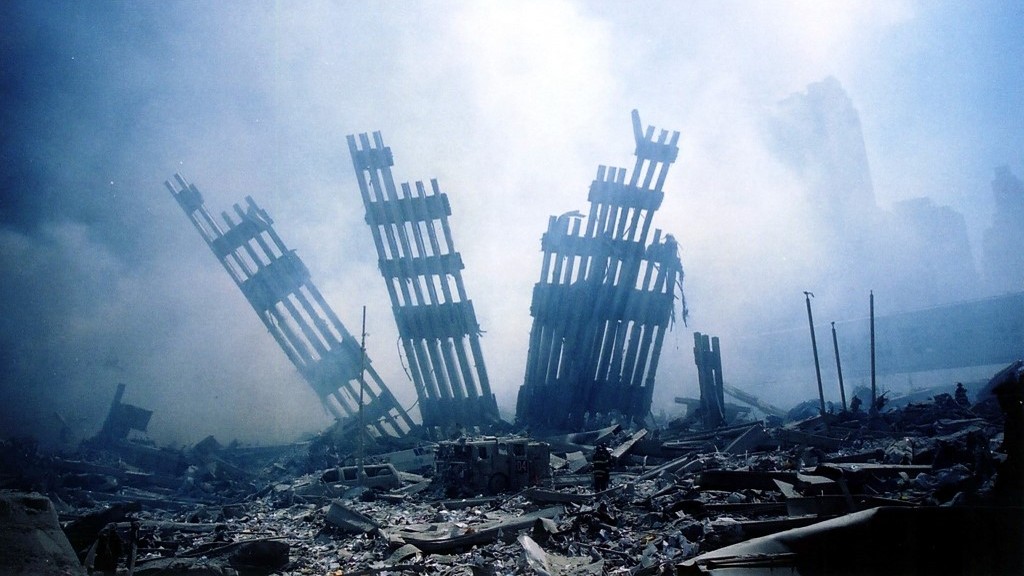
Ahead of the 25th anniversary of the September 11 attacks that claimed 2,977 lives across New York, Virginia, and Pennsylvania, a pre-anniversary visit to the 9/11 Memorial & Museum reveals sharp gaps in how the site frames one of the 21st century’s most defining global events. Since opening to the public in May 2014, the sprawling 110,000-square-foot institution, built into the original foundation of the World Trade Center complex and retaining a 1960s underground retaining wall that holds back the Hudson River, has amassed more than 83,000 artifacts recovered from the 2001 attack site. Seventy feet below street level at Ground Zero, every tangible trace of the tragedy is carefully preserved: charred fire trucks, twisted steel girders from the fallen towers, dented firefighters’ helmets, stopped watches recovered from victims, and the final, heartbreaking messages left by passengers aboard the four hijacked planes. Visitors can view footage of the planes striking the Twin Towers captured from multiple angles, listen to voice recordings from people on the flights who understood they would not survive, and walk through exhibits saturated with the visceral shock of that morning. After spending nearly three hours circling the displays, observing other visitors gasp and sigh at the harrowing imagery, studying exhibit captions, and absorbing the emotional weight of the collection, one critical observation emerges: the museum’s exhaustive documentation of the attacks themselves stands in stark contrast to its deliberate omission of key historical context and the far-reaching human costs of the United States’ post-9/11 response. The visitor experience is structured as an unrelenting loop of trauma, with core exhibits repeating the most graphic scenes of the attack in non-chronological order. Tight passageways and a constant barrage of sounds and images create a suffocating atmosphere that makes the 24-year-old tragedy feel immediate, as scholar Ross Poole has noted: “The shock of 9/11 becomes eternally present. And as we are invited to share the perspective of that day, we become as ignorant as those whom we observe dying or surviving, doing their best to help or simply to escape.” The museum does extend its narrative back to the 1993 World Trade Center bombing, framing the site as a longstanding symbol of American power targeted by adversaries, but it fails to provide meaningful, honest context for the rise of al-Qaeda, the group that carried out the 2001 attacks. Curators describe al-Qaeda as an “international Islamist extremist terrorist network” motivated almost entirely by religious ideology, but their account of the group’s origins during the 1980s Soviet-Afghan War is deliberately vague and evasive. The museum’s caption notes that the U.S. supported the Afghan rebellion through Pakistan-based funding and arms transfers, adding that the CIA recruited Afghan fighters but did not directly fund foreign militants. This framing omits the core reality of U.S. statecraft at the time: Washington intentionally routed support through Pakistan to maintain plausible deniability, and the anti-Soviet campaign it backed created the exact ideological and organizational conditions that allowed al-Qaeda to emerge. By sidelining this history and centering religious extremism as the sole driver of the attacks, the museum perpetuates narratives that fuel anti-Islam prejudice. Most striking is the museum’s near-total silence on the 20-plus-year global “war on terror” launched in response to 9/11 – a campaign that has killed an estimated 1 million people and displaced 37 million more worldwide. It makes no mention of the vast expansion of domestic surveillance targeting Muslim communities in the U.S., the use of torture at CIA black sites and facilities like Abu Ghraib and Guantanamo Bay, or the restructuring of U.S. immigration and security systems that created the Department of Homeland Security, ICE, and TSA. Ironically, the visitor entry process itself serves as an unplanned, living example of this post-9/11 security state: upon arrival, guests are processed through airport-style body scanners and pat-downs, mirroring the surveillance and screening infrastructure that 9/11 made permanent. Even the museum’s board underscores this bias: former U.S. President George W. Bush, who oversaw the launch of the war on terror, serves as an honorary trustee. One staff member privately shared reservations about the omission of the war on terror’s legacy but declined to comment further. While the museum meticulously records the names, faces, and stories of every person killed in the 2001 attacks, the hundreds of thousands of people killed in U.S. military action after 9/11 remain unmentioned, nameless, and faceless – a gap that is reflected in the visitor demographic, with almost no people of color observed among touring groups during the visit. As the 25th anniversary approaches, this incomplete narrative extends to current, 9/11-linked crises unfolding today. The visitor draws a striking parallel between the debris and public health disaster that followed the Twin Towers’ collapse, and the ongoing catastrophe in the Gaza Strip. In New York, more people have died from 9/11-related diseases like lung and blood cancer than were killed in the attacks themselves; just days before the visit, New York Mayor Zohran Mamdani released 170,000 previously undisclosed pages of documents confirming city officials knew the air around Ground Zero was toxic in the weeks after the attack. In Gaza, 78 percent of all homes and infrastructure have been destroyed with U.S. military and political backing, leaving more than 61 million tons of toxic debris to clear – a public health disaster on an unimaginable scale, with little access to medical care, clean water, or humanitarian aid. The gaps in the museum’s narrative also extend to the legal process for the accused 9/11 conspirators: just days before the visit, a U.S. military judge ruled that statements made by alleged plot mastermind Khalid Sheikh Mohammed to the FBI cannot be used at trial, because they were obtained through torture during his detention in CIA custody. His trial is not scheduled to begin until 2028 – nearly 25 years after his capture. Beyond the critique of its curation, the museum also frames the trauma of 9/11 as a commercial product. Upon exiting the exhibit halls, ushers explicitly direct visitors to the on-site museum store, where guests can purchase branded 9/11 merchandise: magnets, t-shirts, American flags, and “Never Forget” mugs imported from Thailand. Above ground, the 9/11 Memorial – composed of two massive sunken reflecting pools named *Reflecting Absence*, opened in 2011 – offers a far more evocative framing of the tragedy. The names of those killed in the attacks are carved into the stone edges of the pools, where water cascades into a deep central void that never fills. Architect Michael Arad designed the memorial to capture a “sense of rupture and continued absence,” a metaphor that ends up carrying unintended meaning: while the memorial asks the public to honor the void left by the attacks, the museum pulls visitors deeper into an incomplete, politically motivated narrative that perpetuates division and erases far more tragedy than it documents. Today, as younger generations increasingly question the official 9/11 narrative, framing the attacks as a convenient pretext for endless war and global resource extraction, the 9/11 Memorial & Museum stands as a time capsule of an old, contested story – one that still serves political ends 25 years on. This article was originally published by Middle East Eye, an independent outlet covering the Middle East, North Africa, and global affairs.