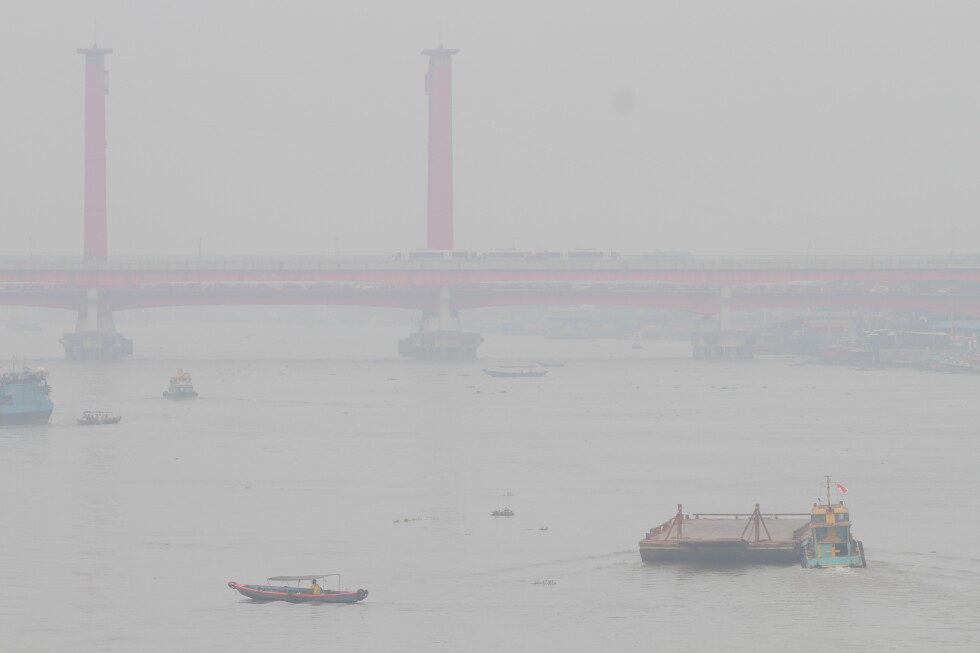
A growing environmental emergency is unfolding across Indonesia as intensifying forest and peatland wildfires, supercharged by an extreme El Nino pattern and an extended dry season, have pushed dangerous air pollution across the country and spilled into neighboring Southeast Asian nations. This crisis has forced widespread school closures and a shift to remote learning, disrupting the education of more than 1.4 million Indonesian children, with authorities scrambling to contain the spreading blazes.
On Wednesday, the capital of South Sumatra province, Palembang, became the latest region to enact emergency education measures, ordering all schools from kindergarten through junior high to transition to fully online instruction. The move impacts more than 250,000 students across 1,030 local institutions, with city officials citing the severe health risks that thick toxic haze poses to young people, including elevated rates of acute respiratory infections. “Students’ health and safety remained the government’s priority,” Palembang Mayor Ratu Dewa told reporters, noting that the policy will be reassessed continuously and in-person learning will resume as soon as air quality improves. He also added that teachers have been instructed to avoid assigning excessive schoolwork during the remote learning period to prevent unnecessary student burden.
Decades of recurring annual fire seasons have plagued Indonesia, but 2024’s crisis has been among the most severe on record, driven by climate-fueled extreme weather. The dry, hot conditions have allowed blazes to spread rapidly across peatlands and old-growth forests, releasing massive plumes of toxic smoke that have drifted hundreds of kilometers beyond Indonesia’s borders. As of this week, haze has reached as far north as the Philippines, more than 800 kilometers from the fire hot spots, and pushed air pollution in parts of Malaysia past emergency thresholds. Last week, Malaysian authorities declared a state of emergency in a Sarawak state town on Borneo Island, marking a major escalation of what is now a regional public health crisis.
Government data shows that the disaster is concentrated largely on Indonesia’s half of Borneo (called Kalimantan) and the island of Sumatra, with thousands of hectares of land burned across both regions. Satellite data released Wednesday by Indonesia’s Environment Ministry mapped 2,459 active fire hot spots in Central Kalimantan, the country’s worst-affected area. South Sumatra followed with 1,445 detected hot spots, the second-highest total nationwide, while West Kalimantan recorded 928 hot spots to rank third. In total, more than 202,000 hectares of land have burned across Indonesia between January and July — an area nearly three times the entire size of Singapore. Across Sumatra and Borneo alone, roughly 12,800 schools remain closed due to unsafe air quality, according to official counts.
International child welfare organization Save the Children has warned that the crisis goes far beyond environmental and public health, framing it as a violation of children’s basic rights. “The Earth, our home, is on fire, and children, including here in Asia, are being left to bear the consequences,” said Arshad Malik, Save the Children’s Asia regional director. The organization confirmed that more than 1.4 million students across affected Indonesian regions have been pushed into remote learning due to the haze.
Indonesian authorities have ramped up large-scale firefighting operations across multiple affected provinces, drawing on international support to contain the blazes. Multiple countries across Southeast Asia and beyond have dispatched aircraft to assist with water bombing and containment efforts, including Japan, the United States, Russia, Australia, Canada and Ukraine.