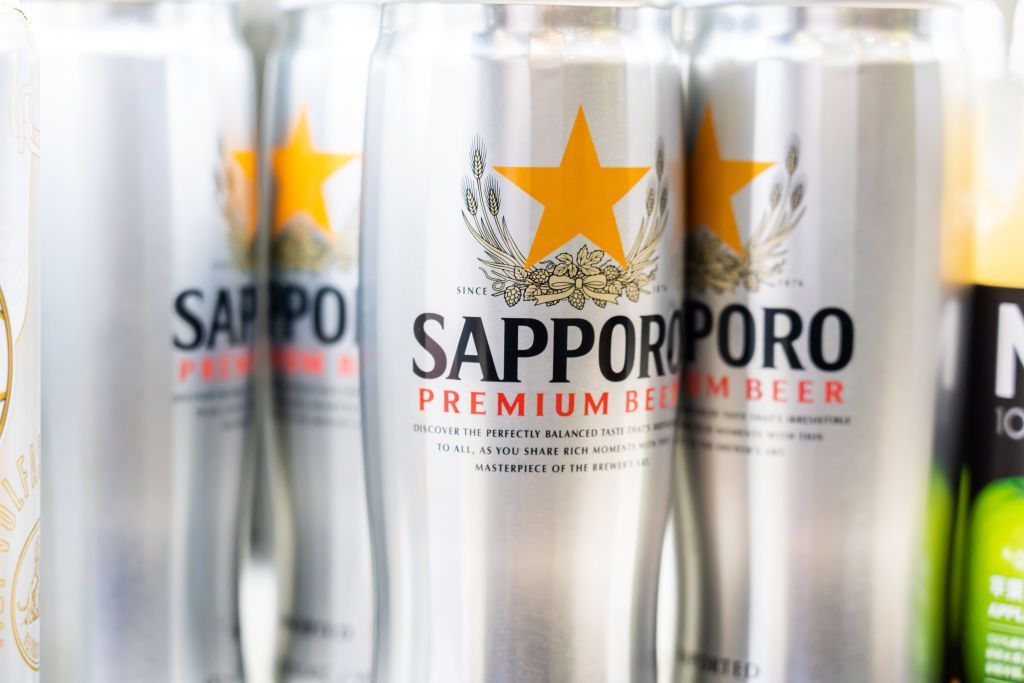
Global trade policy shifts are forcing major consumer goods companies to restructure their cross-border supply chains, and leading Japanese brewing giant Sapporo is the latest firm to make significant operational changes in response. After the United States imposed a new 50% tariff on Canadian-sourced beer that went into effect on September 2 this year, the company has confirmed it will relocate production of beer bound for U.S. consumers from its Canadian facilities to domestic sites within the U.S.
The new levy has drastically inflated operational costs for breweries that ship products across the U.S.-Canada border. In comments to Bloomberg, Sapporo Chief Strategy Officer Rieko Shofu framed trade tariffs as an external, unmanageable factor for the business, noting that the company’s path forward centers on expanding localized production in key target markets. The company did not issue an immediate additional response to requests for comment from the BBC when contacted for further details.
Per Sapporo’s current timeline, production of its non-alcoholic beer line – which currently serves U.S. customers from Canadian manufacturing sites – will be fully transitioned to U.S. facilities by the first half of 2027. As one of the Japanese brewer’s largest and most strategically critical overseas markets, changes to North American production will directly impact operations at Sleeman Breweries, Sapporo’s Canadian subsidiary.
To offset the cost increases triggered by the new tariffs and support expanded domestic output for the U.S. market, Sapporo is actively evaluating multiple options to add production capacity along the U.S. West Coast, which is its largest regional market in the country. These potential moves include constructing a new purpose-built brewery, acquiring an existing manufacturing facility, or entering a contract production partnership with an established local brewer.
Sapporo has spent decades building its footprint in the U.S. market, and today it claims its namesake flagship Sapporo beer is the top-selling Asian beer brand in the country. For years, the company has prioritized aggressive overseas expansion to counteract stagnant domestic alcohol sales in Japan, where a steadily shrinking population has created persistent headwinds for revenue growth. To support this global growth push, Sapporo has earmarked up to ¥400 billion ($2.6 billion) in total investment by 2030, with roughly 30% of that capital allocated to developing overseas markets.
The company’s expansion strategy is not limited to North America. Earlier this summer in July, it announced a strategic partnership with global brewing conglomerate Carlsberg to grow its market share across Southeast Asia, a fast-growing region with rising demand for international beer brands.
Sapporo’s production relocation is far from an isolated case. As governments around the world increasingly implement new trade barriers, multinational companies are actively re-evaluating their manufacturing footprints to reduce cost exposure. The July 2025 U.S. tariff announcement that included new levies on dozens of trade partners, Canada included, has already squeezed margins for hundreds of businesses that rely on integrated cross-border North American supply chains. Sapporo’s decision underscores a broader global trend: as trade barriers raise the cost of serving international customers from offshore production sites, more companies are shifting toward localized manufacturing to maintain competitiveness.