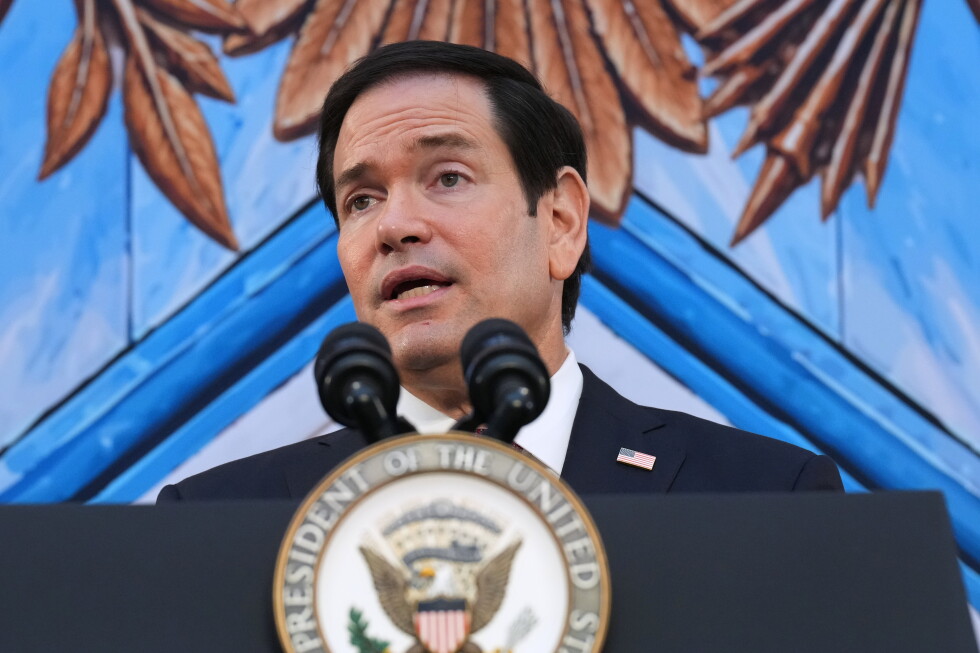
WASHINGTON — U.S. Secretary of State Marco Rubio launched a high-stakes three-nation tour of Latin America on Tuesday, centered on deepening ties with newly elected conservative, pro-Washington leaders across the region. The trip comes as the Trump administration ramps up cross-border military operations against drug trafficking, pushes to expand U.S. energy influence in the Western Hemisphere, and pushes for greater coordination to curb illegal migration northward.
The tour comes just one week after the U.S. finalized a major oil agreement with the post-Nicolás Maduro government of Venezuela, following a January U.S. military operation that ousted the longtime leftist leader. Rubio’s first stop is neighboring Colombia, where he will hold talks with new President Abelardo de la Espriella, a right-wing leader who has openly aligned his administration with Donald Trump’s policy agenda across drugs, immigration, and energy.
De la Espriella is among a growing wave of conservative leaders who have won office across Latin America in recent cycles, reversing a decades-long leftward shift in the region and backing the Trump administration’s more aggressive foreign policy approach toward the Americas. When the trip was announced last week, the U.S. State Department confirmed that Rubio would also travel on to Ecuador and Peru after wrapping up engagements in Colombia, with core discussions focusing on “enhanced cooperation in the shared fight against narcoterrorism, which threatens our hemisphere.”
The tour comes just 24 hours after U.S. forces intercepted and sank an Ecuadorian vessel that U.S. officials allege has direct ties to the transnational criminal organization Los Choneros. This action marks the latest in a string of U.S. operations targeting vessels suspected of trafficking drugs across Latin American waters. The expanded maritime campaign in the Caribbean Sea and eastern Pacific Ocean launched one year ago, running parallel to the Trump administration’s aggressive crackdown on undocumented migrants in the U.S., a large share of whom originate from Latin America.
The sunken vessel is the fifth targeted by U.S. military forces in the region in less than two weeks. In the vast majority of these operations, local conservative governments — including the three Rubio is visiting — have provided either formal cooperation or quiet tacit approval.
A key shift in U.S. tactics was on display in Monday’s operation, however: unlike most strikes on alleged drug-trafficking vessels that began in September 2025, all crew members were removed from the vessel before it was sunk and transferred into the custody of Ecuadorian authorities. This adjustment follows more than a year of offensive strikes that have killed at least 227 people the Trump administration labels “narcoterrorists” — a classification the administration has never supported with public evidence. The U.S. military carried out at least two of these deadly strikes just last month, before shifting focus to intercept floating refueling stations that officials say support illicit maritime drug smuggling networks.
In a pre-trip video statement released Tuesday, Colombian Foreign Minister Omar Bula framed Rubio’s visit as the starting point for “rebuilding a strategic alliance with the United States, our main partner in the region.” Bula confirmed that talks will center on security cooperation, including counternarcotics efforts, bilateral trade, and alignment on what both sides call “shared democratic values.”
Since taking office last month, De la Espriella — nicknamed “El Tigre” for his hardline approach — has made cracking down on drug trafficking and overhauling Colombia’s immigration policy central to his agenda, promising to deport thousands of undocumented migrants, mostly Venezuelan nationals, in a move he says will reduce national crime rates. Shortly after his inauguration, he brought Colombia into the U.S.-backed Americas Counter Cartels Coalition, rebuilding security cooperation with Washington that was badly strained during the 2022-2026 progressive administration of Gustavo Petro. He also formally closed the peace negotiations with illegal armed groups that Petro initiated, calling the process a failed effort that only worsened Colombia’s violence crisis.
In his first month in office, De la Espriella has ordered at least three airstrikes against illicit armed groups and expanded nationwide military counter-narcotics operations. But the new security approach has already drawn sharp criticism: multiple civilian minors were killed in the airstrikes, and opposition leaders and Colombia’s state Ombudsman’s Office condemned the president after he publicly displayed the bodies of alleged criminals wrapped in plastic bags alongside seized ammunition, as part of a public relations push to showcase his administration’s results.
Last week, De la Espriella announced that his government had killed Naín Andrés Pérez Toncel, alias “Bendito Menor,” a top leader of the illegal Self-Defense Forces of the Sierra Nevada armed group in northern Colombia. Perez Toncel was the first high-profile target named after the president labeled dozens of illegal armed group leaders “legitimate military targets” following his election win.
Colombia continues to grapple with ongoing competition between illegal armed groups for control of territory key to drug trafficking and illegal mining, even a decade after the government signed a landmark peace deal with the former FARC rebel movement that demobilized most of the group’s fighters.
After meeting De la Espriella in the Caribbean coastal city of Barranquilla — where the two sides are set to sign a civil nuclear cooperation agreement and a critical minerals trade pact — Rubio will travel to Quito, Ecuador, for a short working visit. There, he will meet President Daniel Noboa, whose administration has steadily expanded joint counternarcotics operations with U.S. military forces over the past two years.
Rubio will wrap up his regional tour in Lima, Peru, where he will hold talks with new President Keiko Fujimori, daughter of former Peruvian leader Alberto Fujimori. Fujimori’s recent election win marks another major rightward shift in Peruvian politics, aligning the country more closely with U.S. regional policy priorities.