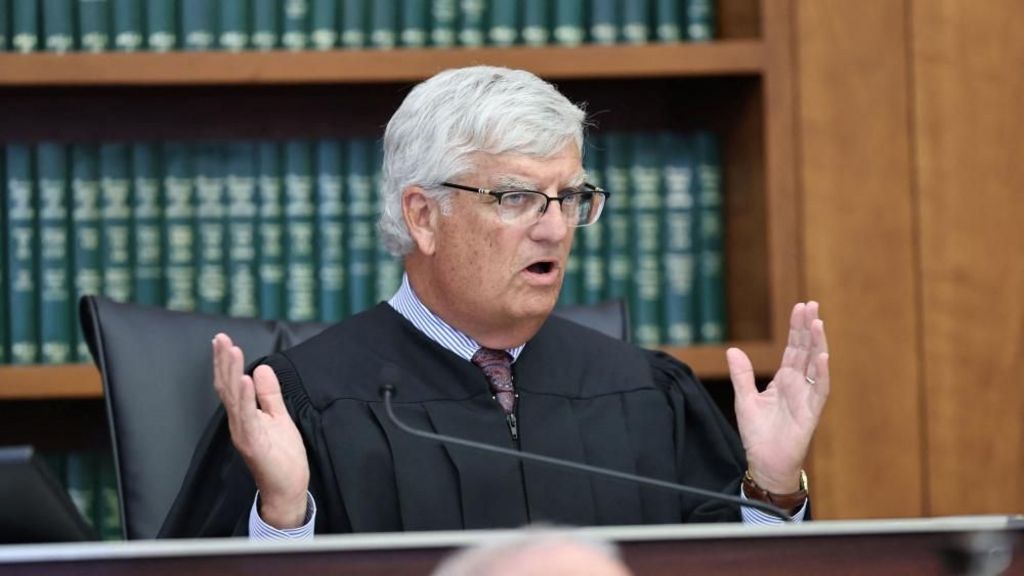
After seven days of closed-door deliberations over the fate of Lindsay Clancy, the Massachusetts mother accused of killing her three young children, the trial has hit an unprecedented stalemate: the 12-member jury has remained hopelessly deadlocked, leaving the presiding judge on track to formally declare a mistrial.
Clancy, 33, was charged with three counts of first-degree murder for the 2023 deaths of her 5-year-old daughter Cora, 3-year-old son Dawson, and 8-month-old son Callan. She does not dispute that she killed the three children, but has entered a plea of not guilty by reason of insanity. Her legal team argues Clancy was suffering from severe postpartum psychosis at the time of the killings, a debilitating mental health condition that erased her ability to tell right from wrong, and thus she cannot be held criminally liable for her actions. Prosecutors have pushed back fiercely against this narrative, arguing the killings were a premeditated, intentional act that meets the legal standard for first-degree murder.
Under Massachusetts and U.S. federal legal rules, a jury must return a unanimous verdict beyond a reasonable doubt to convict or acquit a defendant in a felony murder trial. Over the course of deliberations, jurors have notified Judge William Sullivan three separate times that they are unable to reach a consensus, even after Sullivan issued a rare Tuey-Rodriguez charge – an additional set of instructions that encourages jurors to re-examine their own positions and engage openly with opposing perspectives in an effort to break the deadlock. When the panel again confirmed it could not reach an agreement, Sullivan publicly signaled he had no remaining legal option but to declare a mistrial. He has delayed the formal declaration for one hour to allow Clancy’s lead attorney, Kevin Reddington, to file an emergency appeal.
A mistrial declaration does not equate to an acquittal, nor does it validate the prosecution’s case against Clancy; it simply ends the current trial without a formal verdict, opening the door to three distinct possible outcomes for the high-profile case, which has drawn intense national public attention over its six-week run. If a mistrial is formally entered, prosecutors can choose to dismiss the charges entirely, negotiate a plea deal with Clancy’s defense team, or request a retrial with a newly seated jury. Legal experts note that dismissal remains unlikely for a case of this severity, and most expect prosecutors to push for a new trial.
“In serious felony cases like these, prosecutors often ask for a retrial,” explained Heather Cucolo, a New York Law School professor and leading expert in mental health law. She added, “A case like this that obviously has been so high profile, and there is so much of an emotional response to the facts of this case, I think it’s very likely that the prosecutor will ask for a retrial.”
Until the next steps are finalized, Clancy will remain in custody at the same mental health facility where she has been held since the killings, on the original murder charges. If a retrial is scheduled, the timeline for a new proceeding will depend on multiple factors, including court availability, pre-trial motions filed by either side, and scheduling for expert witnesses, both for the prosecution and defense. The entire six-week original trial has been marked by intense public interest, with crowds regularly gathering outside the Massachusetts courthouse to follow updates.
To protect the jury’s privacy, the identities of the nine women and three men who served on the panel have not been released to the public, and Judge Sullivan banned all photography and recording of jurors during the proceedings. Once the case concludes, however, individual jurors are free to choose whether to speak publicly about their deliberations. Past high-profile trials have seen jurors come forward to share their experiences, including through media interviews or published books, meaning details of the internal deadlock could emerge in the coming weeks.
This case has shone a new spotlight on postpartum psychosis, a severe, rare mental health emergency that can occur in the period after childbirth. For individuals experiencing suicidal thoughts or emotional distress after childbirth, or anyone struggling with similar mental health challenges, support is available globally through Befrienders Worldwide at www.befrienders.org, and for UK residents through BBC Action Line at bbc.co.uk/actionline.