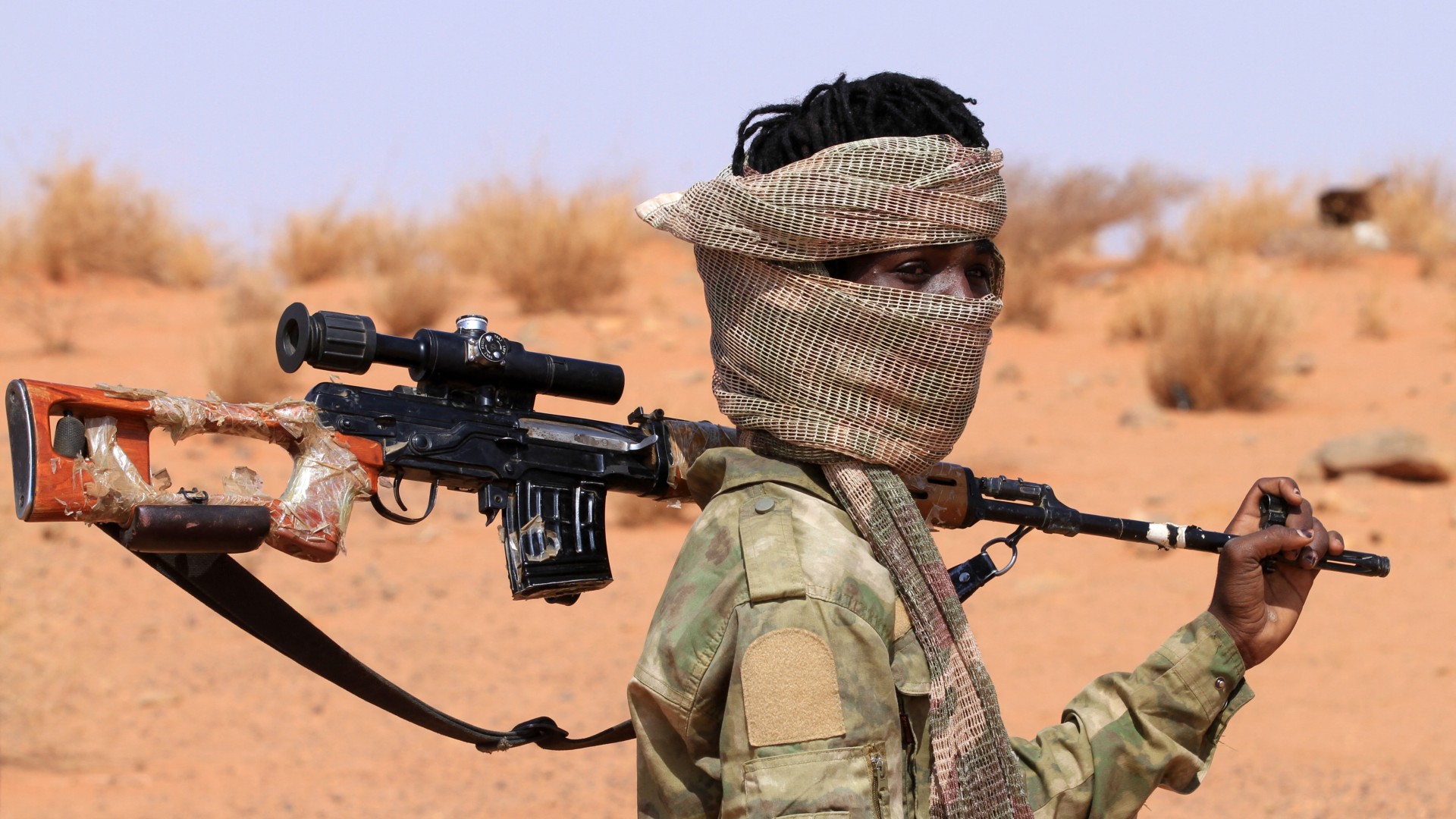
A United Nations-led independent international investigation has delivered a damning new assessment of Sudan’s 16-month-old civil conflict, concluding that cross-border flows of foreign weaponry, advanced military technology, and contracted mercenaries are prolonging the war and enabling widespread attacks on civilian targets that may rise to the level of war crimes. The long-awaited report from the Independent International Fact-Finding Mission for Sudan, released publicly Thursday, confirmed there are reasonable grounds to believe a coordinated transnational network has provided the Rapid Support Forces (RSF), Sudan’s main paramilitary opposition group, with a steady stream of arms, logistical backing, combat training, and foreign personnel.
Investigators traced the sprawling network, which includes private companies, middlemen, and individual actors, to operations based in or transiting through the United Arab Emirates (UAE), Colombia, Chad, Libya, and Somalia. While the UAE has repeatedly denied all accusations of supporting the RSF, extensive independent reporting from Middle East Eye and other open-source research has long linked the Gulf state to arms and supply shipments to the paramilitary group. In recent weeks, global human rights organizations have submitted two formal communications to the International Criminal Court, calling for investigations into the role of foreign actors—specifically senior UAE officials—in aiding and abetting alleged RSF atrocities.
Beyond the RSF’s foreign support, the UN mission also uncovered preliminary evidence that foreign-provided drone technology has drastically expanded the long-range strike capacity of Sudan’s official Sudanese Armed Forces (SAF), allowing the military to hit targets deep in territory held by the RSF. “The consequences of this external support are being felt most acutely by civilians,” said Mohamed Chande Othman, chair of the fact-finding mission. “This external support has not brought greater protection for civilians. Instead, civilians are paying the price through attacks on homes, hospitals, schools, markets and places of refuge.”
The report’s casualty figures underscore the devastating human cost of these externally enabled attacks: between January and May 2026 alone, more than 1,000 civilians were killed in drone strikes across the country. Investigators documented deliberate strikes on protected civilian infrastructure by both warring parties, including an RSF attack on a kindergarten, displacement camp, and hospital in Kalogi, South Kordofan, in December 2025. Successive RSF drone strikes hit the Nabaa al-Hanan kindergarten, first responders who rushed to the scene, and a nearby rural hospital, killing 114 people—roughly 60 of whom were children—and wounding 35 more. The mission’s investigation found no evidence that either the kindergarten or the hospital was being used for military purposes, stripping the attack of any legal justification under international law. The RSF also carried out a lethal strike on a former International Organization for Migration building that sheltered displaced families in Kulba, killing at least five civilians including multiple children.
On the SAF side, the mission confirmed the military carried out a major strike on Ad-Da’ein Teaching Hospital in East Darfur on the first day of Eid al-Fitr in March 2026. The attack killed at least 70 people, injured 146 more, and completely disabled the only major referral hospital serving more than two million people in the region. Even after investigating claims that wounded RSF fighters were receiving care at the facility, the mission emphasized that providing medical treatment to injured combatants does not revoke a hospital’s protected status under international humanitarian law. The report also attributed strikes on the Abu Zaima market in North Kordofan and the Yabus market in Blue Nile to the SAF, finding no identifiable military targets at either impact site. Investigators noted that deliberate attacks on clearly civilian sites meet the legal definition of potential war crimes.
The report dedicated specific analysis to the RSF’s foreign supply lines for its operations in Darfur, where the mission previously found evidence of acts bearing the hallmarks of genocide against non-Arab communities. It traced weapons, personnel, and supplies through interconnected air, maritime, and land routes that pass through Bosaso in Somalia’s Puntland region, southeastern Libya, and Chad. Among the military equipment supplied to the RSF are Chinese-made NORINCO AH-4 howitzers, FK-2000 air defense systems, and CH-95 reconnaissance and strike drones. Investigators noted that much of this materiel matches specifications of equipment previously exported to the UAE, a finding that reinforces existing links between Emirati-linked entities and the RSF supply chain.
Witness testimony collected by the mission documented repeated cargo flights departing from the UAE, transiting through Chad, before moving supplies and foreign contractors into RSF-controlled territory. While investigators stopped short of holding the Emirati state officially responsible for the network’s actions, they concluded that individuals and entities registered, based, or linked to the UAE play a “significant role” in recruiting, financing, and transporting military contractors and delivering other critical support to the RSF. In its response to investigators, the UAE rejected all allegations of arms supplies or mercenary facilitation, insisting it has remained neutral in the conflict and that internal inquiries found no evidence linking entities under its jurisdiction to mercenary activity in Sudan. Even so, the fact-finding mission urged Emirati authorities to launch more robust investigations and take enforcement action against companies and individuals operating from its territory that support the RSF.
Colombian contractors emerged as a particularly critical component of the RSF’s advanced weapons operations, the report found. Investigators estimate that as many as 2,000 former Colombian military personnel have been recruited to support the RSF since August 2024. Multiple witnesses confirmed that some of these contractors received combat training at a military-style facility in Ghayathi, UAE, before traveling to Sudan via Somalia, Libya, or Chad. Contractors belonging to a unit calling itself the “Desert Wolves” were present in el-Fasher before, during, and after the RSF’s seizure of the city, operating drones, artillery, and other advanced weapons systems.
“This support fed into RSF operations in Zamzam camp and later during the takeover of el-Fasher, where the mission documented grave violations and international crimes, including conduct displaying hallmarks of genocide,” said Mona Rishmawi, a member of the fact-finding mission. The mission has previously confirmed that RSF forces and their allied militias committed war crimes and crimes against humanity during the el-Fasher campaign, and that their systematic targeting of non-Arab communities meets the criteria for potential acts of genocide.
While investigators identified multiple unpublicized foreign individuals and entities linked to the support network, the report only publicly names individuals already sanctioned by the UN Security Council’s Sudan sanctions committee. That list includes retired Colombian colonel Alvaro Andres Quijano Becerra, founder of one of the main recruitment firms in the network, who was based in Abu Dhabi. His wife, Claudia Viviana Oliveros Forero, is accused of coordinating recruitment activities inside Colombia. Both were sanctioned by the Security Council in April for their role in recruiting and deploying former Colombian soldiers to Sudan. The mission confirmed it maintains confidential dossiers on other unnamed suspects, which it will share with international judicial and accountability bodies as needed.
Colombian authorities have acknowledged that Colombian companies and individuals have recruited contractors for deployment to Sudan, but the state has denied directing or supporting these activities, and the fact-finding mission made no finding of official Colombian state responsibility for the network. Under international criminal law, any individual who knowingly provides practical assistance that substantially contributes to the commission of international crimes can be held liable for aiding and abetting, even if their support was not strictly indispensable to the crime.
“Accountability cannot stop with those who carry out the attacks,” said mission member Joy Ngozi Ezeilo. Investigators are calling for full inquiries that trace accountability through the entire chain of command, including individuals who order, finance, supply, or otherwise facilitate international crimes in Sudan.
To curb the ongoing flow of weapons fueling the conflict, the mission urged the UN Security Council to expand the existing partial arms embargo covering only Darfur to the entire territory of Sudan. It also called on all UN member states to halt all transfers of weapons, drones, and military technology to any Sudanese party when there is a substantial risk the equipment will be used to facilitate serious violations of international humanitarian and human rights law.
Sudan’s ongoing civil war erupted in April 2023, triggered by a bitter power struggle between SAF chief Abdel Fattah al-Burhan and RSF commander Mohamed Hamdan Dagalo, widely known as Hemedti. The conflict has killed at least tens of thousands of people, displaced more than 13 million from their homes, and pushed more than 19.5 million Sudanese to the brink of famine. The UN and European Union have both described the crisis as the world’s largest humanitarian and displacement emergency currently unfolding. Both warring parties have faced widespread accusations of systematic atrocities, and repeated international diplomatic efforts to negotiate a lasting ceasefire have all collapsed to date.