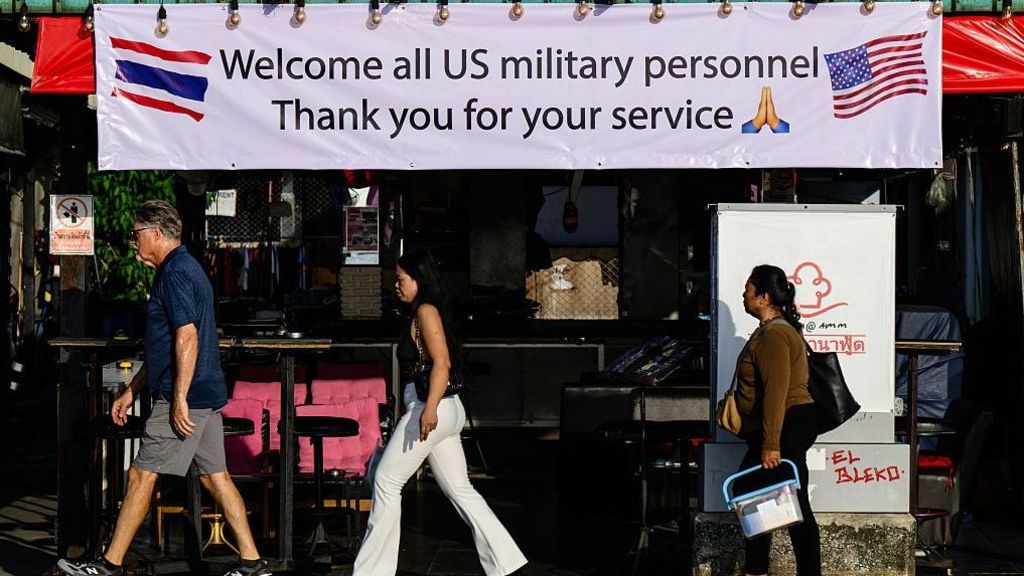
After completing an unprecedented 250 consecutive days at sea without a single port call, the U.S. Navy’s nuclear-powered aircraft carrier USS Abraham Lincoln has arrived at its scheduled rest stop in Thailand, bringing nearly 5,000 exhausted crew members ashore for their first extended break in nine months. The vessel is anchored a short 40-minute drive from the iconic coastal resort town of Pattaya, a destination whose global identity has been deeply shaped by decades of U.S. military R&R visits stretching back to the Vietnam War era.
What is now one of the world’s most famous entertainment hubs began as a quiet fishing village, transformed starting in the 1960s when hundreds of thousands of U.S. troops deployed to Southeast Asia arrived for rest and recuperation between tours of duty. Those visits turned Pattaya into a frenetic, neon-lit party town known worldwide for its raucous nightlife and sex tourism, a reputation it still carries decades after the end of the Vietnam conflict.
Today, however, Pattaya’s normally crowded beachside alleys and famous Walking Street are far quieter than they were before recent global and regional conflicts. The ongoing war between the U.S.-Israeli coalition and Iran has gutted international tourism across Southeast Asia, crimping consumer spending and pushing many local businesses to the brink of collapse. For struggling proprietors, the arrival of 5,000 U.S. sailors, who have not had a chance to spend their nine months of accumulated pay during their time at sea, represents a rare lifeline for their bottom lines.
Near Walking Street, gem seller Anon Saiteer already has hung a large welcome sign for U.S. crew members, advertising exclusive discounts for visiting service members. “This visit could be our best hope,” Saiteer told reporters. “We have nothing to lose – we just hope they will spend some money here.” The welcome is not unlimited, however: both U.S. and Thai authorities have worked to structure the visit to avoid the salacious headlines that have long dogged Pattaya’s reputation.
Thai officials have designated several zones off-limits for U.S. service members, including Soi 6, the beachside lane notorious for its high concentration of go-go bars and sex workers. While prostitution is technically illegal under Thai law, an estimated 25,000 to 50,000 sex workers operate in Pattaya, many concentrated in the restricted lanes. U.S. crew members are also barred from entering local cannabis shops and from participating in high-risk recreational activities including paragliding and jet skiing.
“The US military have done their homework,” Pattaya Mayor Poramase Ngampiches told the BBC, emphasizing that the off-limits designation was a joint decision between the two governments. To keep order during the visit, Thai authorities have deployed hundreds of additional police officers to patrol entertainment districts, and have issued warnings to local businesses against overcharging visiting American sailors. The U.S. Navy has also set up daily shuttle bus service from the port to Pattaya running from 5 a.m. to 2 a.m. daily, and has pre-approved two hotels for crew members seeking an overnight stay on shore.
The extended deployment that brought the carrier to this point was not originally planned. The USS Abraham Lincoln departed San Diego last November for a scheduled six-month operational deployment to the Pacific and South China Sea. But in late February, the vessel was rerouted to the Gulf of Oman to support U.S. and Israeli military operations against Iran, extending its time at sea far beyond initial projections.
The unplanned extension drew scrutiny from U.S. lawmakers in recent weeks, after reports emerged of substandard living conditions including food shortages, broken sanitation infrastructure, and rising mental health strain among the 5,000-person crew. The U.S. Navy has acknowledged that working conditions have been unusually difficult during the extended deployment, but has pushed back against claims that the crew lacks sufficient support, and declined to comment on the Pattaya port call to the BBC, citing operational security requirements.
While Thailand maintains close economic and diplomatic ties with China, it remains a longstanding treaty ally of the United States, and port calls by U.S. Navy vessels are a regular occurrence in Thai waters. Even so, this visit marks the largest contingent of U.S. military personnel arriving directly from an active war zone to Pattaya since the fall of Saigon in 1975, at the end of the Vietnam War.
For Pattaya’s local government, the visit also offers an opportunity to rebrand the city beyond its outdated mid-century reputation. Mayor Poramase acknowledged that the city’s historic association with adult entertainment cannot be erased, but highlighted efforts to diversify Pattaya’s tourism offerings to attract family travelers, wellness visitors, and business conference groups. “We have to be frank, the city has a reputation for bar girls. We understand the stereotypes. We can’t stop that,” he said. “What we can do is to show that Pattaya has changed, that we now have other things, such as sports, seminars, wellness and family-friendly activities. It’s a mixture of everything.”
Both U.S. and Thai officials expect the carrier to conclude its rest and refit period and depart for its journey back to the United States across the Pacific on September 6, with the goal of sending the crew home rested and recovered after their grueling nine-month deployment.