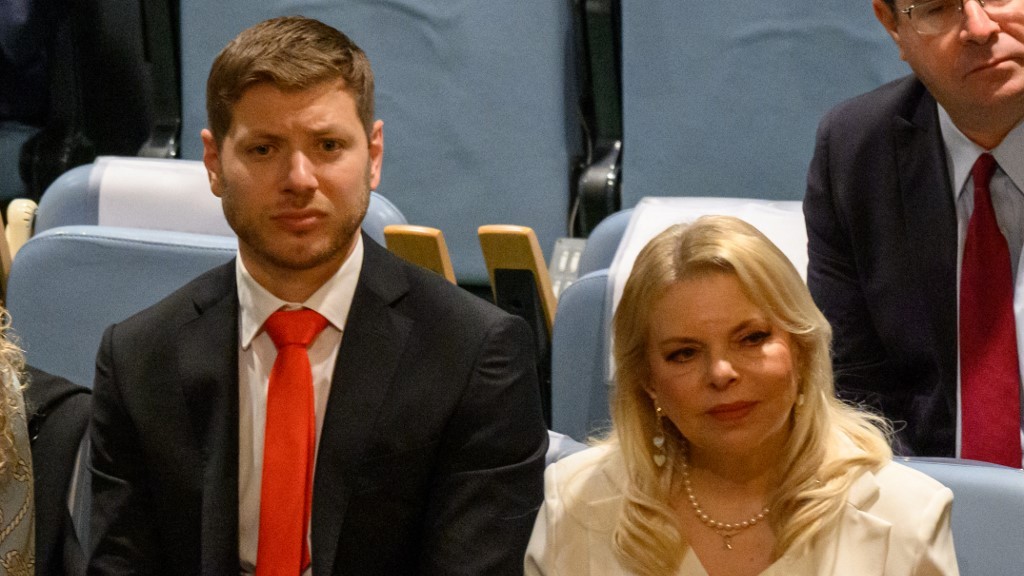
A long-simmering territorial dispute over the Falkland Islands, known as the Islas Malvinas to Argentina, has reemerged as a flashpoint in global diplomacy, following provocative comments from Israeli Prime Minister Benjamin Netanyahu’s son and a groundbreaking shift in rhetoric from former U.S. President Donald Trump.
Days after 35-year-old Yair Netanyahu, a U.S.-based political activist, publicly asserted in Spanish social media posts that the contested South Atlantic archipelago belongs to Argentina, Trump confirmed for the first time that Washington could open a review of its long-standing stance backing British sovereignty over the islands. Speaking to reporters in the Oval Office on Monday, when asked if the U.S. was reevaluating its position, Trump responded: “I always review every position – that’s just one of many.”
The former president offered no further detail on what changes Washington might consider, but his remarks mark the first public signal from a U.S. leader that the country’s long-held position on the dispute could be up for negotiation. The 3,600 residents of the islands overwhelmingly support continued British rule, and the conflict over the territory already led to a 1982 war between Argentina and the United Kingdom that left hundreds dead on both sides.
Yair Netanyahu’s intervention in the dispute was not rooted in the territorial question itself, but in his sharp criticism of the current British government’s stance toward Israel. In follow-up posts after his initial declaration, the activist made clear his position was a response to what he frames as British hostility toward Israel. He called the current British government “antisemitic, communist, jihadist,” and condemned the UK for its recent recognition of Palestinian statehood aspirations and criticism of Israel’s actions in Gaza and the occupied West Bank. “I don’t care about the Falkland Islands, I care about Israel,” he wrote, adding that Argentina has remained a consistent friend to Israel, unlike the UK.
Argentine President Javier Milei, a staunch pro-Israel leader who has made backing the Netanyahu administration a core pillar of his foreign policy amid controversial domestic economic reforms, quickly reposted Yair Netanyahu’s comments. Milei has repeatedly expressed unwavering support for Netanyahu during the Gaza conflict, has spoken of converting to Judaism, and has pledged to move Argentina’s Israeli embassy from Tel Aviv to Jerusalem, a move strongly aligned with the current Israeli government’s priorities.
Even before Yair Netanyahu’s public comments, UK newspaper The Telegraph reported that pro-Israel Republican figures had already been lobbying privately in Washington to push the Trump administration to abandon its long-standing neutral stance on the Falklands dispute. Analysts note that Israel holds unprecedented influence within the Trump administration, and recent British criticism of Israel’s military campaign in Gaza, its apartheid system in the occupied West Bank, and a prospective British sanctions package against Israeli officials reported earlier by Middle East Eye, have created incentive for Israel and its allies to use the Falklands dispute as leverage against the UK within the U.S. government.
Yair Netanyahu’s comments have already sparked backlash from even pro-Israel and far-right political figures in the UK, who warn the remarks risk alienating British supporters of Israel. Right-wing pro-Israel commentator Alex Armstrong, who works for GB News, called the comments “unconstructive,” urging Yair Netanyahu to distinguish between the British government and pro-Israel constituents within the UK. Rupert Lowe, a far-right British lawmaker and vocal Israel supporter, added a firm rebuke, declaring “the Falklands are British and will remain so,” and noting that any future British government would defend the territory militarily if needed.
A leaked Pentagon memo from earlier this year already suggested the Trump administration was considering using the Falklands dispute as bargaining leverage in trade and diplomatic negotiations with the UK, adding context to Trump’s recent comments that have upended decades of quiet agreement on the islands’ status.