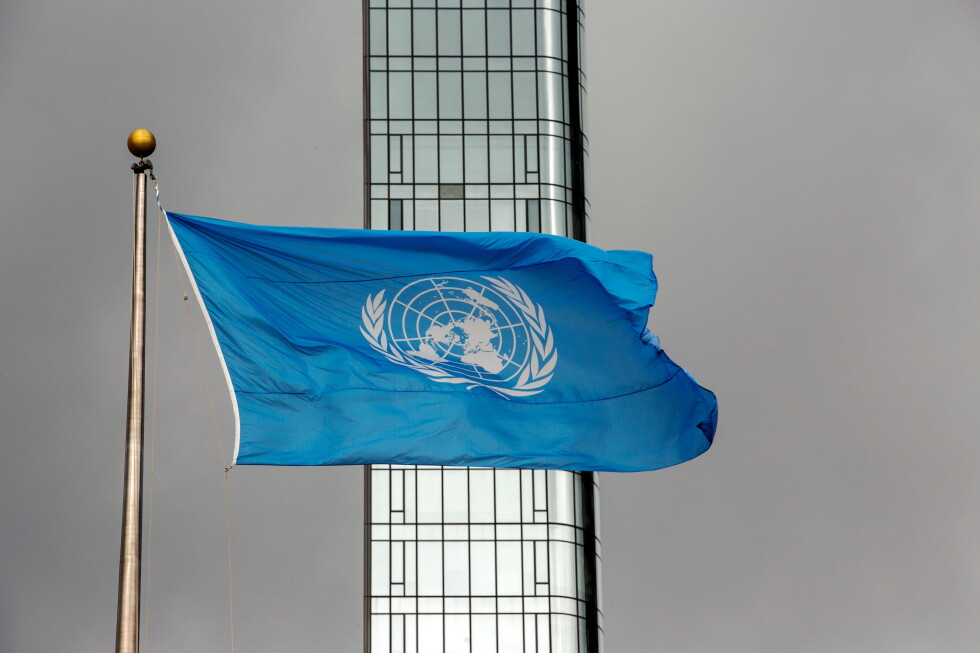
On the International Day Against Nuclear Tests, top United Nations disarmament officials have issued a stark public warning: the fragile decades-long global restraint on nuclear explosive testing is at grave risk of collapse, with rising geopolitical tensions pushing major nuclear-armed states closer to resumption that could ignite a dangerous new global arms race.
Held at U.N. Headquarters in New York, the commemorative General Assembly meeting came amid a rapidly shifting landscape of global distrust. Last year, the world’s two largest nuclear powers — the United States and Russia — both openly raised the possibility of resuming explosive nuclear tests, sending shockwaves through the international nonproliferation community. Then-U.S. President Donald Trump accused Russia and China of carrying out covert nuclear tests, claims both nations have flatly denied. Earlier this year, Russia took the unprecedented step of revoking its ratification of the Comprehensive Nuclear Test Ban Treaty (CTBT), the 1996 global agreement designed to permanently ban all nuclear explosive testing.
Addressing assembled delegates, U.N. High Representative for Disarmament Affairs Izumi Nakamitsu emphasized the gravity of the current moment. The world is facing “deep geopolitical tension, growing division and diminishing trust,” she noted, creating fertile ground for a rollback of decades of progress on nuclear nonproliferation. “Even contemplating such a course is dangerous,” Nakamitsu warned. “Any resumption would erode decades of restraint, deepen mistrust and risk triggering reciprocal tests and an arms race. This must never become reality.”
The CTBT, which was adopted by the international community in 1996, carries a strict requirement for entry into force: it must be ratified by 44 specific countries identified as possessing nuclear technology or infrastructure. To date, nine of those countries have failed to complete ratification. The U.S., China, Iran, Egypt and Israel have signed the treaty but never moved to ratify it. India, Pakistan and North Korea have neither signed nor ratified the agreement, leaving the treaty stuck in a decades-long limbo that has prevented it from formally entering into force. Even with that barrier, the CTBT has become the cornerstone of global norms against nuclear testing, with nearly all nations adhering to an informal moratorium for nearly 30 years.
In a small glimmer of progress, Robert Floyd, executive head of the Comprehensive Nuclear Test Ban Treaty Organization (CTBTO) that monitors global compliance with the treaty, announced that Tonga’s recent ratification has pushed the total number of states party to the agreement to 179. Still, Floyd stressed that the underlying geopolitical risks have never been higher. Since the first atomic test in 1945, more than 2,000 nuclear explosions have been conducted across the globe, he noted. While that number has dropped sharply to fewer than 12 total tests over the past three decades — a testament to the strength of the global moratorium — the shifting global landscape has erased much of that progress. “The international scene is tense, full of mistrust,” Floyd cautioned, “including about nuclear testing.”
If major powers walk away from the testing moratorium, Floyd warned, the consequences will be catastrophic. A return to regular testing would pave the way for the development of far more advanced, lethal nuclear arsenals, drastically increase the risk of accidental nuclear use, and leave the world facing “devastation from nuclear ‘bad luck.’”
The International Day Against Nuclear Tests, established to mark the 1991 closure of the Soviet Union’s Semipalatinsk test site — now located in Kazakhstan, where 456 nuclear tests were conducted over decades — also centers the human cost of nuclear testing that is often overlooked in global diplomatic debates. This year, survivors and affected community leaders shared first-hand accounts of intergenerational harm caused by unregulated nuclear testing.
Tina Cordova, co-founder of the Tularosa Basin Downwinders Consortium, an advocacy group formed to support communities affected by the 1945 Trinity atomic test in New Mexico, told delegates how five generations of her family have suffered from radiation-related illnesses linked to the first ever nuclear bomb test. “We were never warned before or after of the danger, so we lived our lives off the land as we always did,” Cordova said. Every generation of her family has battled cancer caused by radiation exposure from the test, she added, a fate shared by thousands of affected communities around the world.
Cordova emphasized that New Mexico survivors are not isolated in their struggle. Nuclear testing programs carried out across the globe have left communities in Guam, French Polynesia’s Tahiti, Kazakhstan, and Indigenous Aboriginal lands in Australia, as well as multiple U.S. states including Idaho, Utah, Arizona, Nevada, Colorado and Montana, suffering chronic health impacts from radiation exposure. Uranium miners and processing workers and their families have also faced disproportionate harm from nuclear testing programs. “We’re the people that became the collateral damage to the development and testing of nuclear devices and were left to deal with the consequences on our own,” Cordova said. “It is why we fight for acknowledgment and assistance.”