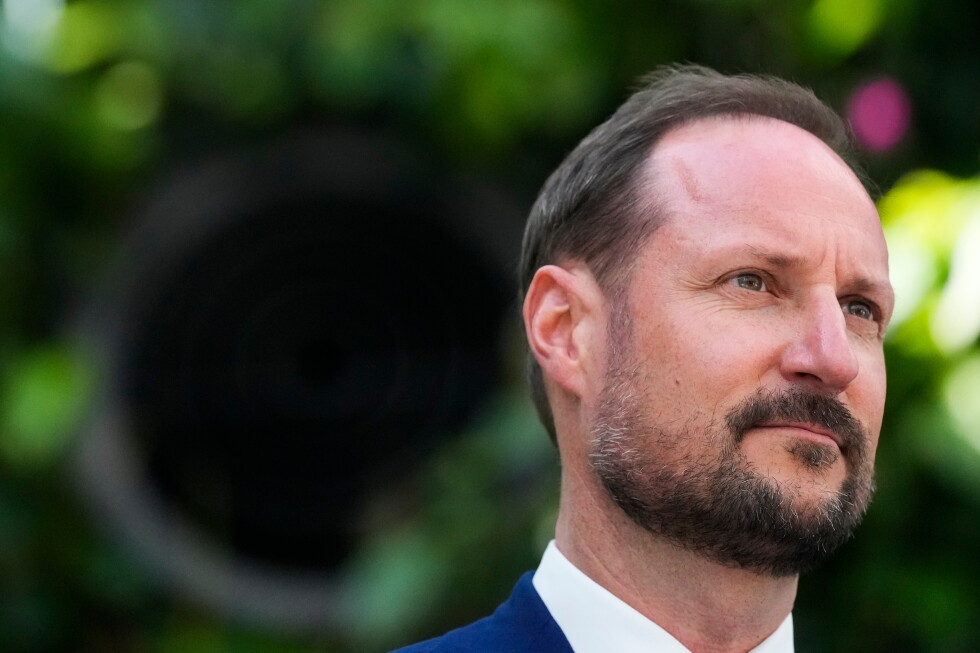
The Scandinavian nation of Norway has entered a new era of its centuries-old monarchy, following the death of King Harald V on Friday. With the passing of the 89-year-old monarch, 53-year-old Crown Prince Haakon formally ascended to the throne as King Haakon VIII, bringing with him a mix of decades of preparation and unprecedented challenges to the royal institution’s standing among the Norwegian public.
Upon Haakon’s ascension, his eldest child, 21-year-old Ingrid Alexandra, became the new crown princess and first in line to the Norwegian throne, marking a milestone in the country’s succession history. The new king is no stranger to the core responsibilities of the role, having stepped in as regent on multiple occasions in recent years as his father’s health declined steadily.
The Norwegian monarchy carries one of the oldest continuous lineage claims in Europe, tracing its founding roots back to King Harald Fairhair in the 9th century. When Norway regained full independence from Sweden in 1905, a national plebiscite saw 75% of voters back the restoration of a constitutional monarchy. While the modern monarchy holds only ceremonial power, with governing authority resting entirely with Norway’s elected parliament, the royal family remains a prominent cultural figure and a global ambassador for the high-income Nordic nation.
Born as the younger child of King Harald V, two years after his sister Princess Märtha Louise, Haakon became heir to the throne in 1991 following the death of his grandfather King Olav, under older succession laws that prioritized male heirs. A 1990 constitutional reform changed succession rules to grant precedence to the first-born child regardless of gender, but the change was not applied retroactively, leaving Haakon’s place in the line of succession unchanged.
Unlike many heirs who grew up solely focused on royal duties, Haakon initially dreamed of a far more ordinary life. In a 1998 memoir, he recalled childhood aspirations of owning a small toy shop, before coming to terms with the preordained path that lay ahead. The new king brings a diverse academic and professional background to the role: he holds a bachelor’s degree in political science from the University of California, Berkeley, a master’s degree in development studies with a focus on international trade and African development from the London School of Economics and Political Science, is a graduate of the Royal Norwegian Naval Academy, and completed the Norwegian Foreign Ministry’s elite diplomat trainee program. Outside of official work, he is an avid surfer, skier, and music fan with a taste for rock and rap, who once told public broadcaster NRK that he would have chosen to be a full-time surfer if not born into royalty.
Haakon’s path to the throne has long been shaped by the public scrutiny that followed his decision to marry Mette-Marit Tjessem Høiby, a commoner and single mother, whom he met at a Norwegian music festival in 1999. At the time, the match sparked deep public division: Mette-Marit’s ex-partner had served prison time for cocaine possession, and she had been linked to Oslo’s drug-fueled youth party scene of the 1990s. Haakon openly acknowledged her past in a 2000 interview, but ultimately won his father’s approval for the marriage — King Harald himself had married a commoner — and the pair wed in August 2001 at Oslo Cathedral. Over time, Mette-Marit’s down-to-earth demeanor and open warmth won over much of the Norwegian public, and the couple’s popularity climbed as they balanced royal ceremonial duties with a relatively private family life. The couple share two children, Crown Princess Ingrid Alexandra and Prince Sverre Magnus, while Haakon has raised Mette-Marit’s son from a previous relationship, Marius Borg Høiby, who holds no royal title.
Today, as Haakon takes the throne, the monarchy faces unprecedented challenges to its public standing, driven by two recent controversies that have rocked the royal family’s reputation. In June 2024, Høiby was convicted of two counts of rape, one count of close-relationship assault, and one count of abuse, and sentenced to four years in prison; his legal team has announced plans to appeal the verdict. The conviction came on the heels of renewed public scrutiny over Mette-Marit’s past connections to deceased American sex offender Jeffrey Epstein. Mette-Marit has publicly apologized for the association, acknowledging poor judgment, and has stated that she was manipulated and deceived by Epstein, saying she felt unsafe during a 2012 meeting at his Florida mansion. She has not been accused of any wrongdoing.
Beyond the controversies connected to Høiby and Epstein, the royal family has faced additional public criticism tied to Haakon’s sister, Princess Märtha Louise. Märtha Louise, who has written books claiming she can communicate with angels, married American self-described shaman Durek Verrett in 2024, a decision that sparked widespread public backlash. She stepped back from all official royal duties in 2022 amid the growing controversy over her and her husband’s public roles.
Adding to Mette-Marit’s personal challenges, she was diagnosed with a rare incurable chronic pulmonary fibrosis in 2018, which caused progressive breathing difficulty, fatigue, and other severe symptoms. She underwent a successful lung transplant in June 2024, and has periodically stepped back from official duties to manage her health.
For the new King Haakon VIII, the central task of his early reign will be to rebuild public trust and shore up flagging support for the monarchy. Polling data shows that public backing for retaining the monarchy has dropped sharply in recent years: a 2017 NRK poll put support at 81%, but by late 2022, a Dagbladet poll found that number had fallen to 68%. While a majority of Norwegians still support retaining the monarchy, the steady decline — accelerated by this year’s high-profile controversies — has put the institution’s future standing at the center of the new king’s agenda.