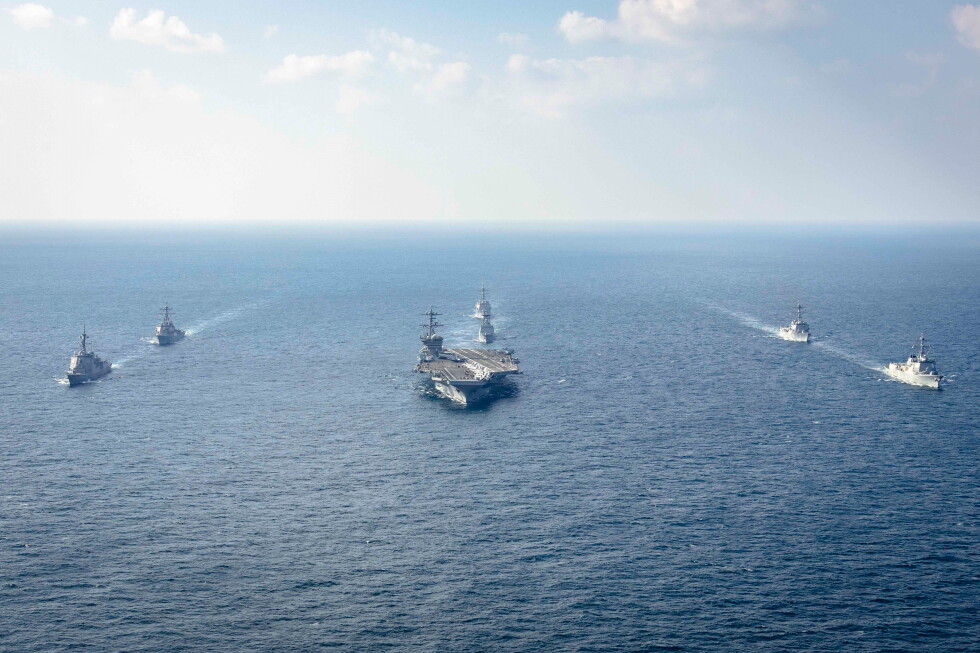
In the wake of fresh North Korean threats of retaliation against perceived U.S. aggression, senior South Korean government officials confirmed Friday that the United States, South Korea, and Japan will move forward with a planned trilateral military exercise next month, aimed at strengthening collective defense capabilities against Pyongyang’s growing nuclear and missile threats. This development has significantly dampened hopes that diplomatic negotiations between North Korea and the United States could resume in the near term, even after former U.S. President Donald Trump took a seemingly conciliatory step by ordering a major cutback to the long-standing bilateral military exercise between Washington and Seoul.
South Korea’s Defense Ministry announced in an official statement that the five-day “Freedom Edge” exercise will kick off September 7 in international waters off the southern Korean island of Jeju. Military officials emphasize that the drill is strictly defensive in its purpose, designed to sharpen coordinated responses to North Korean nuclear and missile provocations while upholding peace and stability across the Northeast Asian region. Launched in 2024, the Freedom Edge drill integrates simultaneous air and naval operations to upgrade allied capabilities in key strategic areas including joint ballistic missile defense, anti-submarine warfare, and cross-border surveillance coordination.
North Korea has long condemned this trilateral exercise as a reckless, confrontational demonstration of military power. Pyongyang has further claimed that the drill also serves a hidden U.S. agenda: to encircle China and exert strategic pressure on Russia amid current global geopolitical shifts. Just one day before South Korea’s confirmation of the drill, Pyongyang issued a new vow to retaliate against what it frames as unrelenting U.S. hostile actions. On Thursday, North Korea’s Foreign Ministry reiterated that accusation, pointing to a planned U.S. sale of air-to-air missiles and associated military equipment to South Korea as a fresh example of aggression, warning that Pyongyang would deliver a “serious, immediate and powerful response” to such hostile moves across multiple domains.
This latest escalation comes on the heels of a scaled-back bilateral exercise between the U.S. and South Korea. Last week, Washington and Seoul cut their annual Ulchi Freedom Shield exercise six days short of its scheduled conclusion, following Trump’s order to substantially reduce the scope of drills that North Korea has long decried as a rehearsal for a full-scale invasion of the country. Trump justified the cutback by citing his positive personal relationship with North Korean leader Kim Jong Un, framing the move as a goodwill gesture to open the door for renewed diplomacy.
However, Pyongyang rejected the overture outright, arguing that simply shortening the drill does nothing to alter its “provocative, aggressive nature.” In a direct show of defiance, North Korea launched roughly 10 short-range ballistic missiles into the sea, carrying out a threat it had issued earlier to respond to the bilateral exercise.
Since the collapse of the first round of U.S.-North Korea diplomatic talks in 2019, Kim Jong Un has systematically expanded North Korea’s nuclear arsenal, deepened the country’s strategic alignment with Russia amid its ongoing war in Ukraine, and strengthened both his military and diplomatic standing globally. Regional security experts note that Kim now holds far greater leverage in any potential negotiations, and is likely to demand major concessions from Washington: formal international recognition of North Korea as a legitimate nuclear weapons state, and full relief from crippling international economic sanctions, in exchange for only partial rolling back of Pyongyang’s nuclear program. Pyongyang has repeatedly stated it will not return to diplomatic talks until the U.S. drops its insistence on North Korean denuclearization as a precondition for negotiations.