Two senior anonymous defense officials, one American based in Europe and one from NATO, have revealed that the U.S. military is grappling with an unprecedented, ‘beyond critical’ shortage of advanced missile interceptors across European NATO territory — a shortfall rooted primarily in the six-month ongoing conflict between the Trump administration and Iran that has left the alliance exposed to potential Russian aggression.
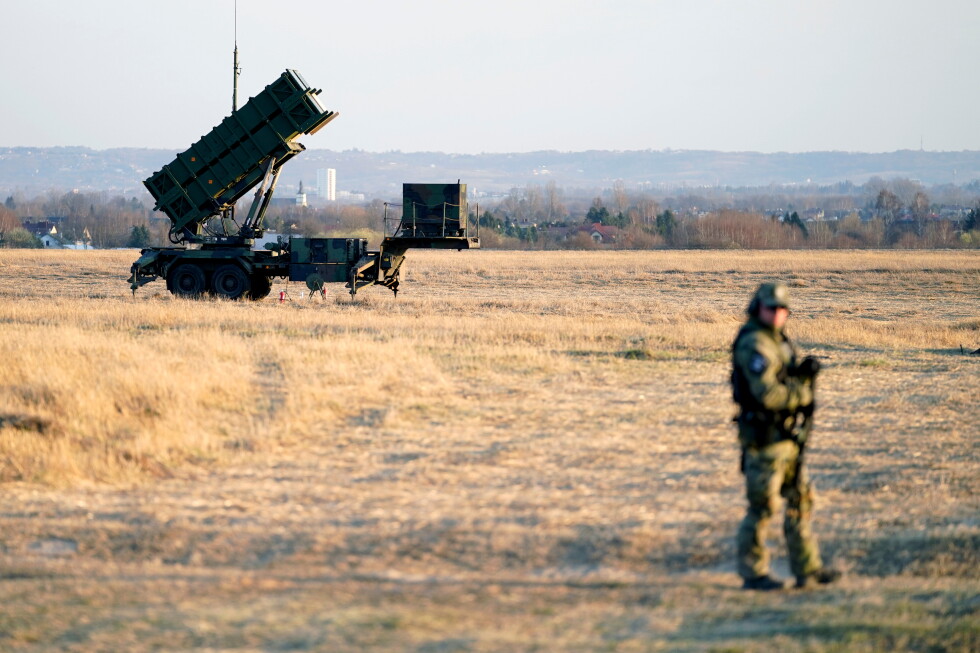
The most alarming gap centers on Patriot interceptor missiles, the primary defensive system capable of neutralizing Russia’s high-speed ballistic missiles. Both officials confirmed that existing stockpiles held by U.S. and NATO forces in the region are dangerously depleted. If Russia were to launch a ballistic missile strike against key NATO infrastructure such as military command centers or power generation facilities, the alliance would face the same crippling shortage of air defense assets that has plagued Ukraine, forcing it to absorb successive uncountered attacks, the U.S. defense official told the Associated Press.
Beyond any coordinated assault, the U.S. currently lacks sufficient Patriot stocks to defend against even a single stray or accidental Russian ballistic missile launch, the official added. This depletion is a direct, cascading consequence of the Trump administration’s decision to escalate conflict with Iran, which required diverting large volumes of European-based missile stocks to the Middle East. U.S. and Gulf coalition forces have expended thousands of interceptors, including hundreds of Patriots, to fend off repeated Iranian drone and missile attacks that have already resulted in American casualties.
While a Russian ballistic missile attack on NATO territory is not considered imminent, the severity of the shortfall prompted a rare, unannounced secret trip by CIA Director John Ratcliffe to Moscow this week to issue a public warning against Russian aggression. Trump downplayed the high-stakes visit, framing it as a “semi-routine” engagement. NATO intelligence estimates suggest Russia could accumulate sufficient capacity to launch a full-scale attack on an alliance member by 2030, a timeline that aligns with projected rebounds in Patriot stockpiles. For the immediate future, analysts note that Russia’s grinding war in Ukraine limits its ability to open a second front, as sustaining an air campaign across two theaters would pose massive logistical challenges for Moscow.
While transfers of Patriot systems to Ukraine have also contributed to the drawdown of global stockpiles, experts emphasize the Iran war was the unforeseen tipping point that pushed inventories into crisis. Ed Arnold, a senior associate fellow at London’s leading military think tank Royal United Services Institute, explained that Ukraine-bound transfers were planned and phased in a manageable way, but the sudden, unexpected depletion of stocks in the Middle East exposed long unaddressed gaps in the U.S. defense supply chain. Alongside Patriot shortages, the U.S. is also facing critical shortfalls of Army Tactical Missile System (ATACMS) medium-range offensive missiles in Europe, though that gap is partially offset by European-built long-range weapons such as the Taurus and Storm Shadow missiles already in service with regional allies.
Top NATO and Pentagon officials have pushed back aggressively against the claims of critical shortages. U.S. Army Col. Martin O’Donnell, a senior NATO military spokesperson, called assertions that Patriot stockpiles are “beyond critical” unfounded, stating that NATO retains sufficient air defense munitions to defend all member territory and continue supporting Ukraine. Pentagon chief spokesman Sean Parnell echoed that denial, calling claims of U.S. munition shortages false, and asserting that the U.S. military maintains a deep, ready arsenal capable of meeting all national security commitments across every theater.
With current stocks severely depleted, Europe has limited alternatives to counter advanced Russian ballistic missiles, which are often paired with low-cost drone swarms designed to overwhelm layered defenses. While shorter-range air defense systems can effectively counter slow-moving drones without expending expensive interceptors, ballistic missiles travel at more than five times the speed of sound on steep dive trajectories, leaving only seconds to detect and intercept them. The Patriot system remains the only widely deployed system capable of reliably countering these weapons, and each individual Patriot battery only covers a limited geographic area, meaning large population centers require multiple batteries to maintain full defense.
The only viable alternative, the French-Italian built SAMP/T NG upgraded air defense system, has yet to see combat testing, and the existing in-service version has a shorter interception range than the Patriot. While U.S. and European naval warships can act as mobile sea-based air defense platforms, they are often unable to reach inland targets in time to provide protection and face significant risk of being sunk in an open conflict.
According to data from the Center for Strategic and International Studies (CSIS), the Iran conflict has consumed roughly 65% of the entire U.S. Patriot inventory, approximately 1,500 of the nation’s total 2,330 interceptors. The Biden administration had already supplied roughly 600 U.S. Patriot interceptors to Ukraine following Russia’s 2022 full-scale invasion. Current production is on track to deliver around 600 new Patriots this year, with a planned production ramp-up to 2,000 interceptors annually by 2030. NATO is set to open the alliance’s first European Patriot manufacturing facility in Germany this coming September, with first deliveries scheduled to begin early next year to pre-ordering members including Germany, the Netherlands, Romania, and Spain.
Even with that future production in the pipeline, the immediate crisis has left some NATO members in a deeply problematic position. Arnold notes that countries like Germany have purchased entire Patriot battery systems at great cost, but currently hold almost no interceptors to fire from them, a situation he calls “ridiculous.” Germany’s defense ministry has declined to comment on the specifics of its national stockpiles.
Analysts point out that Russia faces its own significant constraints that reduce immediate risk. Moscow cannot sustain a large-scale air assault on NATO while also conducting near-daily missile attacks across Ukraine, and recent Ukrainian deep strikes into Russian territory have exposed critical weaknesses in Russia’s own air defense network, factors that are likely to give Russian President Vladimir Putin pause before escalating against the alliance. Arnold summed up the awkward current reality: “The uncomfortable truth is possibly the best air defense that we have is Russian constraints.”