YORK, Maine — On a June morning in 2026, when the thin coastal fog finally lifted from Maine’s York River, former marine science teacher Mike Masi and two interns leaned over a wooden dock, sorting through a teeming mound of one of the Northeast’s most destructive invasive species: the European green crab. Their goal? Separate out the crabs on the cusp of molting their hard outer shells to sell as a premium menu item to high-end restaurants across New England.
Green crabs (Carcinus maenas) first arrived on North America’s East Coast hundreds of years ago, hitching a ride in the ballast water of transatlantic trade ships from their native European waters. Today, their population along the New England coast numbers in the tens of millions, and climate change-fueled ocean warming has supercharged their spread: warmer winters allow more crabs to survive the cold season, and their extreme adaptability lets them thrive in nearly every coastal habitat. A single female green crab can release up to 185,000 eggs once or twice annually, helping the species outcompete native Atlantic rock crabs and juvenile lobsters, destroy critical eelgrass beds, erode salt marsh banks, and decimate native shellfish populations. The invasion costs the region’s commercial shellfish industry tens of millions of dollars every year, as green crabs prey on commercially valuable mussels, oysters, and soft-shell clams. Maine state data shows soft-shell clam landings have plummeted from more than 7.8 million pounds of meat in 1978 to just 1.3 million pounds in 2025, a decline veteran clam fisherman Chad Coffin attributes directly to the green crab takeover.
Now classified as one of the world’s most successful invasive species, green crabs have spread far beyond the East Coast: they have established populations along the U.S. West Coast, reached Alaska, and invaded coastal ecosystems across South Africa, Japan, Argentina, and Australia. “They’re really pretty resilient little guys,” explained Carolyn Tepolt, an evolutionary biologist at the Woods Hole Oceanographic Institution who has studied green crabs for 20 years. “Their adaptability is why we use them to research what allows some species to thrive in new, changing environments.”
To combat the invasion, a growing grassroots movement across New England is taking an unconventional approach: turning the invasive pest into a profitable commercial product, encouraging targeted harvesting to reduce population numbers while creating new revenue streams for local fisheries. Masi, whose company shell+claw is the only commercial enterprise focused on cultivating soft-shell green crabs, says the model turns a universally hated pest into an asset. The economics already make sense for soft-shell pre-molt crabs: Masi can sell each for $3 at market, compared to just 8 cents for a hard-shell green crab. Beyond profit, harvesting the crabs directly helps restore balance to damaged coastal ecosystems.
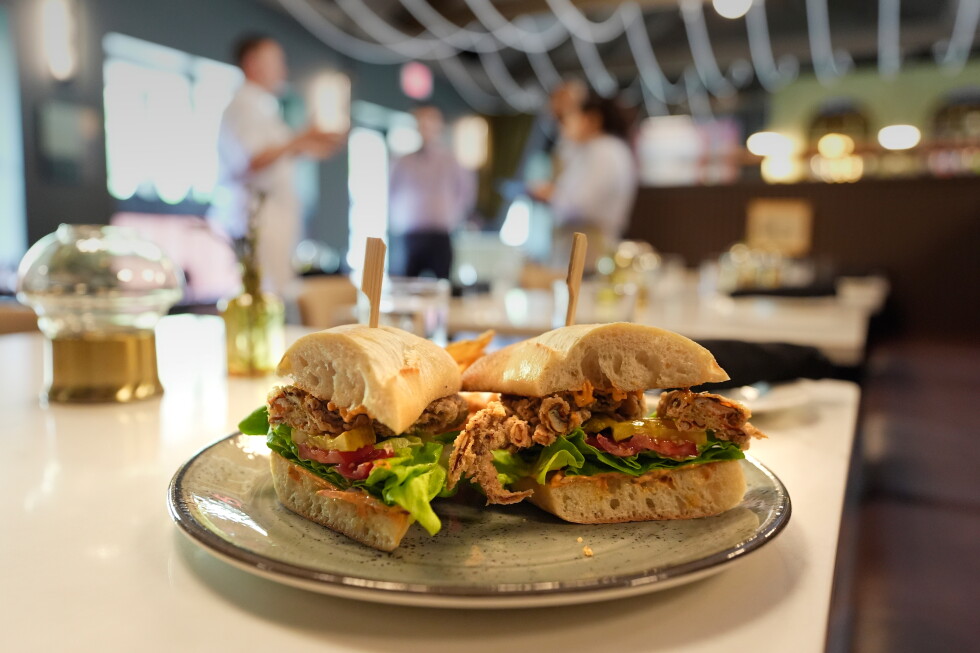
Masi is far from alone in this effort. Other producers across the region have developed green crab-based products including pet treats, fish sauce, and even a specialty green crab whiskey released in New Hampshire. Consumer interest is also growing: the number of New England restaurants offering green crab dishes has increased more than 10-fold since 2021, with many establishments hosting special “green crab weeks” during the two-month soft-shell molting season. Chefs praise the species’ richer, deeper flavor compared to more common commercial crabs. “King, stone, and Jonah crabs all have that mild, sweet light crab flavor,” said Tracy Chang, owner and chef of Cambridge, Massachusetts tapas restaurant PAGU, which serves green crab laksa and tempura soft-shell green crab bao. “Green crab has this really rich, deep, luscious crab flavor that’s far more potent.” Many diners have embraced the product too: physician and author William Li called his first green crab bao “spectacular, filled with flavor, easy to eat, and very tasty.”
Despite this growing momentum, large-scale commercial green crab harvesting remains out of reach for most New England fishermen. The current grassroots campaign has had only minimal impact on overall green crab populations, held back by a lack of processing infrastructure, distribution networks, and government support. There is not even sufficient research to confirm what a sustainable commercial harvest level would be, though experts agree the current catch is a tiny fraction of what the region’s massive green crab population could support. A major barrier is distribution: fishermen in northern Maine near the Canadian border report they can catch unlimited numbers of green crabs, but lack affordable transportation to move the catch to major consumer markets in Boston, New Bedford, and New York City.
A handful of states have taken small regulatory steps to lower barriers for green crab fisheries: Rhode Island offers green crab fishing licenses for just $10, Connecticut removed extra permitting requirements for selling green crabs to restaurants, and Maine has streamlined market access. Only Massachusetts offers direct financial incentives, paying fishermen 40 cents per pound in addition to market revenue, totaling just over $100,000 per year. That level of support stands in stark contrast to Washington state, which declared a state of emergency over green crab invasions in 2022 and plans to spend more than $38 million in state and federal funds through 2027 to eradicate the species. To date in 2026, nearly 2 million green crabs have been caught in Washington, most processed into organic fertilizer. Coastal tribal nations there also use caught crabs for compost, as they work to protect native treaty-protected fisheries from the same devastating impacts seen on the East Coast. “We’ve got treaty-protected fisheries at risk and critical habitats that are used by all sorts of native species,” said Raquel Crosier, deputy director of Washington state’s Fish Program. “We’re really worried that we’ll start to see those types of effects that they saw on the East Coast if we let the population get established.”
Back on the York River, Masi’s operation remains small and labor-intensive. His crew sorts through thousands of wild-caught crabs by hand to identify pre-molt individuals, which are then held in submerged floating cages until they shed their shells. Since launching his business five years ago, Masi has grown annual revenue to as much as $20,000, still roughly the size of a part-time hobby. He draws inspiration from Venice, where green crabs are a native delicacy caught and sold by generations of family fishermen, and remains cautiously optimistic about the future of the New England green crab market. “I am cautiously optimistic about the potential for green crabs,” he said. “We are one breakthrough from making this a profitable business.”
This coverage of climate and invasive species issues is supported by private foundation funding, with The Associated Press maintaining full editorial control over all content.