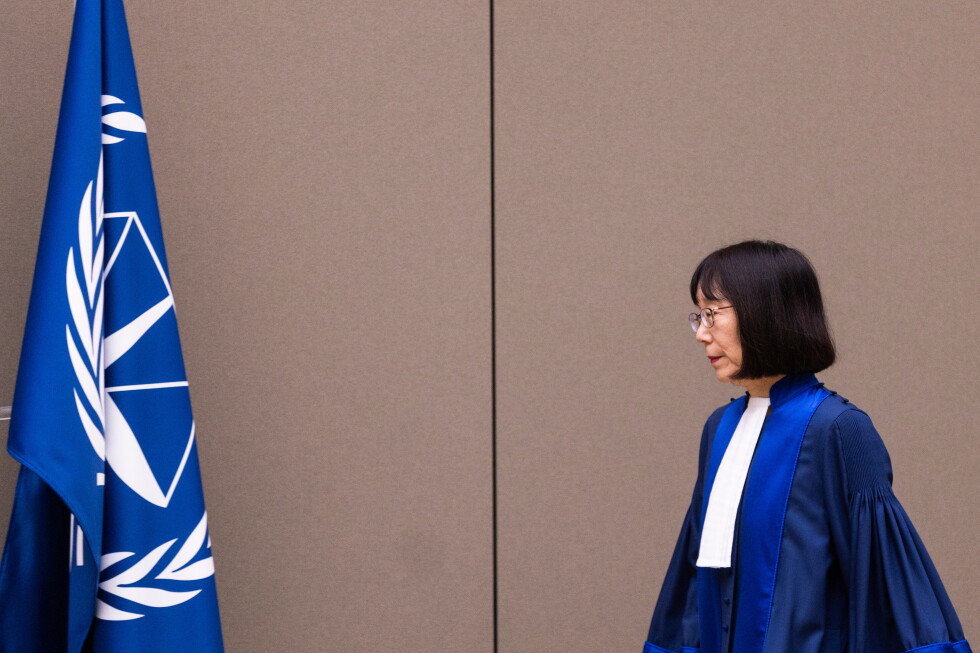
THE HAGUE (Rebuilt Report) — In a video press briefing from the court’s headquarters in The Hague on Wednesday, International Criminal Court (ICC) President Tomoko Akane pushed back firmly against recent U.S. sanctions targeting her, stating there is no legitimate justification for the punitive measures and urging Japan’s government to broker diplomatic action with Washington to prevent further tensions between the U.S. and the global judicial body.
Last week, Akane, a veteran Japanese jurist, became the newest ICC official added to a growing list of court personnel targeted by U.S. sanctions. The measures freeze any assets Akane holds within U.S. legal jurisdictions, bar her and her immediate family from entering the United States, and cut off her access to basic global financial services.
The U.S. has defended its punitive campaign against the ICC, claiming the court has overstepped its official mandate. The sanctions were imposed as retaliation for ICC investigations into alleged war crimes committed by Israeli officials in Gaza and U.S. military personnel in Afghanistan. To date, the Trump administration has applied sanctions to nine of the ICC’s 18 sitting judges, both of the court’s deputy prosecutors, its former chief prosecutor, and one additional member of the prosecution’s office staff.
“I insist that there is no reason I have to be sanctioned,” Akane told reporters, confirming the sanctions, which she had anticipated ahead of their announcement, have not shaken her commitment to judicial work nor hindered the court’s operations. “ICC will never be defeated. Justice will and should prevail.”
Despite acknowledging the sanctions have imposed “unreasonable inconvenience and threat” on her personal life — including the suspension of her personal credit cards — Akane said she remains fully committed to protecting the court, its judicial body and staff, and upholding the ICC’s core mandate.
As a longstanding U.S. ally that has consistently enshrined the rule of law as a central pillar of its diplomatic agenda, Japan has a critical role to play in convincing Washington to step back from further escalation, Akane argued. She also called on the Japanese government to encourage other ICC member states to resist U.S. pressure to withdraw from the court.
“The ICC is a last hope for the victims of serious international crimes,” Akane said. “I would like Japan to do everything it can to defend the ICC and the rule of law in the global society.”
The standoff has placed Japanese Prime Minister Sanae Takaichi in a delicate position, forcing her to balance Japan’s formal commitment to international rule of law with its critical security and political alliance with the U.S. under Donald Trump.
On Tuesday, Takaichi publicly acknowledged the rift, telling reporters that the U.S. sanctions against Akane are “not compatible” with Japan’s official position, and that the government “take this very seriously.” “I share the sense of crisis and concern that President Akane has faced, and we will continue to provide necessary support,” Takaichi said.
She pushed back against criticism from both opposition and ruling party lawmakers that her government has avoided tough confrontation with the Trump administration, noting that Japan has repeatedly called on Washington to reverse the sanctions against Akane.
The pressure on Takaichi’s government ramped up this week, when a cross-party bloc of ruling and opposition lawmakers adopted a formal statement denouncing the Trump administration’s sanctions against the ICC president. The group called for the U.S. to retract the measure and urged the Japanese government to take stronger action to support Akane and the court.
Japanese Foreign Minister Toshimitsu Motegi confirmed Tuesday that the foreign ministry has dispatched a senior official to The Hague to meet directly with Akane to coordinate support options. Motegi also warned that the U.S. stance against the ICC remains “extremely severe,” and that Washington has signaled it could impose additional sanctions in the coming period.
Japan joined the International Criminal Court as its 105th member state in 2007, during the first administration of former Japanese Prime Minister Shinzo Abe.