A devastating early-morning fire at a leading state-run hospital in Pakistan’s capital Islamabad has claimed the lives of at least 14 newborn infants, leaving one infant rescued and triggering urgent official investigations into the preventable tragedy, authorities confirmed this week.
The blaze erupted on the third floor of the maternal and child care wing at the Pakistan Institute of Medical Sciences (PIMS) — the largest public health facility in the capital — just after dawn on Wednesday. Hospital spokespersons confirmed the fire originated from a faulty air conditioning unit in the neonatal ward, where 15 babies were being cared for at the time. Most of the infants were placed in incubators or connected to oxygen support, a combination that turned a small electrical fire into an uncontrollable inferno: while pure oxygen is not flammable, it dramatically accelerates combustion, making surrounding materials burn hotter and spread flames far faster than in normal conditions.
Emergency response teams rushed to the scene after the fire was reported, evacuating more than two dozen people trapped in the building. Alongside the 14 neonatal fatalities, responders successfully pulled 19 other people — including 10 women, seven children, and two men — to safety. Only one newborn from the affected ward survived the blaze.
The toll of the disaster has left families grieving and officials scrambling to untangle what went wrong. Police officials confirmed all 14 deceased infants suffered extensive burn damage, meaning formal DNA testing will be required to positively identify the remains before they can be released to grieving family members for burial.
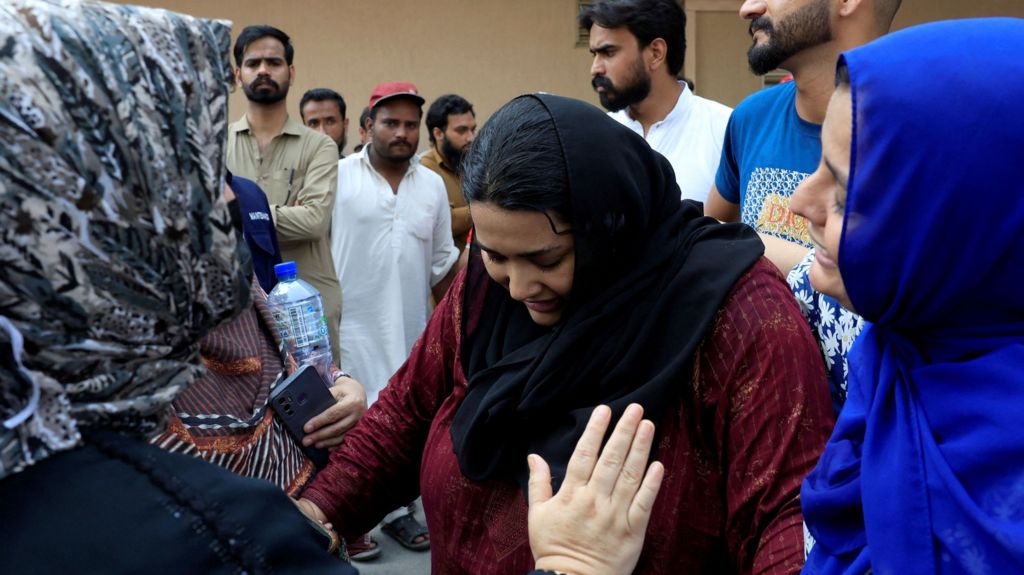
Grief-stricken family members gathered outside the hospital’s main entrance in the hours after the fire, many openly weeping as they waited for updates on their loved ones. One father told reporters his three-day-old child, born just days earlier, was among those killed. Hivsa Walid, who was at the hospital visiting her recently delivered sister-in-law, described the chaotic moment the fire broke out. She and her family were in a nursery across the hall from the burning AC unit when they heard shouts that were initially mistaken for a report of a natural patient death. When they spotted thick smoke filling the corridor, they grabbed the unnamed newborn and fled for their lives.
In the aftermath of the blaze, broken glass from shattered hospital windows littered the sidewalk outside the facility, mixed with discarded medical masks, as police maintained a perimeter to control access to the site.
PIMS, which operates a 156-bed maternal and child health division, is one of the most relied-upon public hospitals in Islamabad. This tragedy is far from an isolated incident for Pakistan: the country has seen a string of deadly large-scale fires in recent years, almost all linked to inadequate fire safety regulations, outdated building codes, and consistent lax enforcement of existing safety rules. Just eight months earlier, a massive fire tore through the Gul Plaza shopping mall in Karachi, Pakistan’s largest city, killing 67 people in one of the country’s deadliest commercial fires in recent history.
In a statement released hours after the fire, Pakistani Prime Minister Shehbaz Sharif expressed profound grief and sincere regret over the loss of the infants, calling the loss of young children an irreparable tragedy. He ordered national and local authorities to launch an immediate full investigation into the cause of the blaze. A fact-finding committee was quickly convened by Islamabad’s District Magistrate, which has been ordered to submit a full investigative report within 24 hours of the fire.