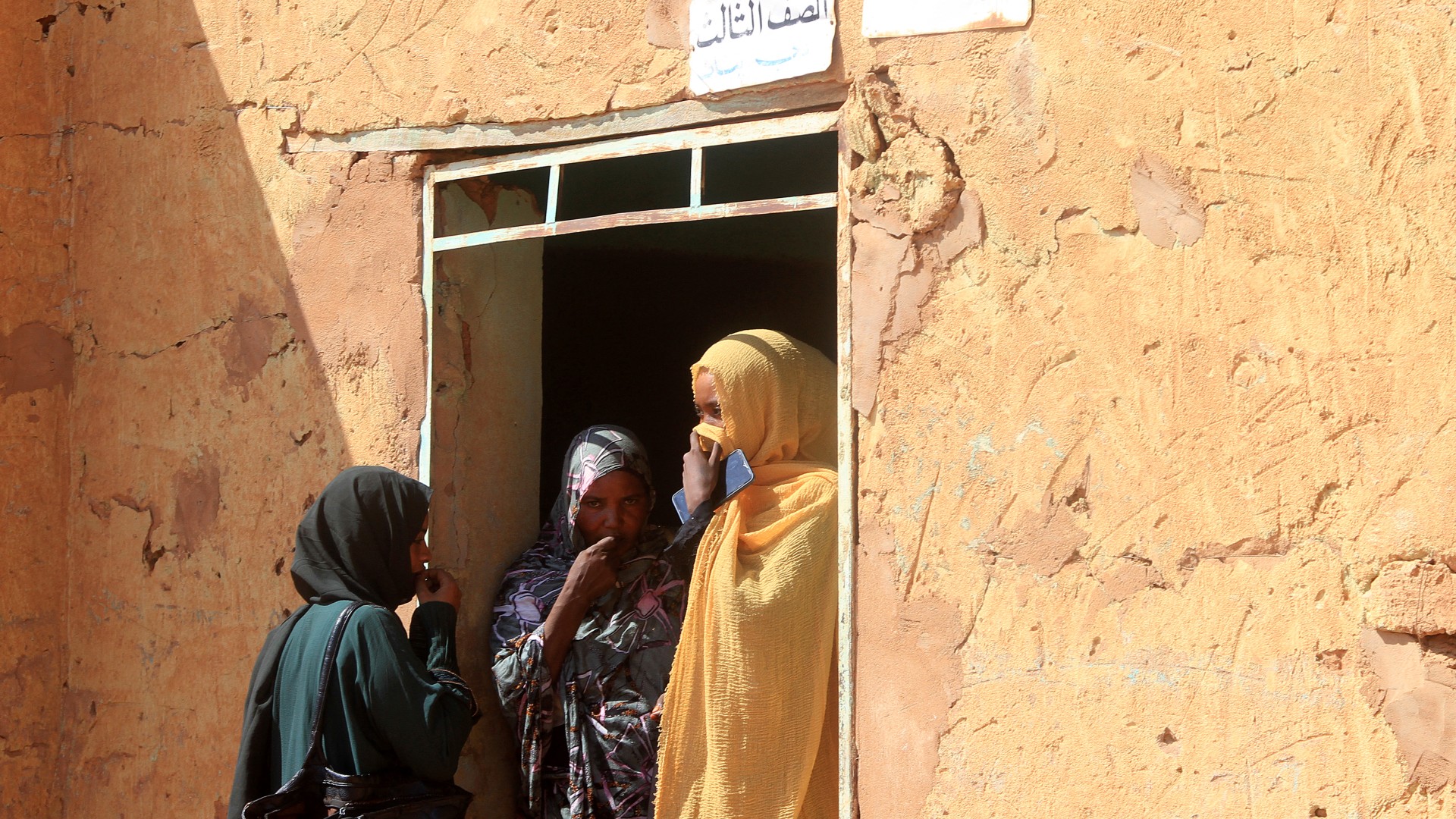
Once renowned across North Kordofan for its fragrant lemon groves that filled the market town’s streets with sweet spring blossom, Bara now bears the unthinkable scars of Sudan’s brutal 2023 civil war. What was once a thriving community of 100,000 residents is now a desolate landscape of destruction, where the scent of rotting human flesh has replaced the scent of lemon flowers, following months of sieges, violent clashes, and targeted civilian massacres carried out by the Rapid Support Forces (RSF) during their occupation of the town.
In July 2024, the Sudanese Armed Forces (SAF) and its allied resistance groups achieved a decisive victory, driving RSF fighters out of Bara and opening a rare window for independent observers and local first responders to access the war-ravaged town. Multiple eyewitnesses who entered Bara shortly after the SAF recapture described scenes of widespread horror: unburied civilian corpses left abandoned on roadways by the RSF fighters who gunned them down, while the few dead that received any form of burial lie in shallow graves or sealed inside destroyed private homes.
Local engineering experts working to assess Bara’s critical infrastructure have issued an urgent public warning about an impending public health catastrophe. Bara draws all its drinking water from shallow underground aquifers and wells, which reach depths of just 20 to 30 meters. Decomposition from thousands of unburied bodies already risks leaching contaminants into these water sources, threatening the lives of any returning residents and local livestock alike.
Bara’s strategic value has made it a key battleground throughout Sudan’s ongoing conflict. Sitting directly on the primary transport corridor linking Sudan’s capital Khartoum to resource-rich Kordofan, control of the town has shifted repeatedly between warring factions since fighting broke out in April 2023. The RSF, a United Arab Emirates-backed paramilitary group already accused of genocide by the U.S. government and multiple leading human rights organizations, first captured Bara in October 2023, using the town as a launch base for repeated drone strikes on el-Obeid, the capital of North Kordofan state located just 60 kilometers away.
The RSF has a well-documented pattern of mass civilian atrocities across Sudan, including ethnically targeted massacres that killed tens of thousands of people in the Darfur cities of el-Geneina and el-Fasher. Osman Abdulatif, a member of Bara’s pro-SAF popular resistance committee, says the same pattern of violence unfolded in his hometown, even as it remained underreported to the international community.
“Clashes and RSF atrocities in Bara have not gotten the same media attention as what happened in other areas, but we believe the RSF killed hundreds of civilians inside Bara and in the surrounding villages,” Abdulatif told Middle East Eye in an interview from el-Obeid. “We entered the city just a few days after SAF took control, and we found everything destroyed. Bodies littered the streets and homes, and the entire surviving population had fled to el-Obeid and other safe regions.”
Abdulatif added that only two elderly residents, a man and a woman, were found alive in Bara after the RSF occupation, having survived for weeks without access to food after the paramilitary group cut off all supplies to the town. Beyond the urgent need to recover and properly bury civilian corpses, Abdulatif warned that Bara is still littered with large stockpiles of unexploded ordnance that pose a constant lethal threat to any civilians who attempt to return.
Humanitarian teams have confirmed that atrocities are not limited to Bara itself. When Middle East Eye visited surrounding communities, including Gabrat al-Shiekh and Um Syala, they found matching patterns of mass destruction and mass displacement, with hundreds of unclaimed civilian bodies still left scattered across the countryside. Local authorities and non-governmental organizations are preparing to launch a mass body recovery operation, but local organizers say they desperately need additional technical, logistical, and humanitarian support from international partners to carry out the work safely and effectively.
“Right now we are supporting local volunteers to get the process started, but we desperately need technical and humanitarian backing from morgue teams, civil defense, national and international NGOs, and government agencies to get this work done properly,” said one local organizer, speaking on condition of anonymity due to restrictions on media contact.
A volunteer based in Um Syala, a border community adjacent to Bara, confirmed that at least 200 bodies are still unaccounted for in that area alone. Like Bara, Um Syala and Gabrat al-Sheikh hold major strategic value: they ring Bara and sit along the Export Road, a critical logistical artery that carries Kordofan’s key exports — including gold, gum Arabic, silica, and agricultural goods — to Khartoum and global markets. With the SAF’s recapture of Bara and its surrounding communities, the road is now secure, reopening a vital supply line to el-Obeid, which had been under RSF siege for months.
Local military and resistance leaders say the recapture of Bara has shifted the entire balance of power in Sudan’s civil war firmly in the SAF’s favor. “This advance has given the SAF a much more secure position and protected el-Obeid, opening the shortest route between Kordofan and the capital Khartoum. That means el-Obeid and Omdurman are now far safer,” explained Godat Abdul Hadi, a senior leader of the armed popular resistance in North Kordofan.
Local residents and business owners in el-Obeid have already seen tangible improvements to daily life. Mohammed Abbas, a market trader in el-Obeid, said that since the siege was lifted and the Export Road reopened, markets have resumed operation and critical supplies have started flowing into the city for the first time in months. Military sources also confirm that RSF drone strikes on el-Obeid and Omdurman, Khartoum’s twin city on the banks of the Nile, have dropped dramatically, as the RSF lost the forward operating bases it used to launch these attacks.
Just a few months ago, the outlook for el-Obeid was far grimmer. In June 2024, near-constant RSF attacks and threats of a full-scale invasion sparked widespread fears that the North Kordofan capital would suffer the same fate as el-Fasher, where an estimated 60,000 people were killed in RSF massacres in late 2023. The United Kingdom, France, other European governments, and senior United Nations officials issued public calls for the RSF to halt its attacks on el-Obeid, warning of an impending mass civilian bloodbath.
But Abdulatif dismissed these international appeals as empty gestures that did nothing to alleviate civilian suffering. “If these actors were being honest, they would have forced the RSF to lift the siege instead of just asking them not to commit atrocities,” he said. “The international community has lost all credibility when it comes to what is happening in el-Obeid and Kordofan. When they only urge the RSF not to commit crimes, they are indirectly encouraging the group to maintain the siege and deepen the humanitarian suffering of our people.”
“Thankfully, we managed to lift the siege ourselves at this stage, especially after the liberation of Bara and the surrounding areas,” he added.
Despite the SAF’s recent gains, the conflict in North Kordofan is far from over. RSF leadership has not abandoned its goal of seizing full control of the region, and in recent weeks the paramilitary group has launched counteroffensive drone strikes against Gabrat al-Sheikh and targets further afield, including Omdurman, al-Damar, and even Atbara in River Nile State, north of Khartoum.
SAF military officials claim all RSF counterattacks around Bara and el-Obeid have been successfully repulsed, and say army forces are now advancing through West Kordofan toward the RSF’s major stronghold in Darfur. But a senior source with intimate knowledge of the security situation in North Kordofan, speaking on condition of anonymity for security reasons, warned that RSF fighters still hold territory just 100 kilometers from Bara in the Sodari and al-Mazroob regions.
“If the SAF does not continue advancing to secure remaining RSF-held areas in North and West Kordofan, all of our recent gains could be reversed very quickly,” the source said.