India’s demographic landscape is shifting rapidly, with Generation Z poised to become one of the largest voting blocs by the 2029 general election – and the ruling Bharatiya Janata Party (BJP), long a leader in digital political campaigning, is scrambling to adapt its strategy to connect with this young, discerning audience.
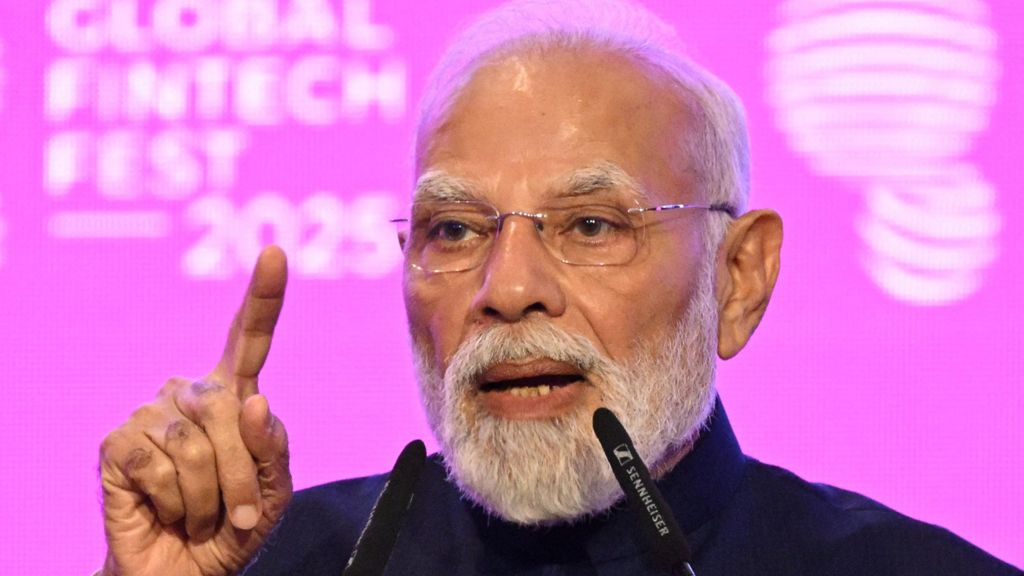
For years, Prime Minister Narendra Modi, 75, has cultivated a carefully curated strongman public image, built around scripted speeches, formal national broadcasts and tightly choreographed public appearances. Even with more than 106 million Instagram followers – making him one of the most followed political leaders on the platform – casual, approachable content was never a core priority for Modi or his party’s social media team. That all changed after a wave of youth-led protests rocked the country earlier this year.
The unexpected protest movement, organized by the satirical activist group Cockroach Janta Party (CJP), spread like wildfire across Instagram via memes, live streams and short-form reels. What began as an online joke quickly evolved into a mass grassroots movement that gained enough momentum to force a sitting federal minister to step down – catching the BJP’s seasoned digital team completely off guard.
Political commentator and author Anurag Minus Verma notes that for over a decade, the Hindu nationalist BJP has built one of India’s most formidable online political operations, leveraging WhatsApp groups, Facebook pages and X (formerly Twitter) accounts to amplify its messaging and dominate public narratives. But today’s young Indians consume content and engage with politics very differently than older generations. More than 60% of India’s 1.4 billion people are under 35, and experts warn that winning Gen Z’s support requires meeting them where they are: on platforms like Instagram, where unfiltered, personal content resonates far more than stiff, traditional political talking points.
In response to the protest wake-up call, Modi has quickly overhauled his Instagram presence. Where his timeline once featured only carefully polished, curated posts, it now includes more seemingly candid content: a “get-ready-with-me” short reel, multiple selfie-style video addresses where Modi refers to young viewers directly as “friends”, and even a speech that wove in a popular Gen Z catchphrase. At a Delhi graduation ceremony, Modi boasted, “I am the first in my bloodline to build a rocket, a chip and a drone” – a deliberate attempt to speak to young India’s growing interest in technology and national development.
But the outreach has not gone as planned. When Modi dropped his first selfie-style reel addressing the ongoing protests, young users responded immediately with sarcasm and mockery. A long, awkward pause after his opening greeting of “friends” went viral, spawning thousands of edits, memes, and jokes that poked fun at the clip’s poor lighting and awkward camera angles. The clip now has more than 400 million views – but the majority of the engagement comes from users sharing it to mock, not support, the prime minister.
Modi’s team has since adjusted, experimenting with new camera angles, backdrops and lighting to address criticism, but many young Indians remain skeptical of the sudden shift in tone. Ginni Malia, a 22-year-old young voter, says she understands why the BJP wants to connect with people her age, but the timing of the outreach raises red flags. “The videos adopt Gen Z language and formats, but they don’t address any of the core concerns that sparked the protests in the first place,” she explained. For many of her peers, the BJP’s new social media content is treated as accidental comedy, not serious political outreach.
The cringe-inducing attempts are not limited to Modi’s personal account. BJP party pages have also jumped on the Gen Z content trend, posting memes, Gen Z slang and pop-culture references that often miss the mark. One post-protest reel, set in a gym, featured a plot where an older trainer argued young people should avoid the protests – and was widely panned as awkward and out of touch in the comments. Another used the title track from 1990s sitcom *Friends*, a millennial favorite that holds little cultural cachet for Gen Z, with the caption “PM Modi is there for you”.
Recognizing that their initial attempts have fallen flat, the BJP has already made leadership changes. The party recently replaced Amit Malviya, its long-serving social media chief who held the role since 2015. Many analysts attribute the shakeup to widespread online criticism of the party’s handling of the protest narrative on social media. During the unrest, Modi reportedly instructed his cabinet to ramp up their own youth-focused social media engagement, and the Hindustan Times recently reported that federal ministers were given formal performance “report cards” for their social media outreach and ordered to expand their presence across all major platforms.
The BJP is not the only Indian political party courting Gen Z on Instagram. Opposition Congress leader Rahul Gandhi has long posted candid selfies and casual content on the platform, and held a popular Instagram “Ask Me Anything” session after the protests, where he responded to questions with playful quips – including one joke about whether he and Batman are the same person.
But even as the BJP tries to adapt, political analysts say the party faces fundamental structural challenges to winning on Instagram. Joyojeet Pal, a University of Michigan professor who studies the political use of social media, explains that the BJP’s traditional digital strategy relies on a network of loyal supporters to amplify messaging on X and WhatsApp. That model does not translate to Instagram, where the algorithm prioritizes affect-driven engagement – watch time, shares, comments and reactions – over network reach.
“It’s not uncommon for a 200-follower account to get 10 million views on a reel, while a huge verified political account only gets a few thousand,” Pal explains. “The BJP built its strategy for a network-centric internet, but today’s platforms are far more affect-centric. That’s a massive shift.”
Another major hurdle is the loss of narrative control. Modi’s first viral Gen Z-style reel is a perfect example: while it earned hundreds of millions of views, young users re-edited and shared it with sarcastic commentary, turning the prime minister’s intended outreach into a national joke. Verma notes that Instagram is fundamentally built around irony and satire, making it easy for even well-produced political content to be turned against the person who posted it. Learning to operate in that ungovernable space is a major culture shift for the BJP, which has long prioritized controlling the narrative.
Still, analysts caution against overstating the impact of social media performance on electoral outcomes. Pal points out that the BJP’s election success has always depended far more on its robust ground organization and loyal core support base than viral social media content. “It’s important to distinguish between winning a social media narrative and winning an election,” Pal says. “The BJP could still sweep elections even if every Gen Z user hates its content on Instagram.”
For now, the BJP – like every major political party in India – is navigating this unfamiliar new political terrain. Pal notes that the party has a long track record of adapting to new forms of political communication: it was an early adopter of social media campaigning, and has already embraced newer formats like podcasts and influencer interviews. It will likely figure out the Instagram game eventually, but it will take time to learn the platform’s unwritten rules. For young Indian voters, the priority is clear: they want leaders to listen to their concerns, not just chase viral social media trends.