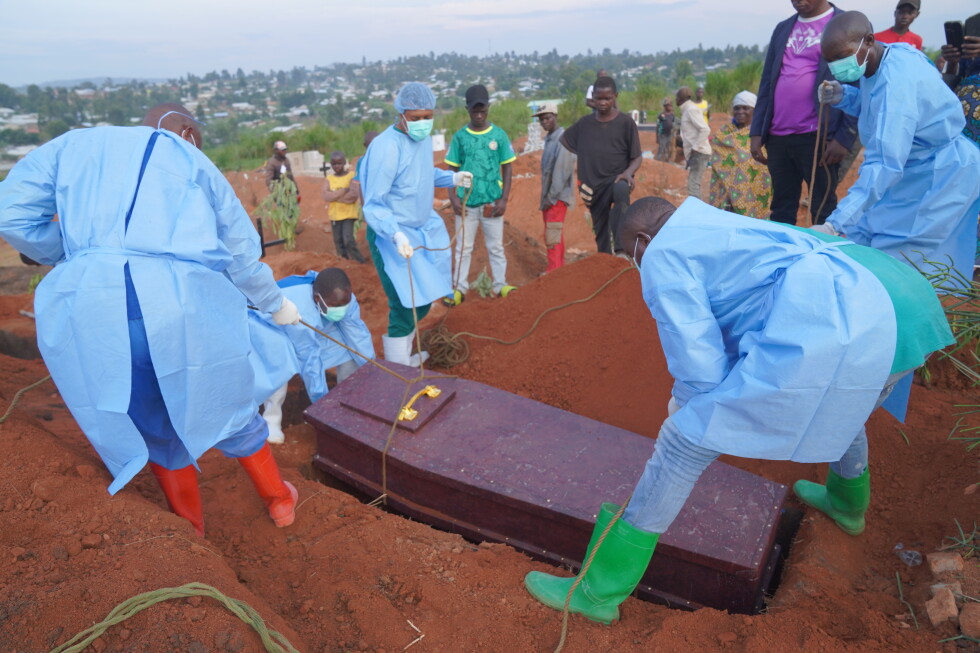
BUNIA, Democratic Republic of Congo – The World Health Organization, alongside global health partners, announced Thursday that the Democratic Republic of Congo (DRC) will soon receive 70,000 doses of the Ervebo vaccine, a move widely regarded as a critical reinforcement for local efforts to curb what health officials have called the fastest-moving Ebola outbreak on record.
Ervebo, a vaccine that has proven effective at stopping Ebola outbreaks in previous public health emergencies, is formally approved to provide protection against the Zaire ebolavirus – one of the viral species that causes Ebola disease. It has not been authorized for use against the Bundibugyo virus, the specific pathogen driving the current outbreak in eastern DRC.
In an official statement, WHO noted that while the full extent of Ervebo’s ability to protect against Bundibugyo remains unconfirmed, early findings from laboratory and animal studies indicate the vaccine could offer at least partial immunity against this strain. Of the 70,000 doses being allocated to Congo, 20,000 will be deployed for a Phase 3 clinical trial designed to formally measure how effective Ervebo is against the Bundibugyo virus. The remaining 50,000 doses will be prioritized for frontline medical workers and response teams, under guidance from WHO technical experts.
As of the latest update, the ongoing outbreak in eastern Congo has recorded 5,208 confirmed cases, with 2,476 recorded deaths. The outbreak is spreading at an unprecedented pace: it has infected and killed more people more rapidly than any previous Ebola outbreak in history, moving roughly three times faster than the 2014-2016 West African Ebola epidemic, which remains the deadliest on record with more than 11,000 fatalities across the region.
Responders have faced major structural challenges since the outbreak began. No vaccines or therapeutic treatments have ever been formally approved for the rare Bundibugyo virus, leaving response teams with few evidence-based tools to slow transmission. Further complicating containment efforts, the majority of new confirmed cases are being detected in communities that were not under active public health surveillance, a sign that the virus has spread widely and left contact tracing teams scrambling to contain undetected chains of transmission.