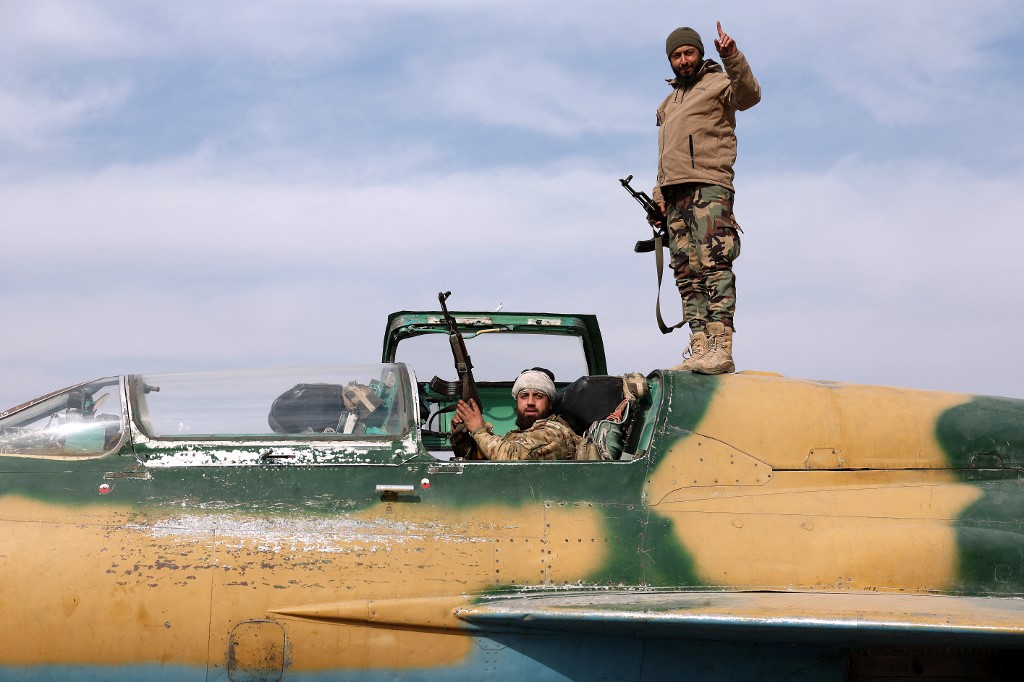
On a Tuesday in mid-August 2026, multiple Israeli airstrikes hit the inactive Abu al-Duhur military airbase in northern Syria, just 70 kilometers from the Turkish border. The targeted attack, carried out days after the signing of the landmark Mecca defense agreement between Turkey, Saudi Arabia, and Pakistan, has ignited a wave of diplomatic fallout and competing narratives across the Middle East, with Ankara dismissing the strike as a pre-election political stunt by Israeli Prime Minister Benjamin Netanyahu.
Netanyahu, who is currently in the thick of a heated domestic election campaign, has already positioned Turkish President Recep Tayyip Erdogan as a key adversary of Israel in his campaign messaging, alongside New York Mayor Zohran Mamdani. But beyond electoral posturing, regional analysts and government insiders say the strike carries larger strategic aims: it appears designed to weaken Ankara’s standing as a reliable ally to the new Syrian government and disrupt the emerging regional security architecture that Turkey has spearheaded.
Shortly after the attack, the Syrian government issued a formal condemnation, confirming that eight precision strikes targeted the airbase’s runway early that morning. The facility has long been non-operational, and initial statements from unnamed Israeli officials were inconsistent, starting with claims that new Syrian President Ahmed al-Sharaa was backing pro-Iranian proxy forces from the site, before the official Israeli narrative shifted dramatically.
In an official statement, the Israeli Prime Minister’s Office claimed that Israel and Syria had struck an understanding to maintain the existing security status quo, which it said Syria was about to break by allowing Turkish troops to deploy to the base near Aleppo. Multiple unconfirmed reports further claimed the strikes hit just after a Turkish official delegation had left the site, as Ankara prepared to take full control of the facility.
But Syrian officials pushed back strongly on these claims in comments to Middle East Eye, clarifying that only a small Turkish technical team had been deployed to repair the base’s runway and control tower, with no Turkish military personnel present on site at the time of the attack. One Syrian official noted that the last reconstruction team had departed the site two days before the strikes, adding that Turkey’s broader work across Syria is focused on helping rebuild a strong, capable national Syrian army to defend the country’s territorial integrity, with no activities targeting Israel. “Turkey doesn’t take over every base it helps repair,” the official emphasized.
Independent data aligns with this account: open source tracking from MEE Osint Track and aggregated data from the Armed Conflict Location & Event Data Project (ACLED) shows that Israel has maintained a consistent campaign of strikes across Syria since the fall of the Bashar al-Assad government, with 1,722 verified, deduplicated strike incidents recorded between January 2025 and August 18, 2026. Ankara for its part has already closed dozens of small outposts across northern Syria and only operates a small number of established, permanent bases in the region. Even if Turkey were to station personnel at Abu al-Duhur, officials note the base’s proximity to the Turkish border means any presence would not shift the regional aerial balance of power, contradicting Israeli claims of a growing threat.
A major point of contention that has raised alarm across the international community is Israel’s failure to use the dedicated military hotline established with Turkey in 2025, a mechanism designed specifically to prevent accidental military clashes and escalation. Turkish officials say this deliberate choice was no oversight: it was a deliberate provocation.
U.S. Envoy to Turkey and Syria Thomas Barrack echoed these concerns in comments to an Israeli media outlet, warning that the strike carried a severe risk of spiraling into direct military conflict between Israel, Turkey, and Syria. “Turkish forces were not aware that the Israeli aircraft were en route to that specific Syrian base, nor of their intended purpose, and therefore could potentially have been inclined to scramble their own jets in the belief that they themselves were under attack,” Barrack explained.
Ankara’s official response framed the attack explicitly as a pre-election gambit by Netanyahu, with the Turkish presidency’s communications office accusing the Israeli prime minister of pursuing expansionist, destabilizing policies across the region to boost his domestic polling. Multiple Turkish government insiders, speaking on condition of anonymity, expanded on this assessment, noting the strike serves dual strategic purposes beyond just winning votes.
The Mecca defense agreement, signed just days before the strike, has created domestic political pressure on Netanyahu, the insiders explain, even as the new trilateral security pact has been welcomed by the U.S. administration of President Donald Trump, which currently backs al-Sharaa’s Syrian government. By striking the base, Israel is sending a clear message that it rejects the new regional security framework being built by Ankara, and will continue to carry out strikes across Syria whenever it sees fit. “It is a way of telling Erdogan that they won’t let him feel comfortable in Syria,” one insider said, noting that Erdogan recently announced plans to visit Damascus later this year — his first trip to the Syrian capital since the fall of Assad.
The strike also acts as a test of the Trump administration’s commitment to the new regional order, insiders add, and officially confirms what many in Ankara have suspected: Israel views Turkey’s long-term presence in Syria as an existential threat. One insider warned that rising tensions ahead of Turkey’s 2028 general election could deepen the rift between the two countries, raising the risk of a major military incident similar to the 2015 downing of a Russian fighter jet by Turkish forces.
While one Turkish source familiar with military operations noted that Turkish radar systems can track Israeli aerial activity as far south as Jordan, and that Ankara was not caught completely off guard — with some speculation that U.S. officials provided advance warning of the strike — Turkish officials still warn Israel is gambling with regional security. “They are playing with fire,” one senior Turkish official said. Barrack has called for the immediate activation of a new deconfliction mechanism that includes Syria, Turkey, and Israel to prevent further escalation, but it remains unclear if Israel will agree to new confidence-building measures following the strike.