In a landmark announcement that cements its role as a trailblazer in African clean energy transition, Kenya has dramatically scaled up its long-term renewable energy capacity goal, more than tripling the previous target to 5,500 megawatts from the current operational capacity of roughly 1,500 megawatts. The ambitious expansion plan lays out a diverse clean energy mix, including 2,000 megawatts of new nuclear capacity, 700 megawatts of additional hydropower, and a suite of new geothermal energy projects across the country.
For a nation that already generates 93% of its total electricity from renewable sources, the updated target is set to strengthen Kenya’s standing as a global leader in green energy adoption. However, energy analysts and industry insiders warn that this dramatic growth in clean generation capacity will not automatically translate to lower electricity bills for domestic and industrial consumers – a pressing priority that has been pushed to the top of the national policy agenda by Kenya’s lawmakers.
Peter Njenga, chief executive officer of KenGen, the state-owned power utility that produces roughly 60% of the country’s electricity, confirmed the recalibration of the national clean energy growth trajectory, saying “We have recalibrated our long-term growth trajectory from 1,500MW to a 5,500MW renewable energy development pipeline.”
Kenyan lawmakers have repeatedly pressured the national government to cut retail electricity rates, arguing that cheaper power is critical to supporting the country’s industrialization goals and easing cost-of-living pressures for households. In July, Kenya’s parliament issued a formal directive to Energy Minister Opiyo Wandayi, ordering him to develop a framework to renegotiate existing power supply agreements with major independent energy producers. Lawmakers argue that lower wholesale electricity costs would give state-owned distribution firm Kenya Price enough financial flexibility to cut consumer rates without compromising its operational and financial stability.
Energy experts across the board agree that Kenya’s urgent priority is not simply adding new generation capacity, but addressing systemic inefficiencies that keep consumer electricity prices far higher than regional peers. “The answer to this conundrum is not as straightforward as it may seem,” said Mugwe Manga, climate finance lead at the nonprofit Financial Sector Deepening Kenya. “One must look at the entire energy system holistically to understand the drivers of the end cost of power.”
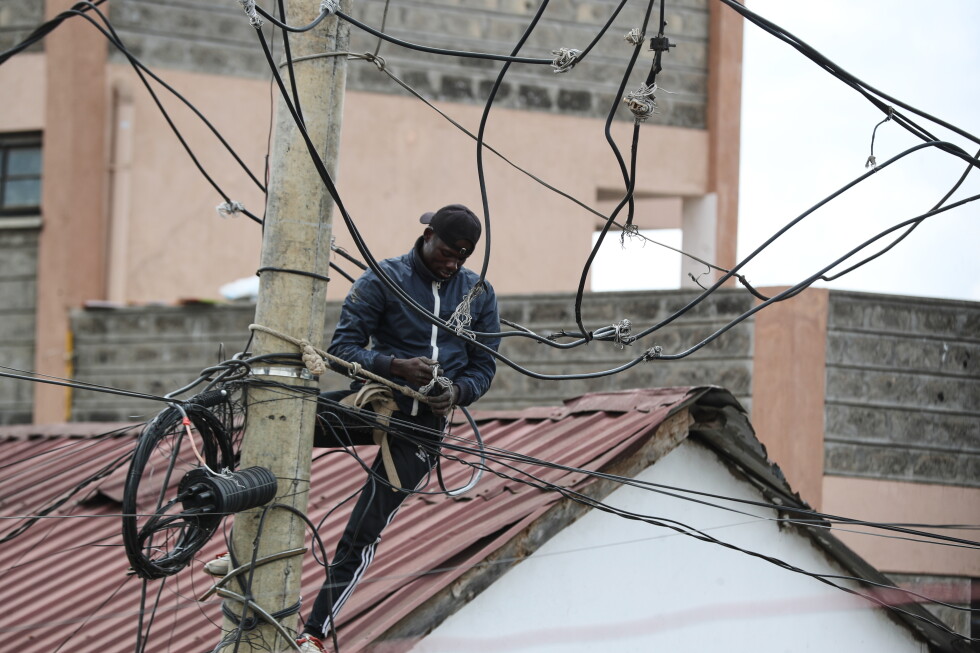
Unlike major emerging economies including Morocco, Egypt, and China, Kenya offers very limited direct government subsidies to buffer retail electricity prices for consumers. While the cost of generating renewable electricity in Kenya is broadly competitive with regional alternatives, end users ultimately bear the full weight of high project financing costs, significant transmission and distribution network losses, taxes, and volatility from foreign exchange rate movements.
Latest market data underscores the stark gap between Kenya’s electricity prices and those of its neighbors: industrial consumers in Kenya pay between $0.18 and $0.23 per kilowatt-hour, compared to just $0.03 per kilowatt-hour in South Africa and Egypt, and roughly $0.05 per kilowatt-hour in Morocco and Ethiopia.
Joseph Siror, CEO of Kenya Power, pushed back on widespread perceptions of excessive pricing in an earlier interview, noting “The perception that electricity is expensive is subjective. The consumer prices are dependent on infrastructure costs, electricity tariff structures, and outstanding bill recoveries.” Siror added that Kenya’s heavy reliance on capital-intensive green energy sources inherently adds to costs, as the specialized infrastructure required for renewable generation carries high upfront installation and long-term maintenance expenses.
Manga identifies the country’s distribution network as one of the single biggest sources of inefficiency driving high consumer costs. “More than 20% of electricity is lost to technical failures and illegal connections, compared with a global average of 8%-10%,” he explained. “That offers a great low-hanging fruit to improve efficiency and pass that efficiency dividend to end consumers through reduced tariffs.”
Prohibitively high financing costs represent a second major barrier to lower prices. Renewable energy developers across Africa face far higher borrowing interest rates than their counterparts in wealthy developed economies, because international investors perceive clean energy projects on the continent as carrying higher systemic risk. These elevated borrowing costs are ultimately passed through to end consumers in the form of higher tariffs.
Kenya’s long-standing power purchase agreements (PPAs) with independent power producers (IPPs) have also come under renewed scrutiny in recent months. IPPs supply roughly 40% of Kenya’s total generation capacity, operating under long-term contracts signed after the country liberalized its electricity generation sector in the late 1990s. Many of these contracts include binding “take-or-pay” clauses that require the Kenyan government to make contracted payments even when the country does not need or consume all the electricity secured under the agreement. Critics argue these arrangements force consumers to pay for unused surplus electricity, though Manga notes that such guarantees were a necessary requirement to secure financing for the capital-intensive renewable projects built over the past two decades.
“Kenya’s renewable resource base is a major advantage, but electricity prices are determined by the whole system, not only by the cost of power generation,” explained Albert Nganga, senior regulatory manager at CrossBoundary Energy. “They also reflect how power is contracted, transmitted, distributed and recovered.” Nganga added that recently proposed open-access electricity market reforms could boost competition by allowing large industrial consumers to purchase power directly from generators, potentially putting downward pressure on prices.
Cynthia Angweya-Muhati, CEO of the Kenya Renewable Energy Association, emphasized that the country’s ambitious new generation targets will only deliver broad benefits if paired with systemic policy and regulatory reform. “The real test will be whether that additional clean generation is matched by reforms that lower electricity costs for consumers,” she said.
This coverage of climate and energy issues by The Associated Press receives financial support from multiple private foundations, with AP retaining full editorial control over all content.