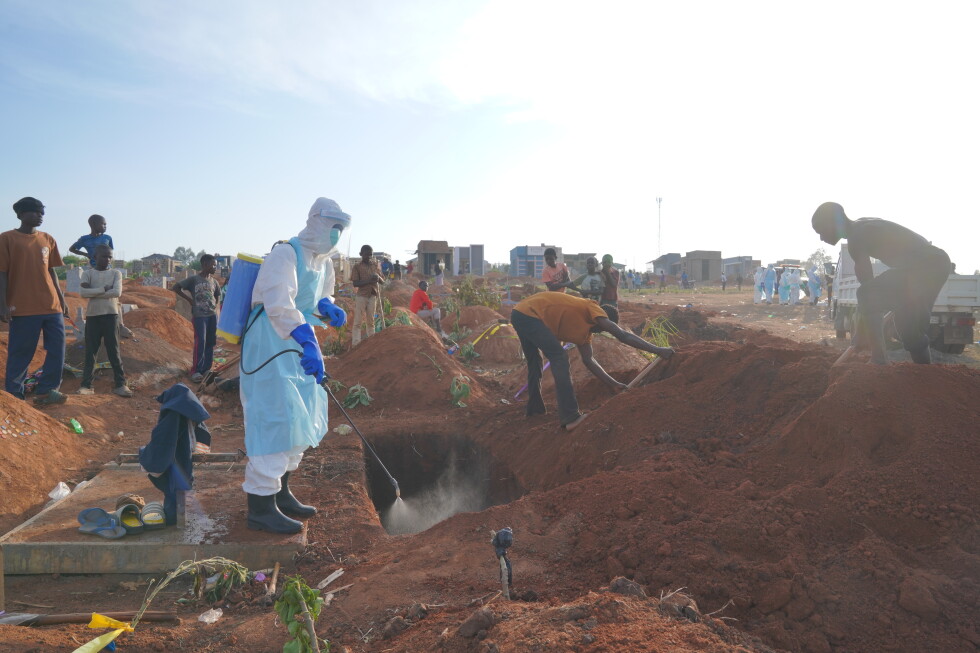
In the conflict-ravaged eastern region of the Democratic Republic of Congo, a rapidly spreading Ebola outbreak fueled by the rare Bundibugyo virus has become the deadliest Ebola event recorded in the Central African nation, new government data confirms. As of early Monday, the outbreak has hit a grim milestone: 4,945 confirmed and probable cases, with 2,325 recorded deaths — a toll that has already outstripped the 2,299 fatalities from Congo’s 2018-2020 Ebola outbreak, the previous deadliest event in the country’s history. This marks the 17th Ebola outbreak the country has faced, and by far the most geographically extensive and fast-moving.
The latest 24-hour reporting period saw 101 new cases and 33 additional deaths, underscoring the relentless spread of the virus. To date, more than 1,000 patients have recovered from infection, while 730 people remain under care in hospitals or isolation facilities. Unlike previous major Ebola outbreaks, there are currently no approved vaccines or specific antiviral treatments for the Bundibugyo variant driving this surge. Clinical trials for experimental vaccines and therapies are currently ongoing in Ituri province, the epicenter of the outbreak that has now spread to six total provinces.
Responders face a cascading series of obstacles that have allowed the virus to outpace containment efforts. A large share of new infections and fatalities are being detected in community members who were not already under active monitoring, a gap that allows silent transmission to continue. Additional challenges include work stoppages by unpaid frontline health workers, persistent security threats from active rebel groups in the region, deep-seated distrust among communities that have endured decades of conflict and trauma, impassable terrain hampered by poorly maintained roads, and widespread misinformation that denies the existence of Ebola entirely.
Over the weekend, the World Health Organization (WHO) warned that the outbreak continues to expand at an “exceptional pace” that outstrips current contact tracing and containment work. Last week alone, the outbreak hit a new weekly record with 579 new cases and 304 deaths. Global health officials have warned that if current trends continue, this outbreak could surpass the 2014-2016 West African Ebola epidemic, the global deadliest on record which killed more than 11,000 people across three countries.
In response to the worsening crisis, international actors have begun ramping up support. The WHO confirmed that a major expansion of response activities is currently underway to reverse the outbreak’s momentum. On Friday, United Nations Under-Secretary-General for Humanitarian Affairs Tom Fletcher announced an additional $30.5 million in emergency funding for the response, alongside the deployment of 20 extra specialized personnel to support frontline efforts. Fletcher framed the escalating crisis as a critical warning to the international community, saying, “We need speed, scale and solidarity before this virus gets even further ahead of us.”