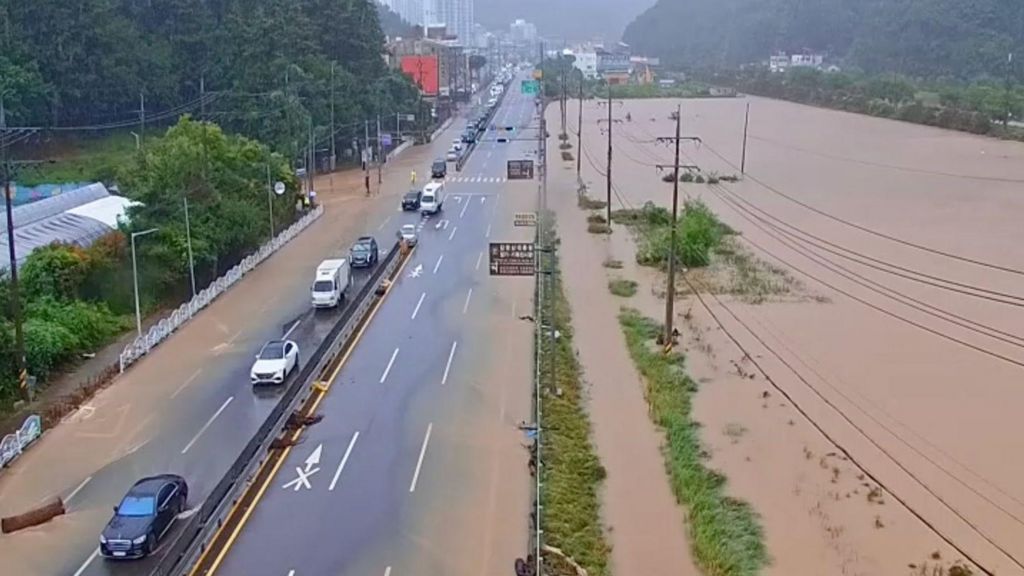
A catastrophic wave of extreme rainfall has unleashed deadly destruction across South Korea’s southeastern Gyeongsang province, leaving one person dead and two injured after a landslide crashed into a residential building in the coastal city of Geoje. The disaster unfolded early Monday morning, when the mudslide fully engulfed the ground floor of a local apartment complex. Emergency response teams rushed to the site to extract three trapped residents, though medics later confirmed one victim had succumbed to injuries, according to local South Korean media reports.
The deadly event came amid a historic downpour that shattered decades of weather records in Geoje. Official data from South Korea’s national meteorological agency shows the city recorded 124.5 millimeters of rainfall in just a single hour overnight between Sunday and Monday — the highest hourly precipitation total ever recorded in the city since systematic weather tracking began there in 1972. Cumulatively, Geoje received more than 400 millimeters of rain across the overnight period, overwhelming drainage systems and triggering widespread infrastructure failure.
Witness videos shared across social media platforms paint a grim picture of the flooding: powerful, murky currents rush through downtown city streets, submerging passenger vehicles up to their windshields and sweeping loose debris across roadways. In response to the unfolding crisis, Geoje city authorities has implemented widespread service suspensions and safety measures: all popular tourist attractions in the city were closed to visitors on Monday, public bus routes have been taken offline due to flooded or damaged roads, and regular municipal household waste collection has been paused until conditions improve. As early as Sunday, local officials had already issued urgent public advisories urging residents to avoid non-essential travel, steer clear of high-risk areas including riverbanks and steep hillsides, and evacuate immediately to designated safe shelters if instructed by emergency personnel.
This disaster in South Korea is part of a broader pattern of extreme weather sweeping across East and Southeast Asia this month, where successive storm systems have brought record flooding and landslides to populated areas of China, Japan, and the Philippines. Climate forecasters warn the 2024 typhoon season is on track to be far more intense than the historical average, a shift directly linked to a strong El Niño climate pattern that developed in June. El Niño drives elevated ocean and global atmospheric temperatures, which in turn boost the moisture content and destructive power of tropical typhoons and storm systems moving through the region.
Just days before the Geoje landslide, Japan faced its own extreme weather catastrophe when “unprecedented” rainfall battered Chiba Prefecture, located just outside of Tokyo. That deluge claimed 10 lives and left thousands of air travelers stranded at Narita International Airport when floodwaters disrupted airport operations. More than 20,000 households across the prefecture lost power during the storm, and the 10th confirmed fatality was identified Sunday as a man in his 30s who died from carbon monoxide poisoning after running a portable generator inside his home to cope with the extended power outage, Japan’s national public broadcaster NHK reported.