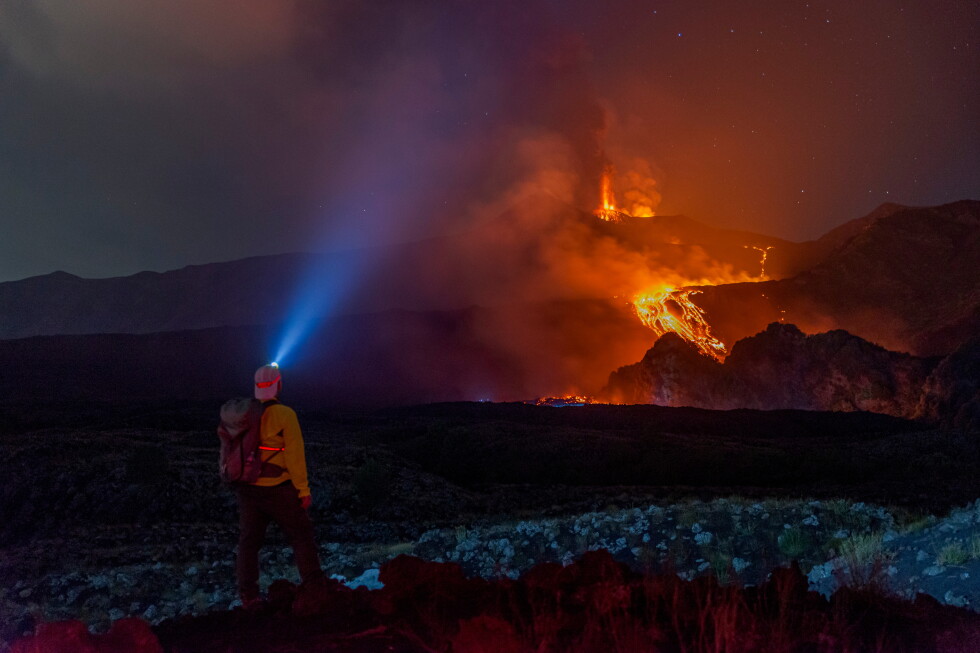
As one of Europe’s most active geological landmarks, Sicily’s Mount Etna has thrown peak summer travel plans into chaos across the Italian island, with its persistent ash emission forcing the closure of Catania Fontanarossa Airport — Sicily’s busiest air hub — for a fifth consecutive day. Thousands of summer vacationers have been left stranded at the height of Ferragosto, Italy’s most popular annual travel week, when millions of Italians leave major cities to crowd coastal and mountain getaways across the country. Airport officials confirmed the shutdown will extend through early Saturday, extending what already marks the longest period of flight disruption from Etna’s volcanic activity since 2002.
Volcanologists emphasize that the extreme caution behind the extended closure is well-founded. Ash particles ejected by the volcano pose severe safety hazards to commercial aircraft, explained Boris Behncke, a senior researcher at the National Institute of Geophysics and Volcanology’s Etna Observatory. When fine volcanic ash is pulled into jet engines, it can melt on the hot internal components of the motor, coat turbine blades, and cause complete engine failure — a risk that aviation regulators have zero tolerance for. Unlike many of Etna’s past eruptions, which are shorter and more explosive, the current event is defined by unusual, sustained ash output that has continued for days. Northerly winds have even carried trace amounts of ash as far south as Malta and northern Africa, extending the volcanic activity’s geographic reach.
What makes this disruption unique compared to previous volcanic events at the site is its longevity, Behncke noted. While Etna’s frequent activity has caused dozens of shorter flight interruptions over recent decades, and even triggered temporary shutdowns during more powerful past eruptions, the ongoing steady ash release from the volcano’s summit has created an unprecedented extended disruption for travel. Catania Airport sits just 20 kilometers south of the active crater, making it particularly vulnerable to ash fallout during periods of sustained activity.
The travel chaos has already sparked secondary disruptions across the island, according to local reporting from Italian daily *Corriere della Sera*. With hundreds of flights forced to divert to smaller airports across Sicily, demand for ground transportation has skyrocketed, leading to sharp, unregulated hikes in taxi fares and car rental prices. Italian consumer advocacy group Codacons has announced it will formally file a complaint with Italy’s national competition authority over widespread reports of price gouging against stranded travelers.
Data from SAC, the operator of Catania Airport, shows the scale of the disruption: between August 6 and August 12, 36% of the nearly 2,000 scheduled flights to and from the hub have been canceled. More than 600 diverted flights have been redirected to alternate airports including Palermo, Trapani, Comiso on Sicily, and Lamezia Terme on the Italian mainland in Calabria. While limited outgoing flights were permitted over the weekend immediately after the eruption began, the airport moved to a full shutdown, banning both incoming and outgoing commercial traffic, starting Monday. Nearby Comiso Airport also briefly suspended operations due to ash accumulation on its runways earlier this week.
To ease the strain on stranded passengers, Italian national rail operator Trenitalia has added six extra daily services along the busy Palermo-Messina-Catania coastal route to increase passenger capacity between the island’s major cities and alternate air hubs. Italy’s national travel industry federation, FIAVET, has called for the creation of a dedicated government task force to better coordinate responses to future volcanic travel disruptions, and is demanding a formal review of how airlines handled mass cancellations and passenger support during the current crisis.
In a statement addressing the chaos, FIAVET President Gian Mario Pilieri noted that travel providers have been working around the clock to rebook passengers, arrange alternate itineraries, and support stranded travelers, but the current crisis has exposed gaps in systemic preparedness. “Operators are working around the clock to provide assistance, process cancellations and arrange alternative travel arrangements, but they cannot bear the burden of structural shortcomings and the management responsibilities of others,” Pilieri said.