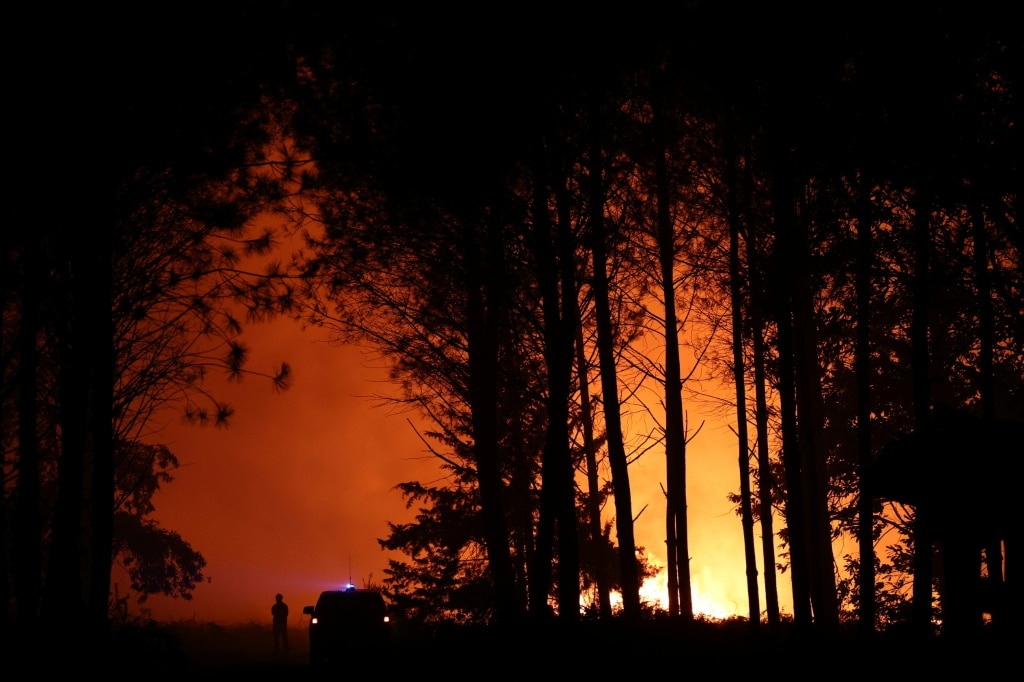
On Friday, nations across the European continent launched coordinated emergency responses to a surge of uncontrolled wildfires, fueled by record-breaking high temperatures and parched, flammable vegetation that has created near-ideal conditions for catastrophic blazes to spread. As the world’s fastest-warming continent, Europe has long faced growing gaps in infrastructure and preparedness to handle the increasing frequency and intensity of extreme heat events, a crisis that climate scientists overwhelmingly link to anthropogenic climate change.
This summer of unrelenting heat and rampant wildfires has already entered the history books as one of the most deadly on record, with thousands of heat and fire-related fatalities recorded across the region. AFP analysis drawing on data from Germany’s national weather service and the European Commission’s Joint Research Centre reveals that on Friday alone, roughly 150 million people across France, Germany, Spain, Italy and other high-risk nations faced air temperatures exceeding 35 degrees Celsius. Even more startling, around 350 million European residents – three out of every five people living on the continent excluding Turkey – experienced temperatures above 30 degrees Celsius.
In France, which has already endured a string of massive, destructive blazes already this wildfire season, a new outbreak ignited in the country’s southwest on Friday. Local officials confirmed that the fast-moving fire forced more than 500 residents to evacuate their homes immediately. The blaze has already consumed 1,100 hectares (approximately 2,700 acres) of land in the Landes department, and was advancing toward the small village of Luglon as of Friday afternoon. Regional fire chief Arnaud Fabre noted that the spread of the fire had slowed, but warned that forecasted local temperatures as high as 36 degrees Celsius created a high risk of dangerous flare-ups in the coming hours. This new emergency comes as the vast majority of France remains in the grip of a prolonged, extreme heatwave.
Western Germany also faced a rapidly escalating wildfire crisis Friday, with local officials ordering the evacuation of approximately 1,800 residents from their homes overnight. Firefighting operations deployed military equipment and helicopter support to contain the blaze, which originated near the town of Huertgenwald, close to Germany’s borders with Belgium and the Netherlands. By Friday morning, the fire had expanded dramatically from an initial 25 hectares (around 60 acres) to 300 hectares, prompting the full evacuation of one of the town’s districts. Southwestern Germany has been one of the hardest-hit regions across the continent this summer, with sustained high temperatures and record low rainfall drying out farmland and pushing river levels to dangerous multi-decade lows.
Across the English Channel, the United Kingdom’s firefighting infrastructure was pushed to breaking point, according to the head of the National Fire Chiefs Council (NFCC). NFCC leadership confirmed that firefighters were operating under “significant pressure” as multiple concurrent wildfires spread across the country against a backdrop of soaring temperatures and widespread drought conditions. On Thursday, which marked the UK’s hottest day of the year to date, a large blaze in the central English town of Stourbridge left a trail of destruction that included charred agricultural fields and destroyed residential properties. Three firefighters responding to that blaze, located southwest of Birmingham, were admitted to hospital for treatment of injuries sustained while fighting the fire.
Croatia is confronting what national fire chief Slavko Tucakovic described as one of the worst wildfires in the country’s modern history. The coastal blaze has already destroyed multiple residential buildings and left 19 people injured, according to local reports. At least 1,000 people displaced by the fire near the coastal town of Omis, located south of the major coastal city of Split, were relocated to a temporary shelter set up in a local sports hall. Tucakovic mobilized additional firefighting teams from across the country to reinforce frontline crews working at the scene, while four Canadair water-bombing aircraft were placed on standby to support containment operations. The same air fleet helped bring a separate wildfire on the nearby island of Brac under full control by Thursday evening.
In northern Greece, a fleet of civilian small craft carried out a dramatic evacuation of roughly 500 tourists from coastal beaches on Thursday, after a large forest fire advanced toward two popular tourist resorts. Hundreds of firefighters, two of whom sustained injuries while battling the flames, worked alongside water-bombing aircraft for hours to contain the blaze on the Halkidiki peninsula, located south of the northern Greek city of Thessaloniki, successfully stopping the fire from spreading across the entire peninsula. Local officials and Greece’s public broadcaster ERT reported that tourists, many still wearing their bathing suits and carrying small children, were ferried to safe nearby beaches, while approximately 200 evacuees were brought to a waiting passenger ship anchored offshore for shelter.