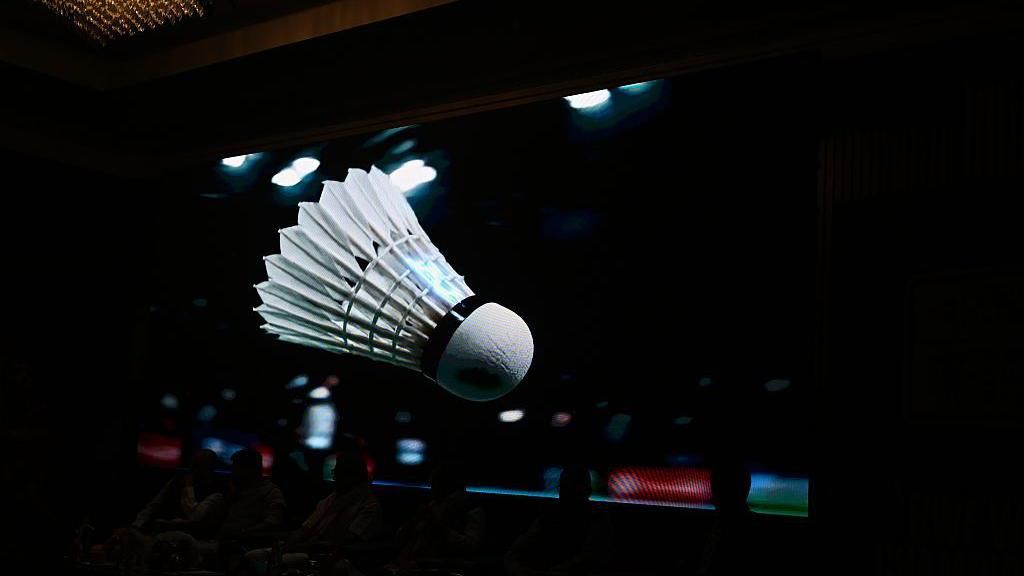
One of badminton’s most prestigious global tournaments, the BWF World Championships, is set to kick off on Monday at New Delhi’s iconic Indira Gandhi Indoor Stadium, bringing together the sport’s top athletes from across the globe. But this year, much of the pre-tournament conversation has centered not on title predictions or rivalries, but on an unusual challenge: keeping uninvited wildlife guests away from the competition courts.
The preparations come in direct response to the high-profile disruptions that marred the capital’s January 2026 India Open tournament. What was meant to be a showcase of elite badminton and India’s ability to host major international sporting events instead became dominated by off-court issues. Famed for its dense urban macaque monkey populations and feral pigeon flocks, Delhi’s wildlife crashed the event: a wild monkey was spotted roaming inside the main stadium, while multiple matches had to be halted mid-play after pigeon droppings landed on active competition courts. Compounding these problems, hazardous levels of seasonal air pollution drew widespread criticism from visiting players, who reported respiratory difficulties during practice and play. The series of missteps left organizers eager to avoid a repeat of the negative headlines as they prepare for the far higher-stakes World Championships.
To address the risk of animal intrusions, event authorities have rolled out a multi-layered set of precautionary upgrades to the 44-year-old venue, which was originally built for the 1982 Asian Games and most recently renovated for the 2010 Commonwealth Games. According to Sanjay Mishra, general secretary of the Badminton Association of India, nearly all entry points to the stadium have been modified to block wildlife access: original single wooden doors have been swapped out for auto-locking double-door systems, durable high-grade netting has been fitted over all open vents, roof gaps and other potential access routes, and a non-toxic gel has been applied to ledges and handles to deter pigeons from landing. Structural and cosmetic overhauls have also been completed across the stadium’s three main competition arenas, with lighting systems fully upgraded to eliminate the shadow issues on courts that drew player complaints during the India Open.
The most talked-about pre-tournament measure has been the reported strategy to deter marauding rhesus macaques, a common nuisance in central Delhi’s public spaces. For decades, Indian authorities have relied on a traditional, low-cost method to repel smaller macaques: leveraging the animals’ natural fear of langurs, large native primates that are dominant over rhesus macaques. A viral social media video that circulated earlier this week showed a man mimicking langur calls inside the stadium grounds, leading multiple media outlets to report that organizers had hired langur impressionists for the championships. Even India’s star two-time Olympic badminton medalist PV Sindhu weighed in on the social media conversation, commenting: “Our solutions may be uniquely Indian, but so are our warmth, our spirit and our hospitality.”
Mishra clarified to the BBC that no dedicated langur mimics have been hired specifically for the tournament, noting that an individual familiar with imitating langur calls was only briefly deployed at the stadium’s northern section as a precaution for its large, sprawling perimeter. This tactic is far from unprecedented for major Indian events: during the 2010 Commonwealth Games, authorities deployed live langurs at competition venues to scare off macaques, and for the 2023 G20 summit hosted in New Delhi, officials placed life-sized cutout posters of langurs across the capital to deter monkey intrusions.
Beyond wildlife, Delhi’s well-documented seasonal air quality crisis remains a lingering concern, though the annual winter pollution peak has passed in mid-August. For India, a successful BWF World Championships carries far more weight than just badminton bragging rights: the country is actively working to build its reputation as a leading destination for global sports, and is already scheduled to host the 2030 Commonwealth Games, with a formal bid in the works for the 2036 Summer Olympics. The 2026 India Open’s high-profile missteps were a major embarrassment for the nation’s sporting ambitions, making a smooth, disruption-free World Championships a key priority.
This year’s tournament, running from August 17 to 23, will feature all of the sport’s top-ranked players, including defending men’s world champion Shi Yuqi of China and defending women’s champion Akane Yamaguchi of Japan. Host nation India will pin its medal hopes on Sindhu, who is leading the country’s challenge in the women’s singles draw. For organizers, the ultimate goal is simple: over the course of the week, all headlines coming out of Delhi’s Indira Gandhi Indoor Stadium should focus on the athletes, the competitive matches, and the drama of badminton’s flagship event — not on rogue monkeys or pigeon droppings.