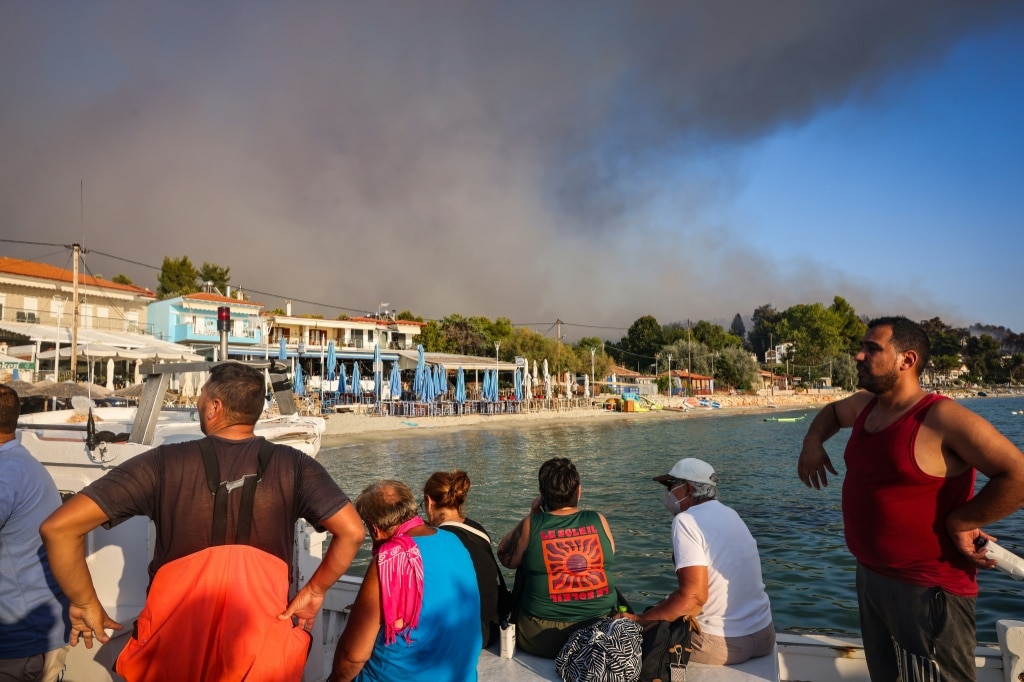
As a raging summer wildfire advanced on two popular tourist beach destinations in northern Greece, a coordinated evacuation carried out by hundreds of small civilian boats alongside official coast guard and fire brigade vessels pulled roughly 500 stranded visitors to safety amid advancing flames. The outbreak, which ignited in the pine-covered Halkidiki peninsula just south of Thessaloniki, quickly gained intensity, pushing fire crews to bring in water-bombing aircraft and more than 200 ground firefighters to halt the blaze’s spread toward the coastal resorts of Siviri and Fourka. By late Thursday, regional civil protection officials confirmed the fire had been brought under control, though firefighting teams remain on high alert for potential reignitions amid hot, dry, windy conditions. Two firefighters were airlifted to local hospitals with burn injuries sustained during the containment effort. The wildfire spread with alarming speed, reaching residential areas and coastal access roads within hours of breaking out. Driven by strong gusty winds, a 1.8-mile-wide wall of flames reaching as high as 100 feet advanced toward the shoreline, forcing authorities to order a full sea evacuation—land routes out of the resorts were already gridlocked with holidaymakers attempting to drive away, leaving the ocean as the only safe escape route. Greek civil protection authorities issued urgent mobile evacuation alerts to all residents and visitors in the affected zone, as thick black smoke blotted out the sun over the coastal communities. Footage broadcast by Greece’s public broadcaster ERT shows dozens of tourists queuing along a Fourka pontoon, many still in their bathing suits and carrying small children, waiting to be ferried out to waiting rescue vessels. Most evacuated tourists were relocated to safer nearby beaches, while around 200 were brought to a larger passenger vessel anchored offshore for shelter. Local resident Sophia, who was stranded on the beach during the evacuation, told Agence France-Presse that the fire had already reached residential areas. “From where we are, we can see that flames have reached the town and the houses,” she said. This year’s wildfire season has stretched Greek emergency services to their breaking point. Earlier this month, a mid-air collision between two firefighting helicopters operating near Athens killed two crew members, and that blaze scorched more than 42 square miles of forest and scrubland. Greek authorities have issued the highest possible level 5 wildfire risk warning for most of the country’s mainland, and Halkidiki regional officials had already implemented a full ban on public entry to the peninsula’s pine forests, which are highly prone to ignition during summer heatwaves. Weather forecasters are warning of extreme fire risk through Friday, with predicted wind gusts reaching up to 60 miles per hour that could quickly spread any new fire outbreaks. Wildfires are an annual danger for Greece during the hot, dry summer months, but climate scientists warn the frequency and severity of these events is growing due to human-caused climate change, which has amplified drought conditions and created more frequent extreme heat events across the Mediterranean region.