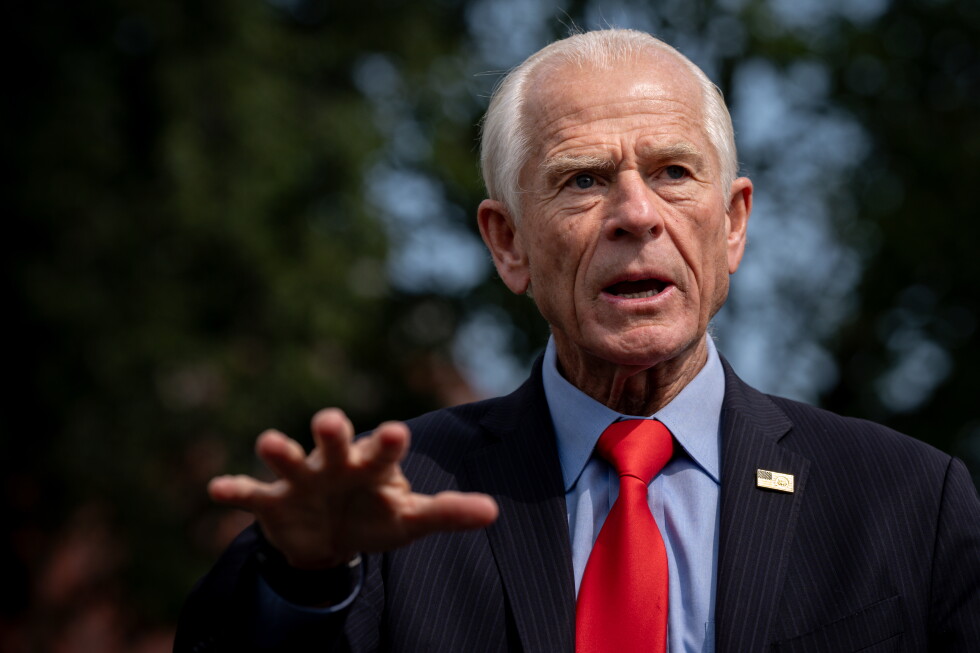
WASHINGTON (AP) — In a bombshell new report released Thursday, the Trump White House has laid out detailed claims that dozens of nations are facilitating a widespread scheme to route exports through third-party countries to evade steep U.S. import tariffs, with annual losses to American tax revenue estimated between $19 billion and $26 billion. The report places a sharp focus on China, which the administration says adjusted its trade practices after the 2018 introduction of sweeping U.S. tariffs by shifting goods to a network of intermediate countries stretching from North America’s Mexico to Southeast Asia’s Malaysia for basic packaging and limited assembly. This so-called transshipping practice created a misleading statistical picture that showed declining U.S. direct imports from China, while allowing Beijing to keep expanding its manufacturing sector in a pattern that the administration argues threatens U.S. factory output and domestic manufacturing employment. White House trade adviser Peter Navarro told reporters during a press conference call that China routes its tariff-evading exports through more than 40 different countries, though he emphasized the report’s core critique centers on third-party nations enabling the evasion, rather than solely blaming China. “For years, the great transshipment scam has let communist China launder its exports,” Navarro said in prepared comments during the call. The release of the high-stakes report comes just weeks ahead of a planned September visit to the U.S. by Chinese President Xi Jinping, an encounter that comes after Donald Trump spoke glowingly of Xi during Trump’s own 2025 trip to Beijing earlier this May. While Chinese officials have repeatedly framed the U.S.-China bilateral relationship as one rooted in “strategic stability,” the Trump administration’s report argues that Beijing’s state-backed export policies for manufactured goods have created economic disruptions for key industrial sectors across North America, Europe, Japan and other major global economies, including the U.S. auto, metals, and electronics industries. Beyond China, Navarro noted that other major economies including India have also been linked to transshipping practices designed to dodge U.S. tariffs. He added that all new trade frameworks negotiated by the Trump administration will now include strict enforcement provisions that impose meaningful penalties on trade partners that tolerate or facilitate tariff-evading transshipment. The Trump administration has imposed broad, high tariffs on imported goods from most major trading partners over its term, applying the import taxes equally to long-standing U.S. allies and strategic rivals alike to protect domestic manufacturing. Independent economic analysts have noted that these tariffs have simultaneously created new, sustained inflationary pressures for American consumers that have offset some of the economic benefits for domestic producers. The White House report draws on both government and private sector trade data to produce a wide range of estimates for the total annual value of transshipped goods, putting the figure somewhere between $34.2 billion and $303 billion per year. To calculate the projected annual tax revenue loss, analysts used a midpoint estimate of $75 billion in annual transshipped goods. To counter the practice, Navarro confirmed that U.S. Customs and Border Protection has already launched a prototype detection program that leverages artificial intelligence to identify false origin declarations. When an importer is caught falsifying a product’s country of origin, the agency can apply retroactive tariffs to all of the entity’s imports dating back 12 months. The Trump administration’s tariff policies have faced a cascade of legal challenges during its second term, with the U.S. Supreme Court striking down several unilateral tariff orders back in February. Despite persistent criticism of the policies, the administration points to shifting trade data as a sign of progress: the U.S. still runs a global trade deficit, but the 2025 year-to-date deficit of $371 billion is roughly $189 billion lower than the deficit recorded during the same period one year prior.
Trump White House says it’s losing $19B-$26B a year in revenue as countries dodge tariffs