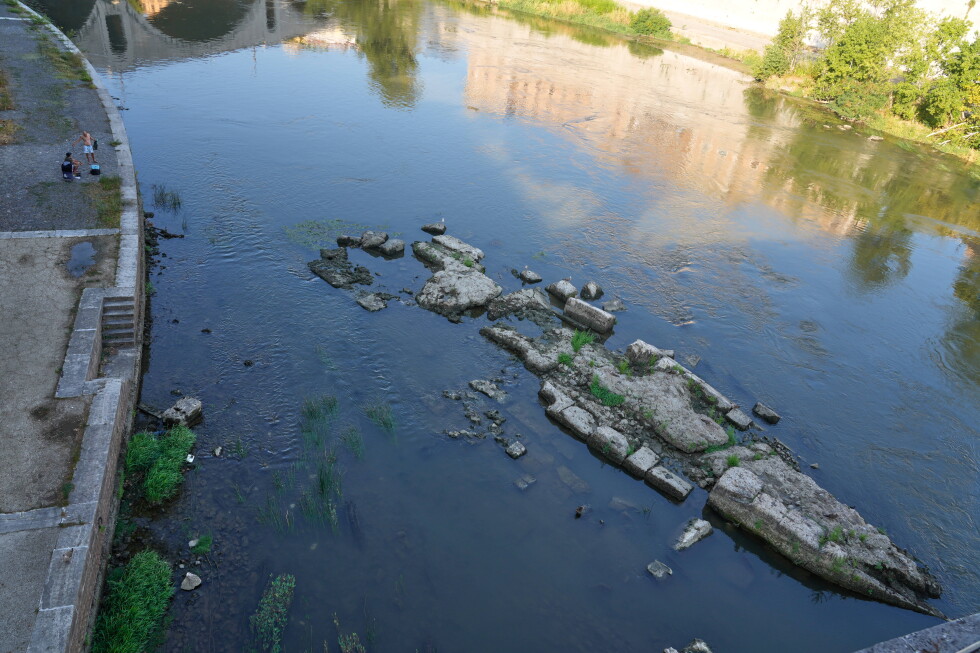
A centuries-old archaeological treasure has risen from the shrinking waters of Rome’s iconic Tiber River, as a prolonged dry spell pushes the Italian capital into a growing water crisis. The stone remains of Nero’s Bridge, a structure that once linked central Rome to the right bank of the Tiber just steps from the famous St. Peter’s Basilica, are now fully exposed after weeks of near-total rainfall sent water levels plummeting to well below seasonal averages.
While the bridge bears the name of the infamous early Roman emperor Nero, archaeological scholars have traced its origins back even further in history. Antonella Bonini, an archaeologist with Rome’s cultural heritage superintendency, explained the name connection comes from the Emperor’s association with the surrounding area: Nero’s circus, the site where Christian tradition holds Apostle Peter was martyred, sits on the land that now houses the Vatican. But research indicates the bridge was actually constructed by Nero’s uncle, the Emperor Caligula, with evidence confirming it stood as early as 39 AD, nearly 2,000 years ago.
The dramatic drop in Tiber water levels that revealed the ancient structure is a symptom of a worsening water emergency across Rome. Giovanni Giganti, coordinator of the Rome civil protection service’s water management center, confirmed the river’s current flow has fallen below 80 cubic meters per second. That figure is roughly half the historic average flow for the month of July. Giganti added that while winter brought above-average precipitation to the region this year, extended dry spells that followed through spring and early summer created the current crisis, putting stress on the city’s water resources and revealing long-submerged landmarks along the river’s course.
The unexpected emergence of Nero’s Bridge has drawn public and archaeological attention, offering a rare chance to study a well-preserved piece of Rome’s ancient infrastructure that has spent most of its modern history hidden beneath the Tiber’s flowing waters.