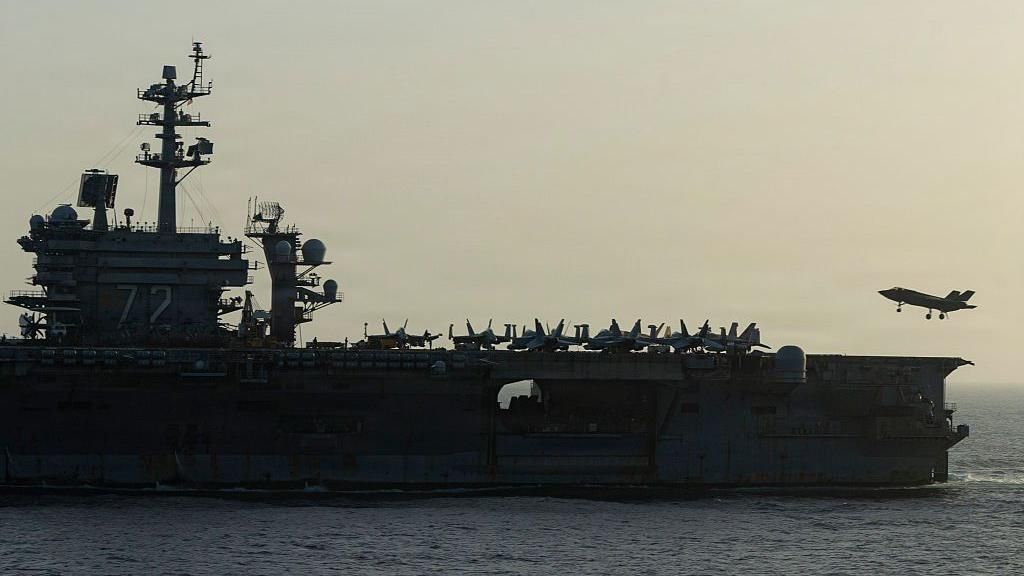
What was planned as a routine rotational deployment has erupted into a political firestorm, as a top Democratic senator is demanding the Pentagon explain shocking allegations of dire living conditions for 5,000 sailors aboard the USS Abraham Lincoln, a U.S. aircraft carrier that has remained stationed in the Middle East for more than 250 days.
The carrier first departed San Diego in November last year, originally bound for the South China Sea, before its mission was redirected to the Middle East in advance of U.S. strikes on Iran in February. What was supposed to conclude in May has been repeatedly extended with no public return date set, leaving crew and their families in limbo. Now, published reports from multiple U.S. military and mainstream outlets have outlined a litany of dangerous and unsanitary conditions onboard, from food shortages and contaminated water to broken plumbing systems and months-long delays or losses of personal mail and care packages. Most alarmingly, family members have told reporters that multiple sailors have experienced severe mental health deterioration, with several considering or attempting suicide. CBS News, the BBC’s U.S. partner, also confirmed via two anonymous government officials that a sailor went overboard from the vessel last month, who was later recovered unharmed, with the incident still under active investigation.
Connecticut Senator Richard Blumenthal laid out these allegations in an official letter sent Thursday to Defense Secretary Pete Hegseth, calling for immediate investigation and clarity on the service’s ability to maintain the high operational pace being demanded of its carrier fleet. “These reports warrant immediate attention,” Blumenthal wrote, adding that the situation raises broader questions about sustained force readiness amid prolonged, unplanned deployments. The mounting scrutiny is also adding increased political pressure on the Trump administration amid ongoing tensions over U.S. military policy toward Iran.
Hegseth, speaking to reporters during a trip to Panama on the same day, rejected the claims entirely, arguing they had been “completely misrepresented.” He asserted that the Pentagon ensures all deployed vessels and crews receive every necessary resource, and expressed deep gratitude for the work of sailors operating in high-tension regions with limited port access. “What they do in those high seas in those austere conditions with less port calls – it’s incredible,” Hegseth told reporters.
Late Thursday, the Wall Street Journal reported that the Pentagon is moving forward with a previously planned rotation that will see the USS Abraham Lincoln replaced by the USS George Washington in the region. The BBC has reached out to the Pentagon for official comment on the rotation report, with no formal response released as of yet.