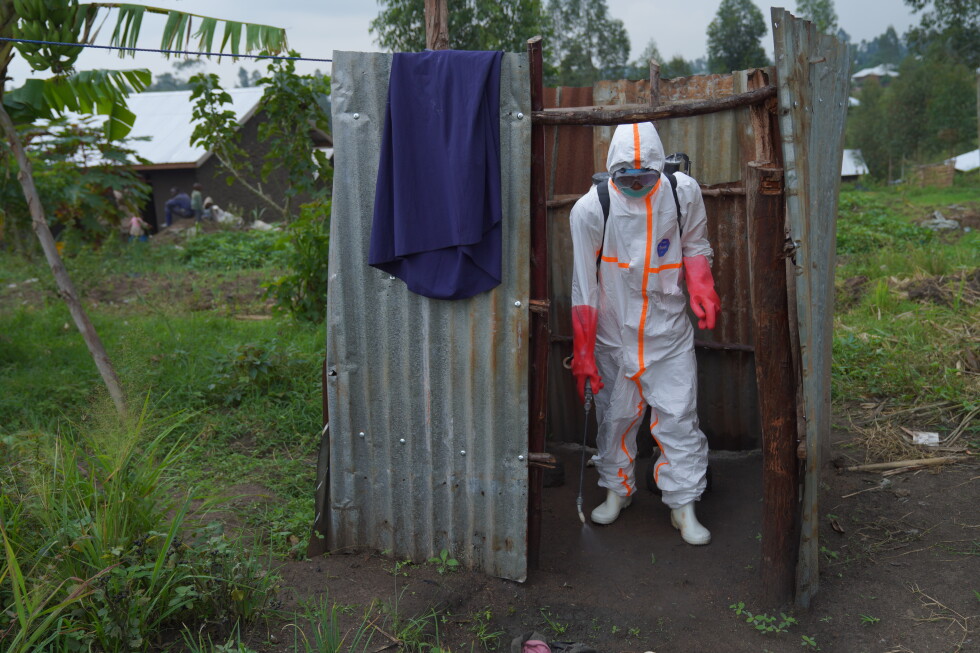
KINSHASA, Democratic Republic of Congo – The ongoing deadly Ebola outbreak in eastern Democratic Republic of Congo has expanded into a sixth previously unaffected province, with the first fatality recorded in Bas-Uele, Africa Centres for Disease Control and Prevention Director-General Jean Kaseya confirmed Thursday.
The deceased patient, Kaseya explained, had traveled from Isiro, a community in the already impacted Haut-Uele province, to Buta – the capital city of Bas-Uele – before succumbing to the virus.
The World Health Organization warned Wednesday that this current outbreak, driven by the rare Bundibugyo strain of Ebola, is already the fastest-growing event of its kind on record and is on course to surpass the 2013-2016 West African outbreak, the deadliest Ebola event in history that claimed more than 11,000 lives. Unlike outbreaks of more common Ebola strains, there are currently no formally approved vaccines or targeted treatments available for the Bundibugyo variant driving the current surge.
Latest official data from the Congolese government puts the outbreak’s cumulative case count above 4,500, with more than 2,100 deaths recorded to date. Alarmingly, this death toll has been reached nearly three times faster than the same mortality milestone during the 2014-2016 West African outbreak, signaling an unprecedented rate of spread.
Response efforts are being severely hampered by a perfect storm of systemic and security challenges. Unpaid health workers have launched widespread strikes, armed rebel groups operate in many affected regions, deep-seated distrust among long-traumatized local communities undermines containment work, and pervasive misinformation claiming Ebola does not exist has discouraged participation in public health measures. These barriers have allowed the virus to outpace intervention teams across the country.
On the same day the expansion to Bas-Uele was announced, health workers at the Nizi Treatment Center in Ituri – the hardest-hit province in the outbreak – walked off the job, forcing the facility to temporarily close. Workers reported they had not received any salary for three months, a grievance that has disrupted care across multiple response sites.
Compounding the crisis, the true scale of the outbreak remains undercounted and poorly understood. Though the outbreak was formally declared on May 15, recent genetic sequencing conducted by the WHO confirms the virus was circulating as early as February, months before official detection. Health authorities estimate that 60 to 70 percent of new confirmed cases are found among community members not already on monitored contact lists, confirming the virus is spreading widely through undetected community transmission.
“We are chasing the virus; the virus is ahead of us,” Dr. Mohamed Yakub Janabi, the WHO Regional Director for Africa, stated this week, summarizing the growing gap between spread and response.
Ebola is a rare but highly contagious viral pathogen that spreads through direct contact with infected bodily fluids including blood, vomit and semen, as well as exposure to contaminated surfaces and materials like bedding and clothing. Infection causes severe acute illness that carries a high risk of fatality without targeted care.
In a small bright spot for the response, clinical trials for two potential treatments specific to this strain of Ebola launched last month in Ituri, offering hope that targeted medical options could become available in the coming months.