In the occupied West Bank, just east of Ramallah, the predominantly Christian Palestinian village of Taybeh has become the latest flashpoint for worsening settler violence, with a recent Israeli military order declaring the surrounding area a closed military zone doing little to shield local communities from persistent assault. The failure of this purported protective measure has left residents trapped in daily intimidation, cut off from their core livelihoods, and raised alarm that the restricted zone will block outside observers from documenting unfolding human rights abuses.
Local residents and activists recorded a new wave of targeted attacks against multiple families in eastern Taybeh on August 11, with the Naif al-Kaabneh family emerging as one of the most affected groups in recent days. This surge of violence comes even after the Israel Defense Forces announced the closed military zone designation covering Taybeh and the nearby southern village of Rammun, framing the order as a measure to bar unauthorised Israeli entry and protect Palestinian residents.
For Taybeh’s population, agriculture, particularly the cultivation of olive groves and production of olive oil, forms the backbone of the local economy. But over recent weeks, residents and international solidarity activists have documented a sharp escalation in settler incursions. Attackers have repeatedly approached residential properties and working farmland, damaged infrastructure, cut off access to water and electricity, and left residents facing growing barriers to reaching their own agricultural holdings.
Despite the military closure coming into force on the Monday before the August 11 attacks, local accounts confirm no meaningful shift in conditions on the ground. Beyond the ongoing attacks and harassment, the new designation has sparked urgent fears that it will restrict access for international journalists, human rights monitors, and solidarity activists who have worked to document abuses and support vulnerable communities.
Naif al-Kaabneh, a Bedouin resident of the community east of Taybeh, described settler aggression as relentless, occurring nearly every day. Speaking to Middle East Eye, he explained that a new unauthorised settlement outpost has been built on land that previously belonged to his extended Bedouin community. Settlers launched a sustained campaign of violence to force the entire community off the land, he said.
“The settlers tear down the fences we build around our homes, steal our sheep, and bring their own cattle to graze on our land. If we attempt to defend ourselves and our property, it is us that the Israeli army arrests,” al-Kaabneh said. Twenty people, including al-Kaabneh’s immediate family and his brother’s household, currently live in the community, facing constant daily hardship under the threat of permanent displacement and land seizure.
“We face the worst attacks imaginable, and we cannot even lift a hand to defend ourselves. We beg someone to help us, to amplify our voices to the world. Our lives have become completely miserable,” he added.
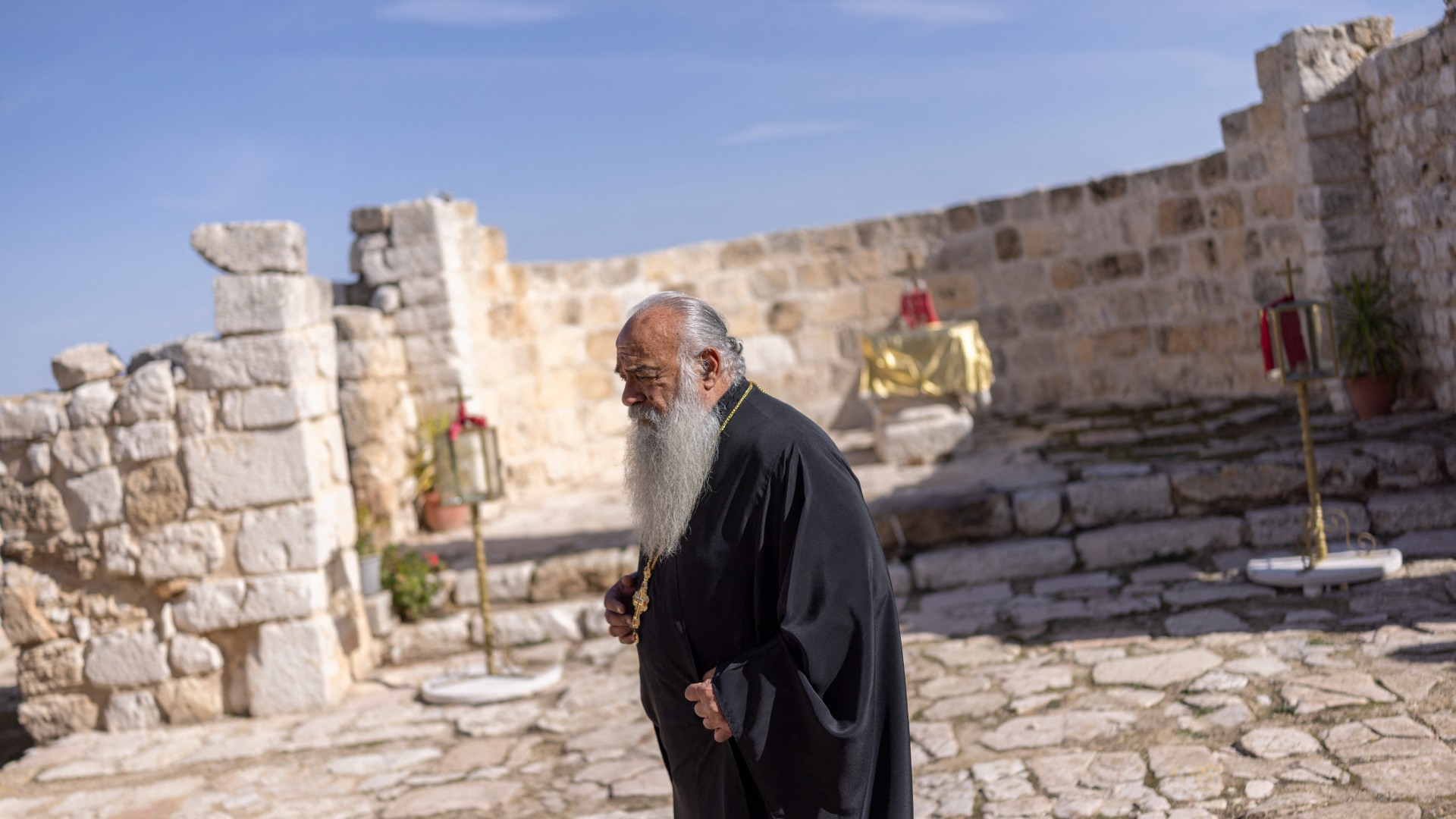
As attacks have grown more frequent, residents say the threat has expanded beyond targeted assaults on homes and property to systematically block access to agricultural land that sustains the village. Father Jack Abed, parish priest of Taybeh’s Melkite church, explained that settler groups, particularly younger attackers, have targeted the village consistently for years.
“They attack our village constantly, and we have not been able to reach our olive trees in peace for three years,” Father Abed said. For Taybeh, olive cultivation and olive oil sales are a critical source of household income, and Father Abed called for an immediate end to the ongoing incursions.
“We simply want to live in peace. We ask that the illegal settlers who attack us, seize our land, and block us from reaching our farms to cultivate our olives be removed,” he said. He also joined local residents in questioning the purpose of the closed military zone order, echoing widespread skepticism about its stated goal of protecting Palestinians.
“We have to ask ourselves and we have to ask the Israeli army: what does this closure actually mean? If Israelis are forbidden from entering this area, why are settlers still able to operate here with impunity?” Father Abed noted that the order has, in practice, given settlers free rein to attack while making it far harder for human rights defenders to reach the area and support residents claiming their rights.
The accounts from Taybeh are supported by international activists who maintain a regular “protective presence” alongside vulnerable families in the village. Avital, an activist who visits Taybeh every week, told Middle East Eye that she has personally observed a sharp escalation in attacks against one vulnerable family and their property in recent weeks.
She confirmed that settlers travel to the family’s home every day, tear down perimeter fences, and bring their own herds of sheep and goats onto the family’s land. On the same morning she spoke to reporters, settlers destroyed multiple items of property at the home.
“They broke a security camera, tore through an electricity cable, and cut the water hose, spilling all of the family’s stored water. Their behaviour is extremely intimidating and openly violent,” Avital said. She added that in previous incidents, solidarity activists have been beaten by attackers, and while Israeli police were called following the most recent incident, they often fail to respond to reports from Palestinian residents.
The ongoing crisis in Taybeh is part of a broader regional surge in settler violence across the occupied West Bank this year. Data from the United Nations Office for the Coordination of Humanitarian Affairs (OCHA) records more than 1,000 settler attacks that caused injury or property damage across the West Bank in the first half of 2026, affecting more than 230 separate Palestinian communities.
By early July 2026, OCHA reported that more than 2,200 Palestinians had been displaced from their homes in the West Bank since the start of the year — an average of roughly 10 people displaced every single day. Displacement has been driven by both settler attacks and Israeli home demolitions carried out under the pretext of unapproved construction. The agency confirmed that settler attacks and the associated access restrictions have become the single primary driver of Palestinian displacement in the West Bank during 2026.