An investigation by independent news outlet Middle East Eye (MEE) has uncovered that the UK Charity Commission has issued formal regulatory advice to the trustees of London’s Edgware United Synagogue, after the charitable venue hosted a real estate event in June that advertised properties in illegally built Israeli settlements in occupied Palestinian territories.
The controversy first came to public light on June 15, when MEE published its initial report revealing that units in illegal Israeli settlements were promoted as part of the Great Israeli Real Estate Event, held at the synagogue one day prior. After the report was published, event organizers acknowledged that the promotion of settlement properties did occur, but claimed the incident was an accidental oversight.
Hours after MEE’s publication, the International Centre of Justice for Palestinians (ICJP) – a UK-based legal organization focused on Palestinian rights – filed a formal complaint with the UK’s national charity regulator. The complaint called for an urgent compliance investigation into the synagogue over its role in hosting the event, arguing that the charity had allowed both its premises and institutional resources to be used for a commercial activity that promoted properties in territory widely recognized as illegally occupied. The filing emphasized that organizers and the synagogue had already been notified of serious legal, regulatory and reputational risks tied to promoting settlement properties before the event went ahead. The complaint stated that by allowing the event to proceed, trustees linked the synagogue’s charitable status and reputation to illegal activity that violated UK regulatory standards for charitable organizations.
On July 28, the Charity Commission issued its formal response to the complaint, a copy of which has been viewed by MEE. In its response, the regulator confirmed that it had reviewed all evidence submitted, held discussions with the synagogue’s trustees, and ultimately issued formal regulatory advice and guidance under Section 15(2) of the 2011 UK Charities Act. This section of legislation grants the commission authority to issue binding, formal guidance to charity trustees to ensure future compliance with charity law. The commission noted that trustees are required to incorporate this guidance into their future decision-making, and confirmed that the case is now formally closed. The regulator also thanked ICJP for bringing the issue to its attention.
In an interview with MEE, an ICJP spokesperson acknowledged that the commission’s action sends a clear signal to UK charities that they cannot dismiss credible legal warnings over the use of their premises or resources to support activities tied to illegal Israeli settlements. However, the organization also criticized the regulator for stopping short of opening a full statutory inquiry, arguing that the response was insufficient given the severity of the incident. The spokesperson noted that while the guidance requires all UK charity trustees to conduct more thorough legal due diligence, assess regulatory and reputational risks, and prevent charitable assets from being used in ways that violate legal obligations, the commission failed to take the robust action needed to uphold charity law and maintain public trust in the UK charitable sector. ICJP believes the gravity of the conduct should have warranted stronger regulatory intervention.
MEE has reached out to Edgware United Synagogue requesting comment on the commission’s decision, and had not received a response at the time of publication. The controversy extends beyond the charity investigation: in June, UK’s then-Foreign Secretary Yvette Cooper announced that government ministers had asked the UK Advertising Standards Authority to open its own separate investigation into the Great Israeli Real Estate Event.
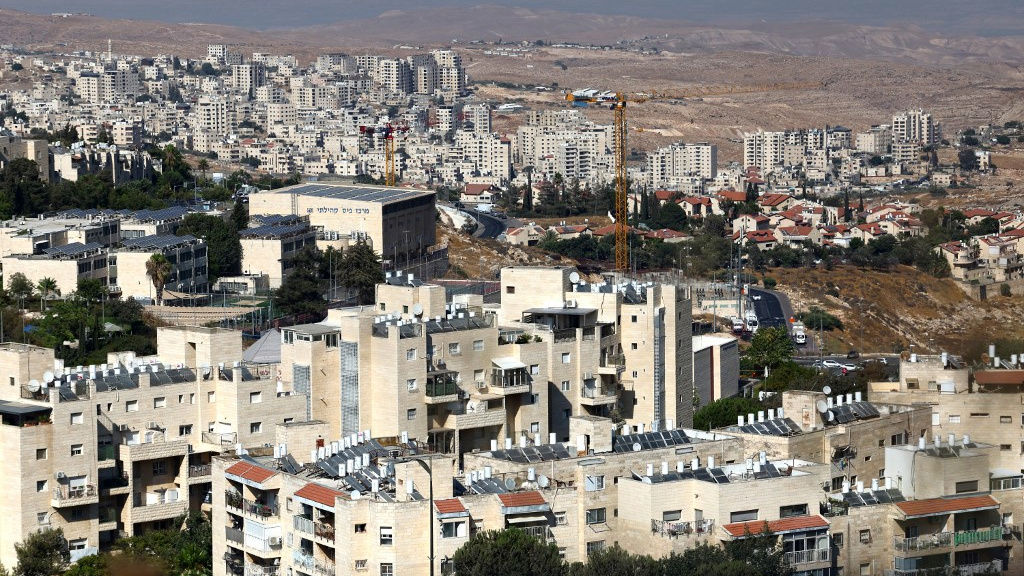
Multiple Israeli developers and real estate firms participated in the June event, openly advertising units in settlements universally recognized as illegal under international law. Israeli developer Harey Zahav promoted projects in Kfar Eldad, an illegal settlement located south of Bethlehem in the occupied West Bank, and Teneh Omarim, another illegal settlement near Hebron. Leading Israeli agency Tivuch Shelly included listings for the illegal West Bank settlement of Ma’ale Adummim in its event brochure, marketing a new development as just 10 minutes from Jerusalem. Another firm, Jerusalem Real Estate, advertised projects in French Hill and Ramat Eshkol, both illegal settlements in occupied East Jerusalem.