Across sweltering European farmlands this summer, an unprecedented drought fueled by human-caused global warming and an amplified El Niño event is pushing agricultural production to its breaking point, leaving even adaptive farmers scrambling to mitigate staggering losses. From the fertile coastal plains of the Netherlands’ southwestern Zeeland Province to the river basins of the Balkan region, the extreme heat and prolonged dry spell have scorched staple crops, drained critical water reserves, and threatened livelihoods that depend on predictable growing seasons.
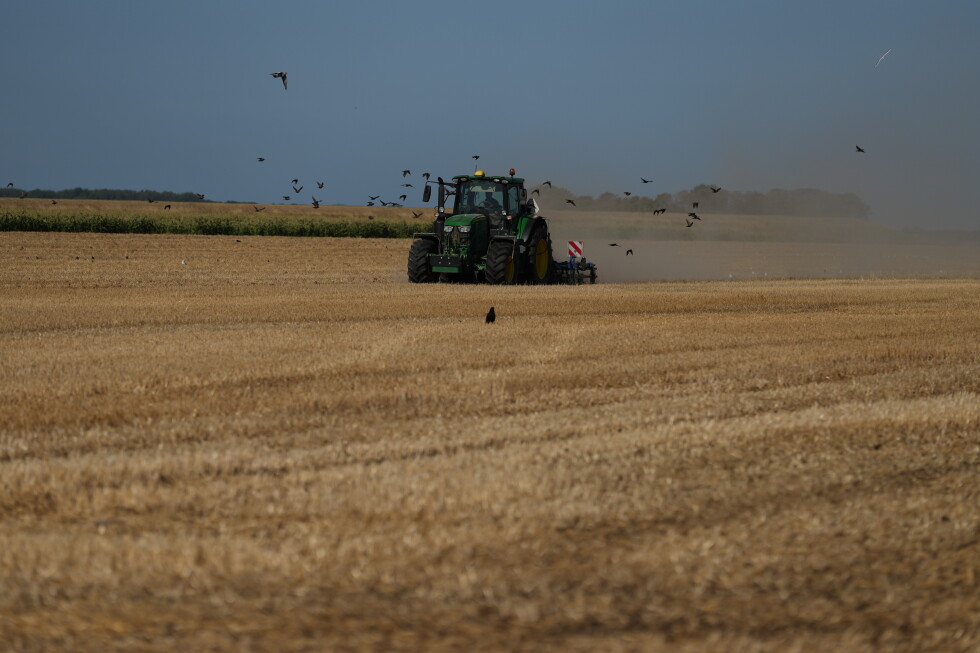
In Zeeland, Maarten Janse has spent years adapting his 150-hectare farm to worsening climate volatility: he uses no-till farming methods that leave soil undisturbed to retain moisture, plants year-round cover crops to prevent dehydration, and adds organic compost and manure to boost soil health. He even diversified his income stream by opening a popular lakeside campsite and began growing salt-tolerant samphire to combat rising soil salinity from prolonged dry conditions. But even these proactive measures are failing to hold back this year’s extreme drought. As he drives his tractor across parched fields, spreading nutrient-rich organic matter to revive cracked soil, the lack of rain has left even his salt-resistant samphire stunted—this crop that evolved to withstand brackish conditions still requires periodic fresh water to grow, a resource that has all but vanished in 2024.
Zeeland farmer Hendrik Jan ten Cate counts himself among the lucky ones: he still has official permission to irrigate his potato crop, grown to supply frozen French fries to major global chains including McDonald’s. Even so, his harvest is coming a full month earlier than usual, and nearly all of his potato plants are already withered and stunted. Most of this year’s crop is too small to meet the demand for long, full-cut French fries that consumers prefer, and he projects his total yield will drop by one-third compared to average growing years. “It’s not just the lack of rain that’s killing our crops,” ten Cate explained. “It’s the combination of relentless sun, bone-dry air, and record consecutive hot days. Potatoes simply cannot survive that mix.”
The crisis extends far beyond the Netherlands, leaving agricultural sectors across the continent reeling. In Bosnia, where agriculture accounts for 5% of national GDP and 10% of total employment, grain farmer Slavisa Lukic stares out across a field of limp, heat-stricken corn stalks. Where he once harvested 6 to 7 tons of corn per hectare, he now expects just 1.5 to 2 tons—if he can even bring a full harvest to market. Clover pastures that once fed local livestock have completely vanished from his property in northeastern Bosnia. “They literally do not exist now,” Lukic said. “Nothing is left.”
Even the Czech Republic’s iconic beer industry is at risk, as drought stunts the annual hop harvest that supplies the country’s world-famous breweries. Plzeňský Prazdroj, the nation’s largest beer producer, projects significant financial losses this year due to reduced hop yields. Jakub Zaoral, the company’s sustainability manager, noted shifting rainfall patterns have made harvests increasingly unpredictable: long dry spells are broken only by intense, short storms that run off parched soil instead of replenishing groundwater reserves. “We’ve had to accept that one year will be great and the next will be a loss,” Zaoral said. “But if this stretches to three consecutive bad years, that could become an existential threat for small hop growers across the country.”
In the Danube River basin, the drought has created cascading crises beyond crop failure. While Romania’s heat and drought-resistant sunflower crops have fared better than most staples this year, record-low water levels on the Danube have brought grain transport to a near-standstill. Congestion at river terminals has left silos overflowing, with farmers unable to store or ship their existing harvests ahead of the upcoming sunflower and corn harvest. “Farmers are already in full panic mode,” said Cezar Gheorghe, founder of Romanian grain consultancy Agricolumn. “They have nowhere to put the crops they already have, and the next harvest is just 10 days away.” In Hungary, Sándor Molnár’s dairy farm has seen no rain since late May, turning cattle grazing plains to dust and forcing him to buy expensive supplementary feed for his 130 dairy cows. “We keep hanging on and hoping next year will be better,” Molnár said. “To be honest, we’ve been saying that for years now. But we’re still hoping this time it will be true.”
Even large, well-resourced farming operations that invested heavily in climate adaptation are feeling the strain. The 10,000-acre Elveden Estate on the Suffolk-Norfolk border in the United Kingdom built a massive reservoir capable of holding water equal to 200 Olympic-sized swimming pools, opening the facility less than a year ago to protect against drought. Today, that reservoir is nearly empty, and a second on-site reservoir holds just 20% of its capacity. While the investment in water storage has allowed the farm to keep irrigating through the current crisis, managing director Andrew Blenkiron warned that supplies are running critically low. “If this hot, dry weather holds, we only have enough water left for six more weeks of irrigation,” Blenkiron said.
The economic damage from this summer’s extreme conditions is projected to last for years, according to a new analysis from Dutch sustainable bank Triodos. The report estimates that repeated heatwaves and droughts across the continent could cut the European Union’s total GDP by 1% by 2026, equal to roughly 180 billion euros ($208 billion). Farmers are positioned to bear the brunt of the damage, with many regions already implementing strict water restrictions that bar farmers from drawing water from streams and drainage channels to irrigate fields and orchards. As climate change continues to increase the frequency and intensity of extreme weather events, European agricultural producers are facing a new normal where even the most proactive adaptation strategies are often no match for the scale of the crisis.