In the parched, poverty-stricken villages of Nepal’s Rautahat district, a preventable tragedy unfolded in late 2025 that encapsulates the global human cost of sweeping U.S. foreign aid cuts. Twenty-year-old Kabita Mukhiya, a young mother of three who dreamed of giving her unborn son the education she never had, suffered for weeks from unexplained abdominal agony and swelling during her 28-week pregnancy. Uneducated, impoverished, and abandoned by the community outreach workers who once monitored at-risk pregnant women in her village, Kabita did not know she was experiencing life-threatening complications. When her aunt finally carried her to a hospital, it was too late: her unborn baby was dead, and Kabita herself died hours later from untreated eclampsia and severe anemia, conditions that routine prenatal care could have detected and managed.
Kabita’s death is not an isolated incident. It is one of hundreds of preventable maternal and child fatalities documented by the Associated Press across the globe following the Trump administration’s decision to dissolve the United States Agency for International Development (USAID), for decades the world’s largest single provider of humanitarian assistance. The U.S. funding cuts, which shuttered life-saving maternal and neonatal health programs, eliminated nutritional support for pregnant people and young children, and idled thousands of community outreach workers, have been followed by additional aid reductions from other donor nations. The World Health Organization (WHO) estimates that 60% of women’s health organizations globally have been forced to slash critical services as a result.
Global public health experts are already bracing for a devastating turning point. The Bill & Melinda Gates Foundation projects that 2025 will be the first year of this century to see an increase in global child mortality, reversing decades of steady progress in reducing preventable deaths. A study published in *The Lancet* warns that the U.S. aid cuts could lead to more than 14 million excess deaths by 2030, including over 4.5 million deaths of children under age 5. WHO’s Rajat Khosla, executive director of the Partnership for Maternal, Newborn and Child Health, calls the reversal catastrophic: “It’s heartbreaking to see what’s happening. It’s decades of progress being washed away.”
In response to AP’s reporting, the U.S. State Department defended the administration’s policy, stating that the restructuring refocuses assistance on efficiency, effectiveness, and global partnership. The department noted that the U.S. still spends more on health and humanitarian aid than any other nation, and continues to support maternal and child health programs in Nepal, adding that “the rest of the world needs to contribute more and share the burden.”
On the ground in Nepal, however, local health workers and aid organizations say the impact of the cuts has already been catastrophic. CARE Nepal, one of the largest aid groups operating in the country, lost more than half of its funding from the U.S. cuts. “The number of deaths of mothers, young mothers, during delivery has really increased,” said Mona Sherpa, CARE Nepal’s country director. “The expected number within a year is happening within four to six months.”
Prior to the cuts, USAID funded a five-year, $35 million maternal and child health initiative in Nepal that reached more than 100,000 women and girls in its first three years. The program equipped rural birthing centers with life-saving equipment and medications, trained nurses and midwives, and supported a network of female community health volunteers who made regular home visits to pregnant women. These volunteers identified warning signs of complications, helped women schedule and access prenatal appointments, and explained critical medical information in terms local communities could understand.
When the program was shut down, the volunteer network collapsed. In Dewahi Gonahi municipality, the head of the local birthing center, Kishori Shah, reports that the number of women attending prenatal checks has dropped by 50% since the cuts. Without early screening, complications that could be easily managed are left to escalate into life-threatening emergencies. “There would have been a decrease in complications if the USAID program was still running,” Shah says.
In Prempur Gonahi village, the reversal of progress is stark. Before the program launched in 2022, the village saw an average of 10 to 15 neonatal deaths per year. By 2024, that number had dropped to zero. Just 10 months after the program was canceled, newborn deaths began to climb again: one in December 2025, four more by March 2026.
Many of these deaths will never be officially counted: the aid cuts also eliminated funding for mortality data collection, leaving vast stretches of rural Nepal without anyone to track and report preventable deaths. Campaign Nepal, a local partner of CARE, has documented eight infant deaths in Dewahi Gonahi since the cuts, but official government records list only two. “There must be more than that,” says Shatrudhan Singh, Campaign Nepal’s executive director. “We just can’t identify them.”
Another young woman from the region, 19-year-old Phula Devi, shared her story of grief with the AP, one she had never told even her own husband. Uneducated and with no outreach worker to guide her, Phula did not understand the warning that her unborn baby had a slow heartbeat, and delayed going to the hospital at the direction of her relatives. When she arrived, doctors urged a C-section to deliver her overdue baby, but Phula did not understand the procedure and was terrified. She delivered the baby on her own, and he was stillborn. “I think of my baby all the time,” Phula says, hiding her tear-streaked face behind a scarf. “She would have done anything to save him, if she’d only known how.”
For Kabita Mukhiya, the collapse of outreach services proved fatal. When she was pregnant with her third child, Yubraj, she received free nutritional supplements from the U.S.-funded program that helped offset her family’s meager diet, which provided barely enough to eat. By the time she became pregnant with her fourth child, the supplements were gone, along with the regular mother’s health meetings she had attended. She missed her first-trimester checkup entirely, and only showed up for her first screening at 16 weeks. Her nurse noticed she was dangerously pale and urged her to get a blood test to check for anemia, but Kabita did not understand why the test was necessary, and never got it. By the time she arrived at the hospital, her condition was irreversible.
Rajkumari Patel, one of the community health volunteers who lost her job when the program was cut, says Kabita’s death is exactly what she was trained to prevent. “I used to know every pregnant woman in her village, visiting them at home,” Patel says. “I would have asked her, ‘Is the baby kicking? When did you last feel movement?’ I would have checked for swelling in her hands and face. I would have looked at her eyes for signs of anemia. These are the signs I would have noticed in Kabita and said, ‘This woman needs a hospital today — not tomorrow.’ Maybe we could have saved her life.”
Nutrition data from the region confirms the widespread damage of cutting support programs. Before the U.S. cuts, the prevalence of life-threatening wasting (severe malnutrition) among children under five in Kabita’s province was 7.4%. A national screening conducted in May 2026 found that rate has jumped to 12.3% after the cuts eliminated most local nutrition support programs.
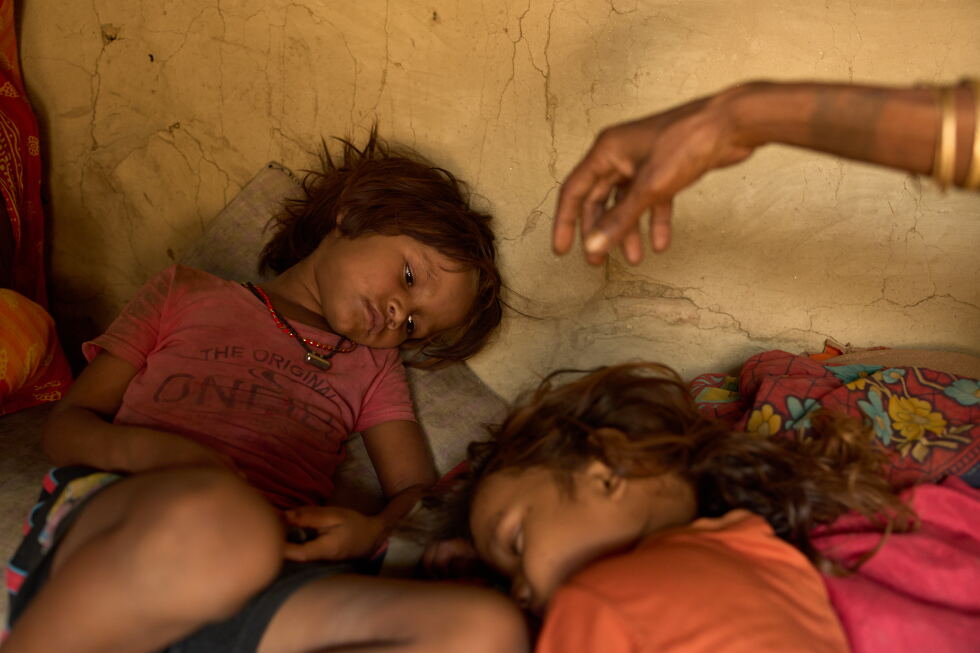
In the months since Kabita’s death, her family has been left to pick up the pieces. Her husband, who was working construction in India when she died, arrived home three days after her funeral, and has been inconsolable, often refusing to work for days at a time. Kabita’s 60-something mother-in-law and aunt are now left to care for her three young children, ages 1, 3, and 5, with barely enough income to put rice on the table. “How will I feed them? I’m old,” says Lachhiya Devi, Kabita’s mother-in-law, as she strokes the leg of her sleeping 4-year-old granddaughter. “You can see how desperately I’m trying to get by.”
Kabita’s aunt Shraddha, who carried her to the hospital and watched her take her final breath, says the tragedy could have been avoided entirely if outreach workers had still been in place to guide the village’s vulnerable women. “We don’t have anyone to help us out here, to tell us about these things. If there was someone, we would ask them, follow their advice,” she says. “It would have saved her life. She was too young to die.”